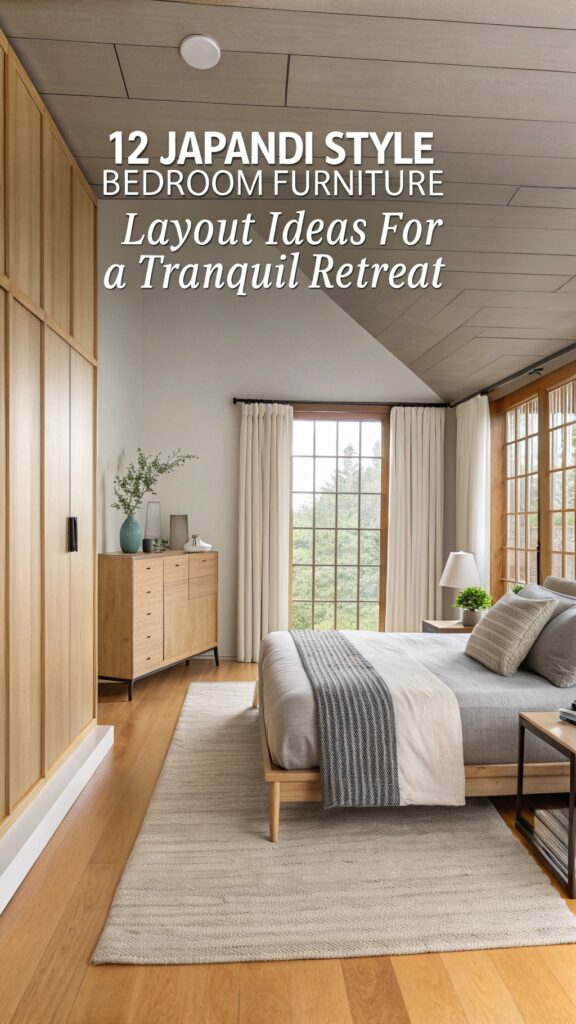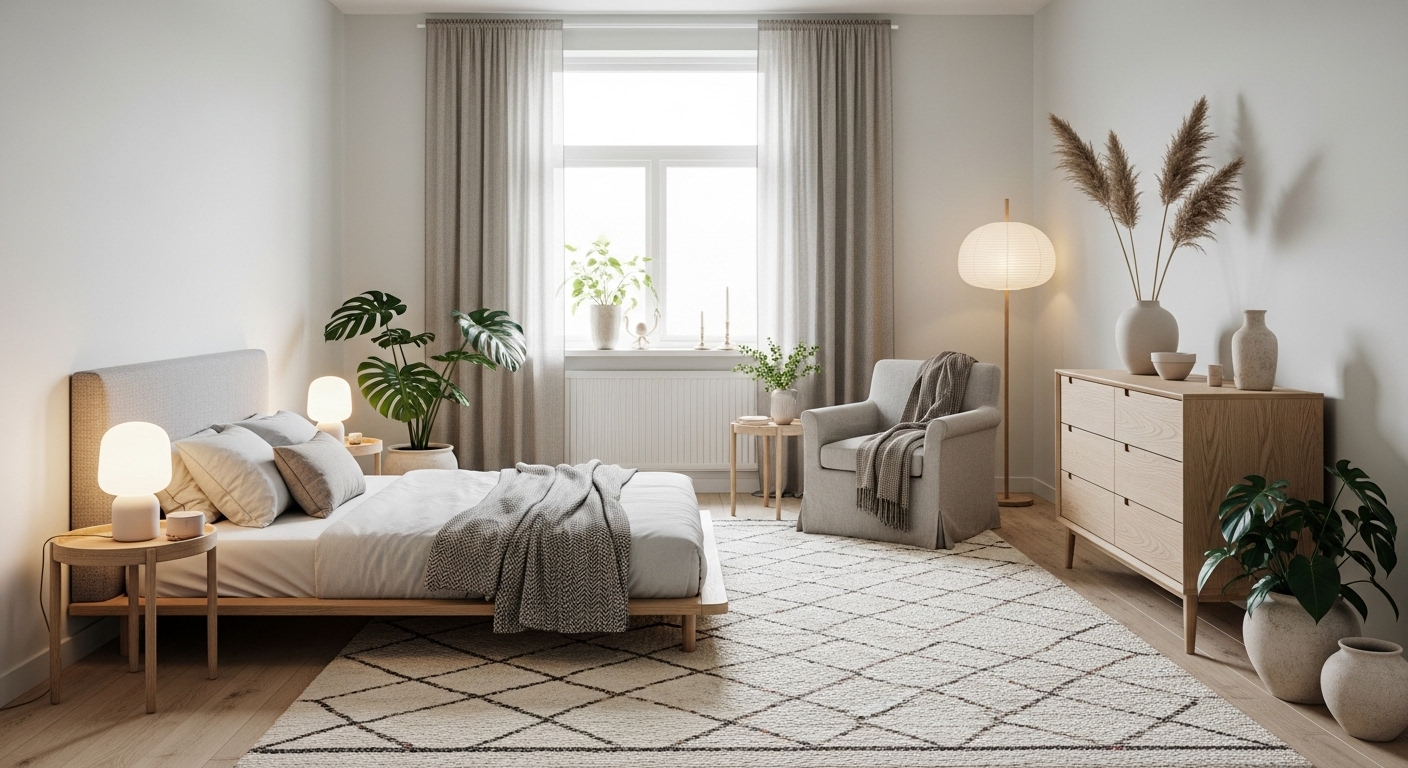
A bedroom isn’t merely a room; it is a vital retreat where external turbulence finally dissipates. Japandi style emerges as the perfect antidote to modern clutter a deliberate, soul-soothing fusion of Scandi utility and Japanese wabi-sabi.
This philosophy transcends mere shopping. It demands a mastery of spatial geometry, prioritizing intentional placement to foster equilibrium and kinetic flow.
To transmute your quarters into a genuine sanctuary, you must curate furniture with architectural precision. Focus on low-profile frames and negative space to anchor the room. These layout strategies serve as a blueprint for tranquility, proving that silence is best felt through design
Why Choose a Japandi Layout?
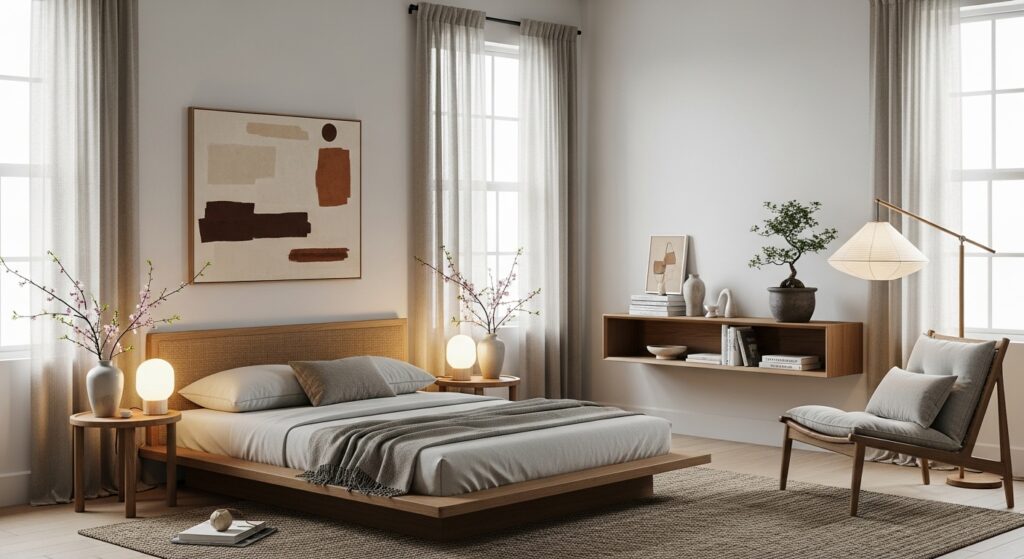
Adopting a Japandi layout goes beyond aesthetics; it is a lifestyle choice centered on intentionality. By merging the Scandi concept of “hygge” (coziness) with the Japanese appreciation for “wabi-sabi” (finding beauty in imperfection), you create a space that is both inviting and uncluttered.
These layouts prioritize breathing room, natural light, and functional simplicity. The result is a bedroom that not only looks sophisticated and serene but also actively promotes restful sleep and a clearer mind by reducing visual noise.
1. The Grounded Centerpiece
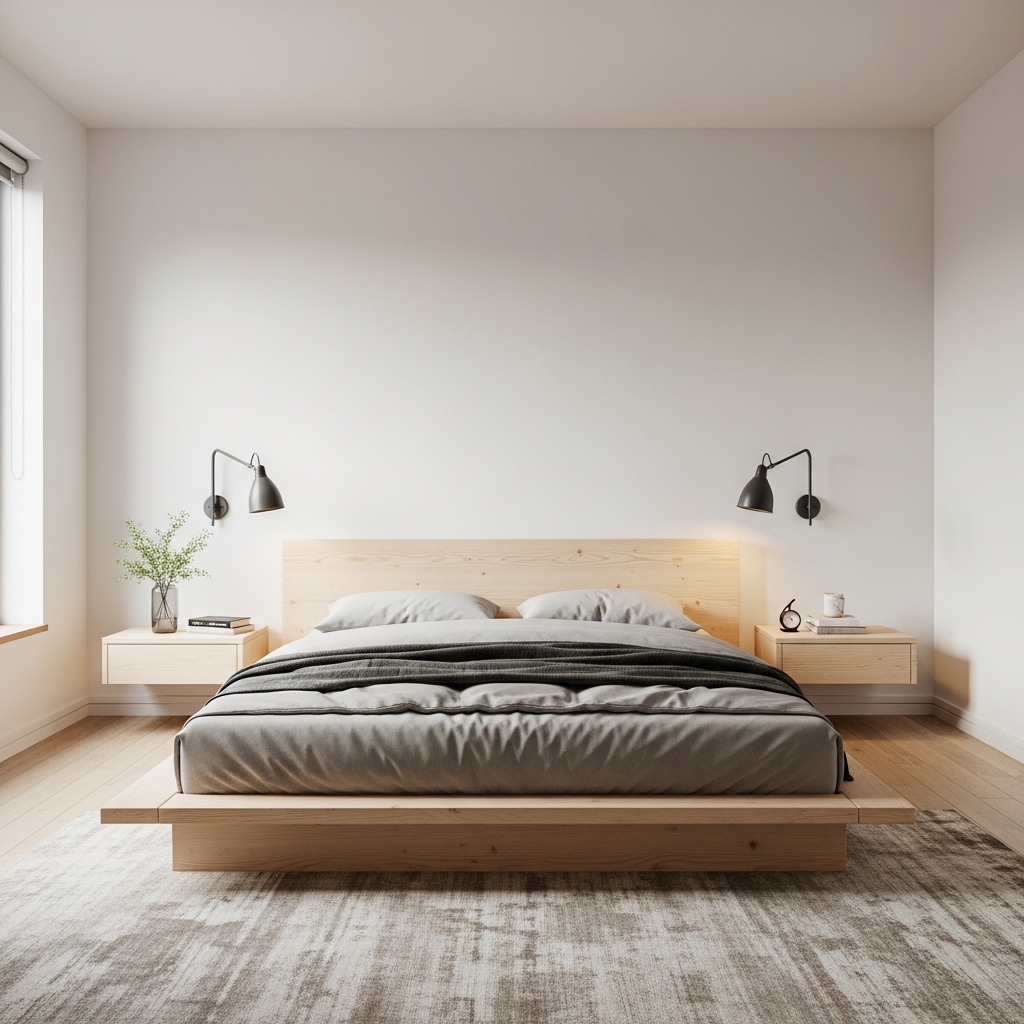
Ideally, position a low-profile platform bed, preferably constructed from light, untreated wood, in the exact center of the main wall.
This instantly grounds the room. Flank the bed with identical, minimalist floating nightstands to maintain a sense of airiness underneath.
Instead of traditional table lamps that clutter surfaces, utilize sleek, adjustable wall sconces for warm, directional lighting. This symmetrical arrangement emphasizes balance and ensures clear walking paths on either side, championing the importance of negative space crucial to this style.
2. The Asymmetrical Zen Corner
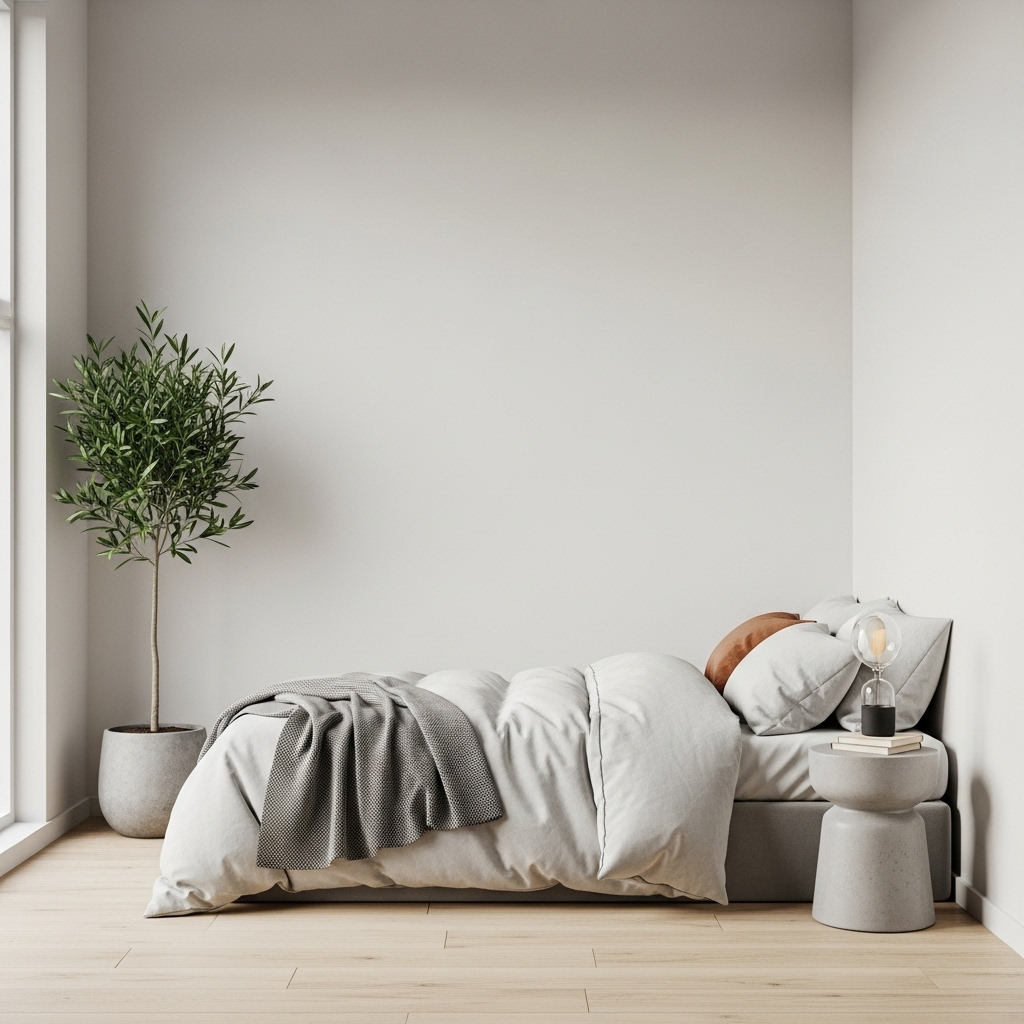
For a less traditional approach, shift your bed into a corner, pushing it against two walls to create a cozy, nested feeling often found in Scandinavian design.
Balance this asymmetry by placing a tall, potted statement plant, like a Ficus or Olive tree, in the opposite corner to draw the eye upward. Beside the bed, use a small, round concrete or wooden stool instead of a standard nightstand.
This layout works exceptionally well in smaller rooms, maximizing floor space while creating a distinct, intimate sleeping zone.
3. The Floating Illusion Layout
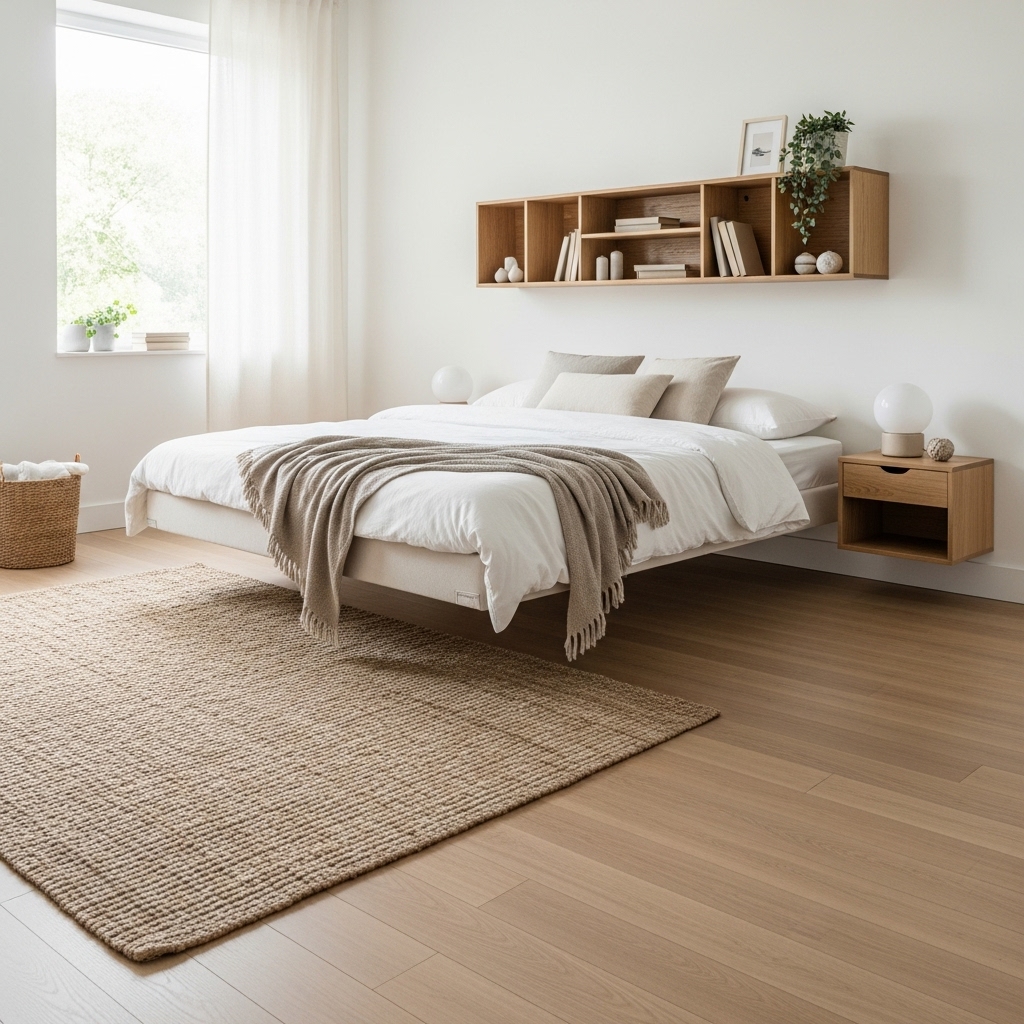
To enhance the feeling of spaciousness, select furniture that appears to hover. Start with a bed frame that has hidden legs, making it look like it is floating above the floor.
Complement this with wall-mounted shelving units instead of heavy dressers, keeping the floor completely visible.
A large, neutral-colored jute or wool rug should be placed partially under the bed to anchor the sleeping area without weighing it down. This layout tricks the eye into perceiving more space, perfect for achieving a minimalist, airy atmosphere.
4. The “Soft Divider” Arrangement
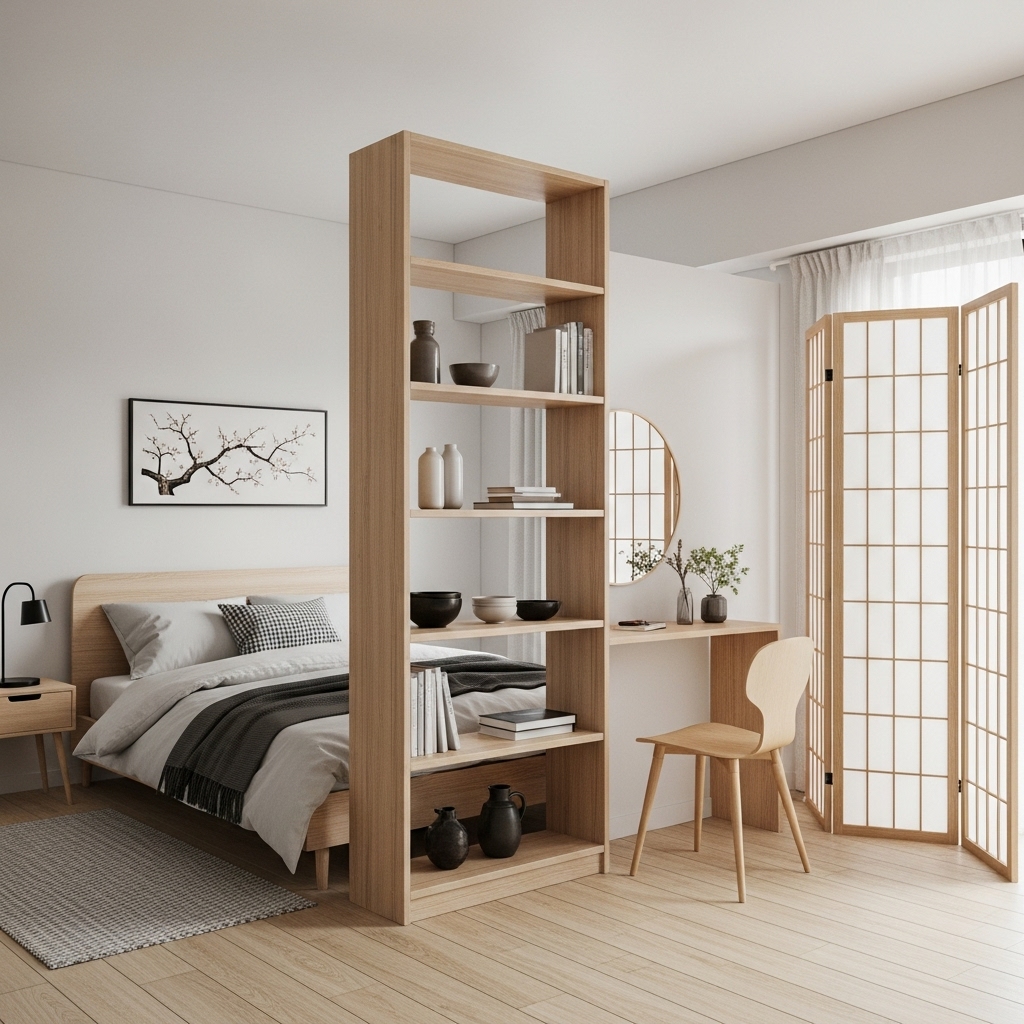
If you have a larger master bedroom or a studio apartment, use furniture to create distinct functional zones without erecting walls. Place a freestanding, open-shelf bookcase made of pale timber perpendicular to the wall to separate the sleeping area from a small dressing or reading nook.
Fill the shelves sparingly with curated ceramics and books to allow light to filter through. Alternatively, a folding screen made of rice paper and wood can offer a delicate, movable partition that adds immediate Japanese architectural interest.
5. The Window-Facing Sanctuary
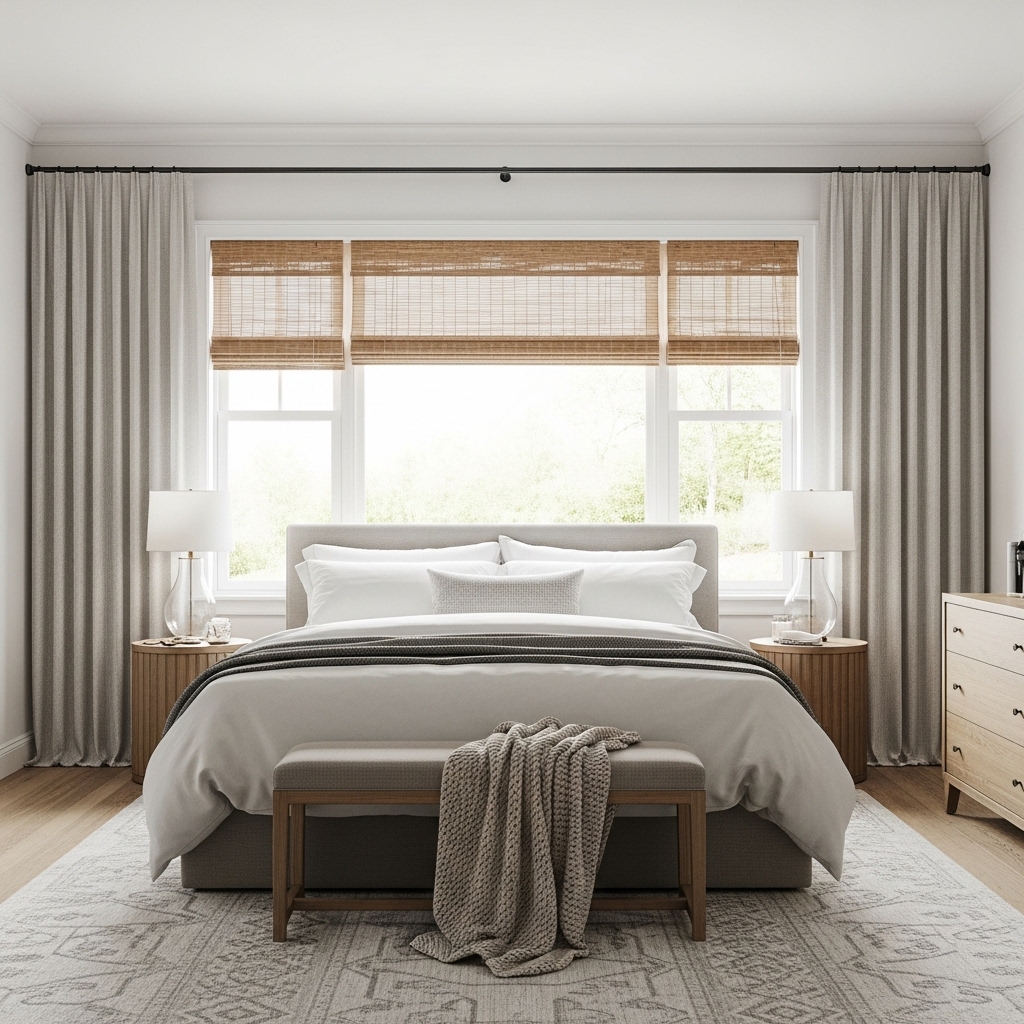
Orient your bed so it faces the room’s primary window, allowing you to wake up to natural light and a view of the outdoors, deeply connecting the space to nature.
Keep the window treatment minimal; think sheer linen curtains or bamboo roller shades that diffuse light softly. Ensure no tall furniture blocks this sightline.
A low bench placed at the foot of the bed, perhaps adorned with a chunky knit throw, provides a practical spot for dressing while leading the eye toward the natural light source.
6. The Low-Level Lounging Zone
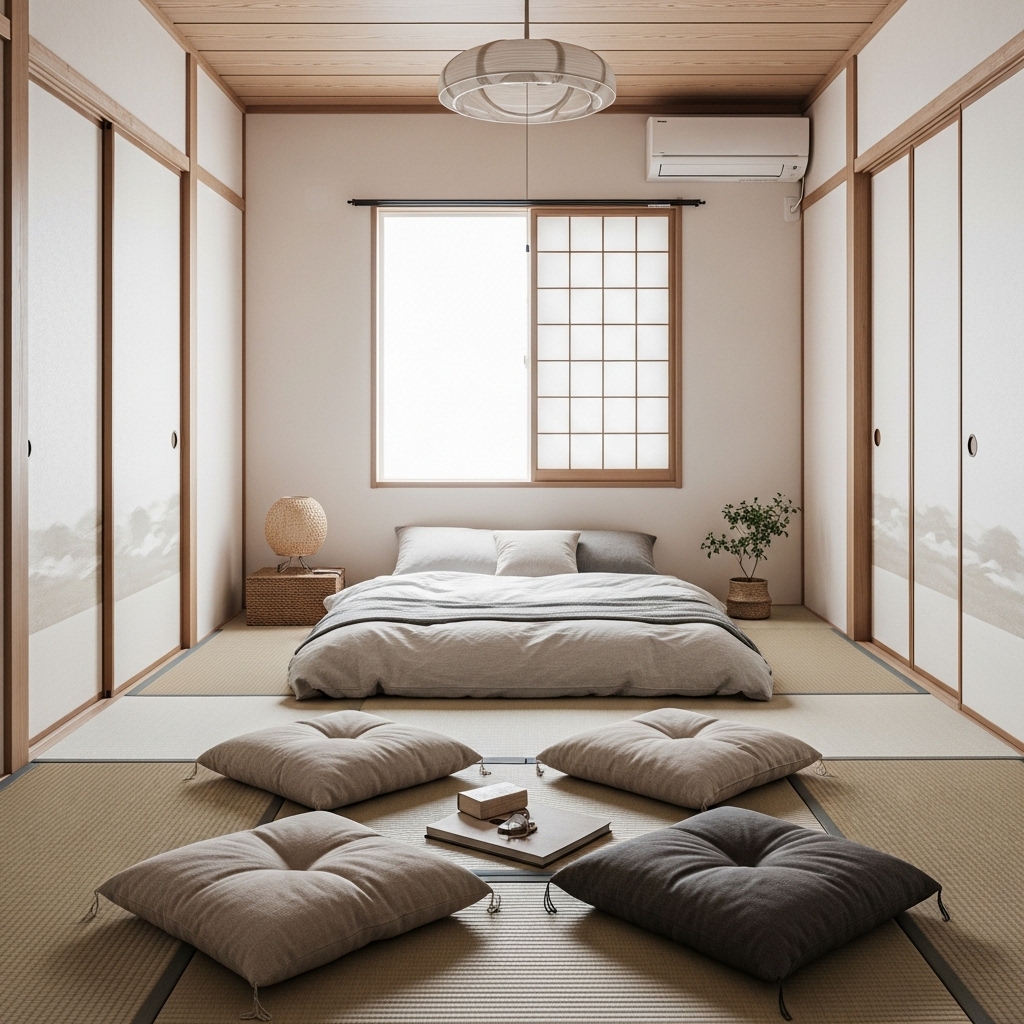
Embrace the Japanese tradition of floor-centric living by lowering the entire perspective of the room. Utilize a very low bed frame or even just a high-quality mattress placed directly on tatami mats.
Accompanied by floor cushions made of natural fabrics like linen instead of standard chairs, this layout creates an incredibly grounded and casual atmosphere.
Keep storage low as well, utilizing long, horizontal sideboards rather than tall wardrobes, ensuring that nothing towers over the inhabitants, which promotes a feeling of safety and calm.
7. The Integrated Storage Wall
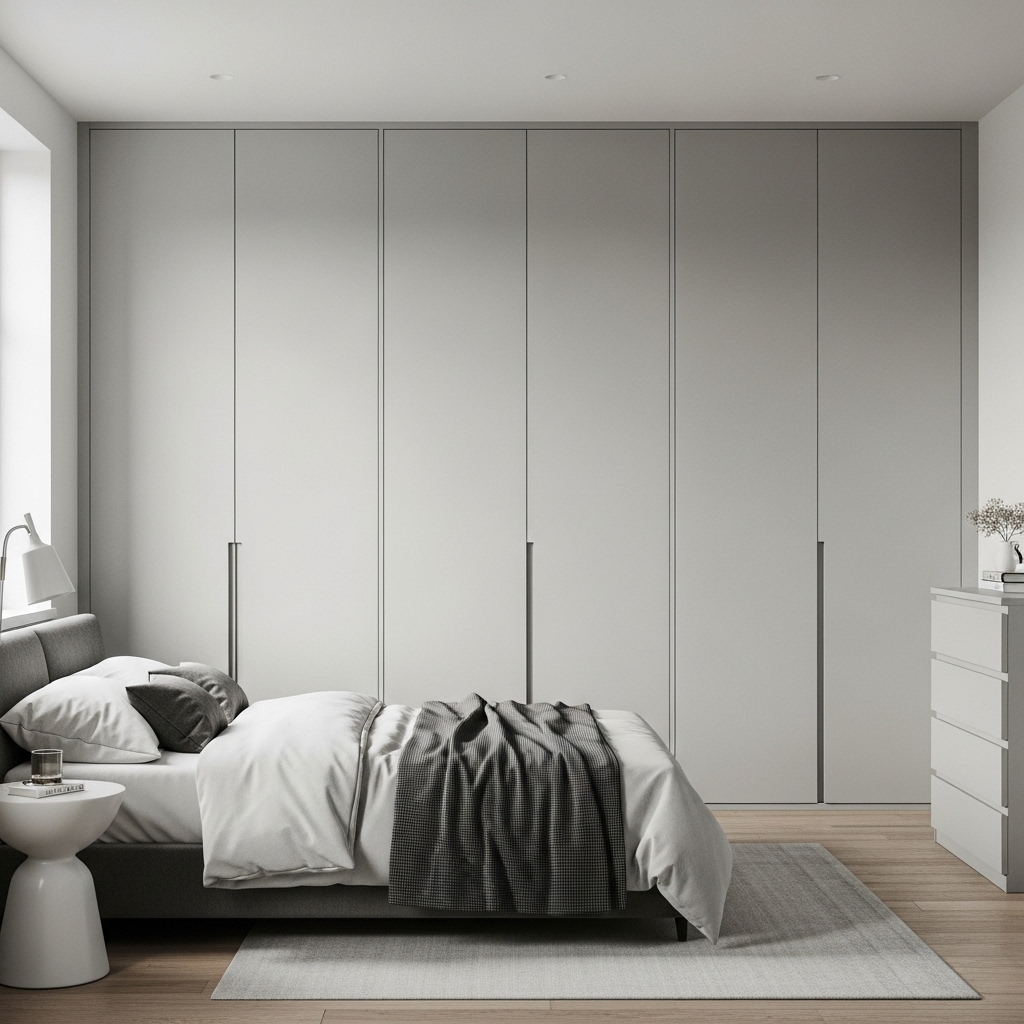
In alignment with Scandinavian practicality, eliminate clutter by dedicating one entire wall to sleek, built-in floor-to-ceiling wardrobes.
Choose flat-panel doors in a matte, off-white, or light grey finish with hidden handles to make the storage disappear into the architecture.
This moves bulky standalone dressers out of the main floor area. With storage integrated, the rest of the room can remain sparse, featuring perhaps only the bed and a small, sculptural side table, emphasizing extreme minimalism and clean lines.
8. The Rattan Focal Point
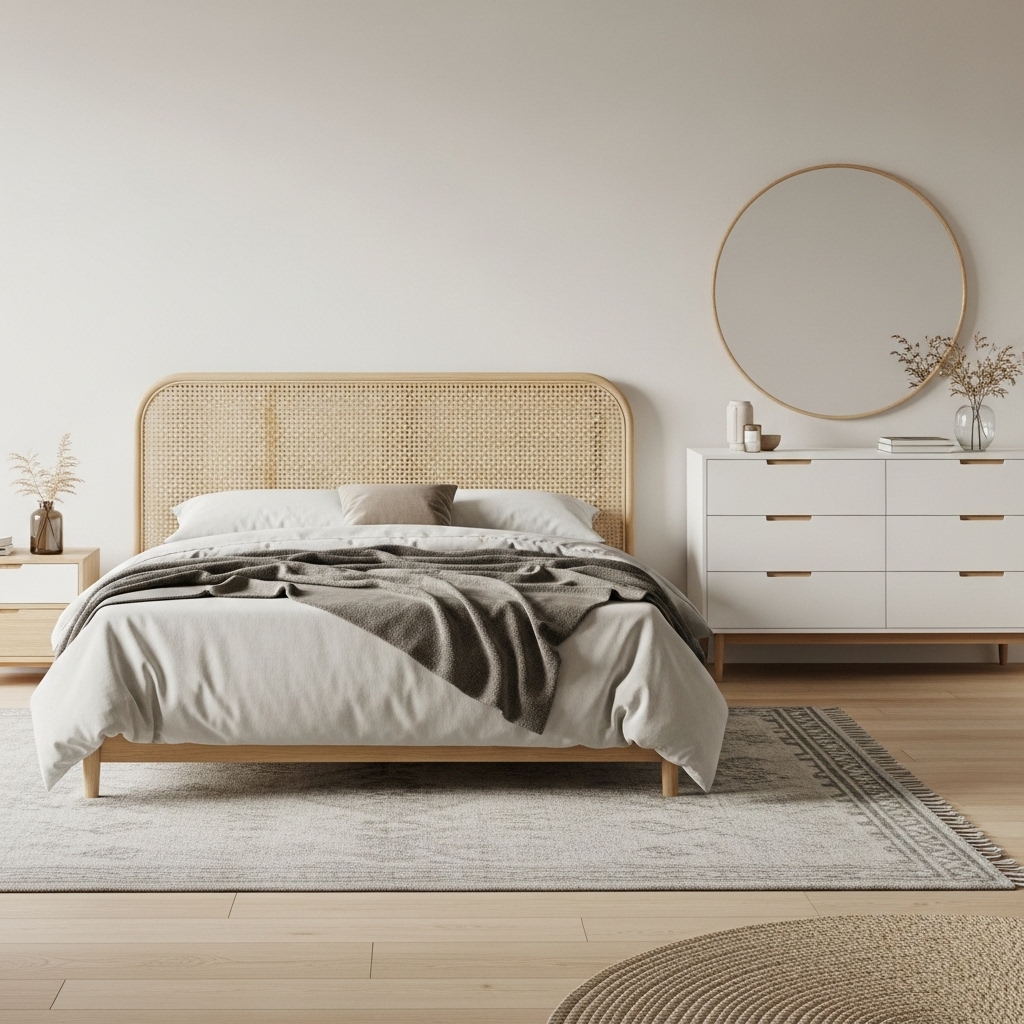
While wood is essential, introducing texture through furniture is vital for warmth. Center your layout around a bed featuring a woven rattan or cane headboard.
This organic element becomes the primary visual interest in an otherwise neutral room. Balance this texture by keeping opposing furniture, like a dresser on the facing wall, extremely smooth and minimalist think white lacquer or blonde wood.
A large, round mirror hung above the smooth dresser will reflect the rattan texture across the room, unifying the space cohesively.
9. The Curated Open Wardrobe
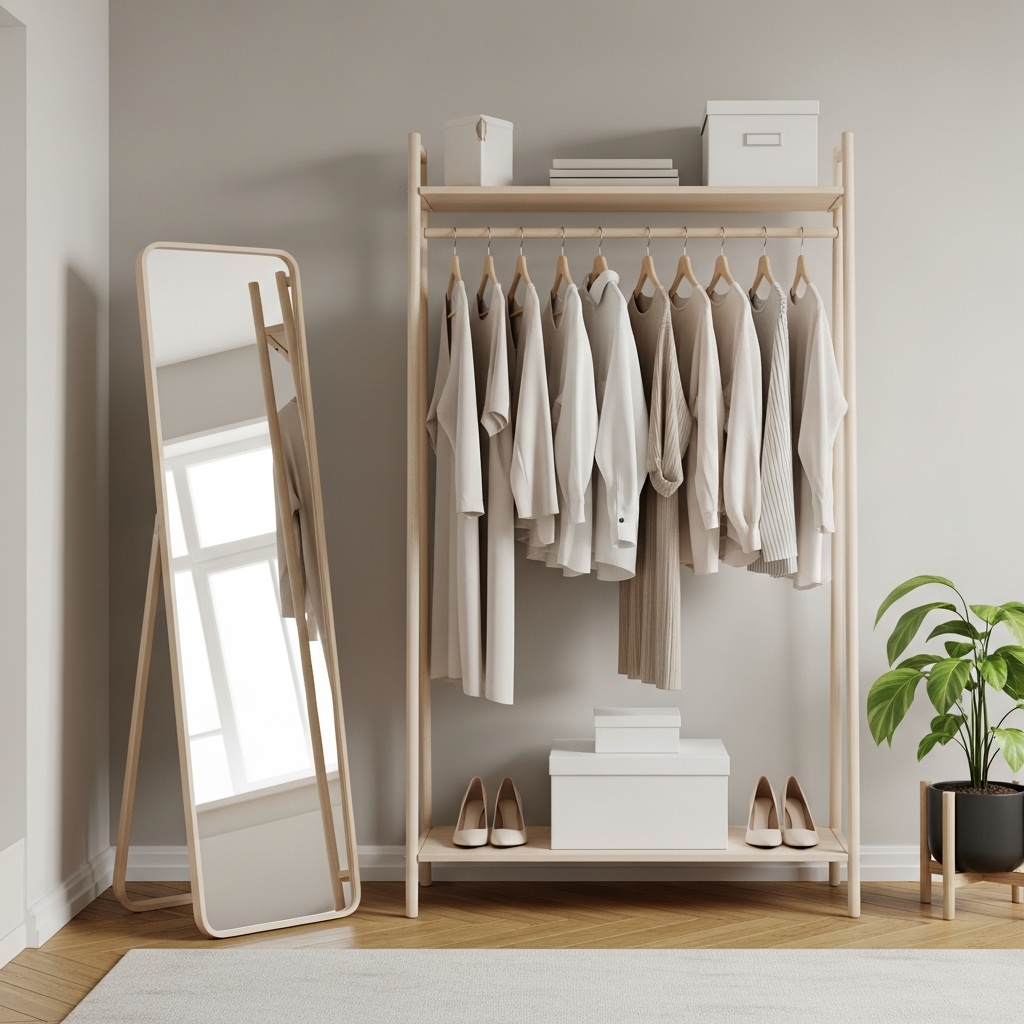
For those who own a capsule wardrobe of neutral tones, turn your clothing into part of the layout. Instead of a closed closet, use a simple, freestanding clothing rack made of light wood or matte black metal.
Display only your most aesthetically pleasing garments on uniform wooden hangers. Position a leaning floor mirror next to it to create a functional dressing area.
This layout encourages minimalism, as it forces you to keep your possessions tidy and curated, turning everyday items into decor.
10. The Cozy Scandi Reading Nook
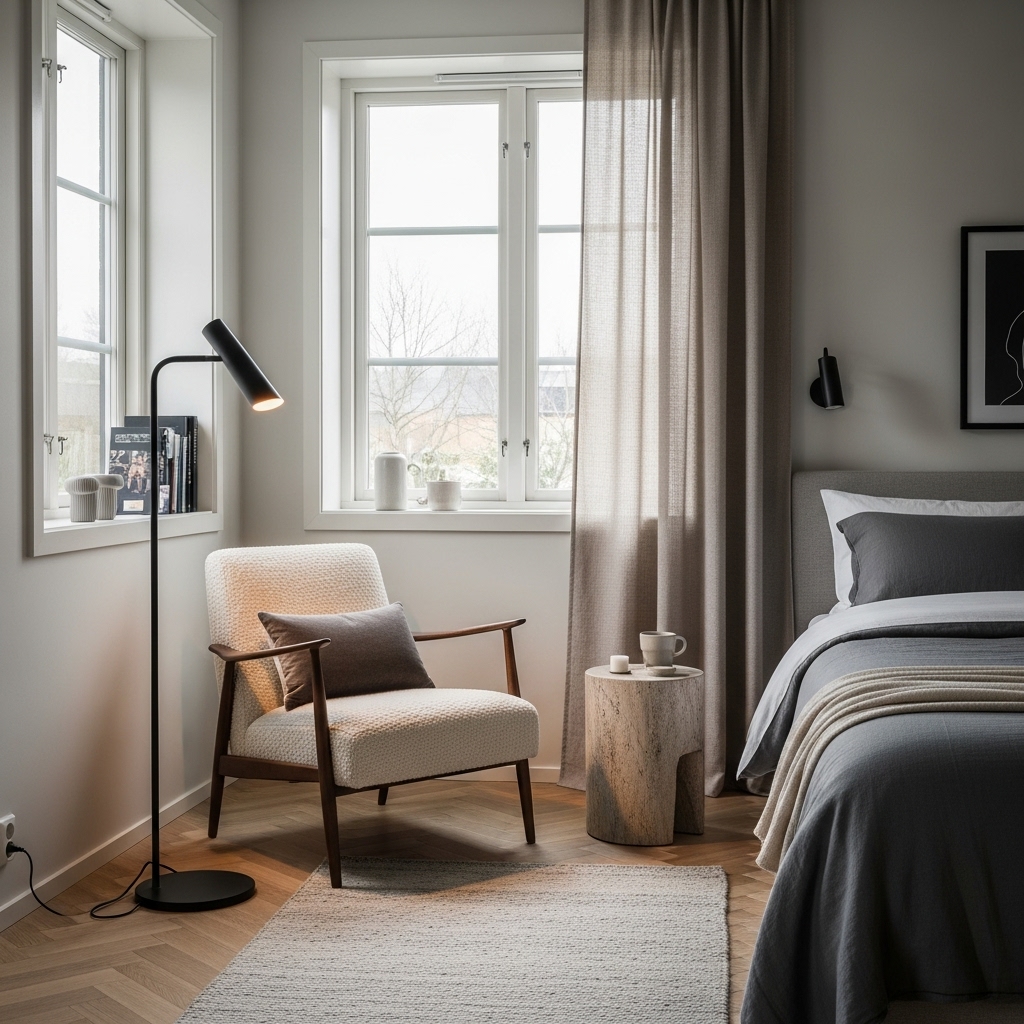
Dedicate a corner specifically to relaxation outside of sleeping. Place a comfortable, yet streamlined armchair upholstered in boucle or sheepskin near a window or in an unused corner.
Pair it with a slender, minimalist floor lamp that provides a warm, downward glow. A small, round side table made of stone or raw wood completes the vignette.
This layout adds a layer of “hygge” comfort to the room, providing a dedicated space to unwind without cluttering the main sleeping zone with excess furniture.
11. The Anchoring Circular Flow
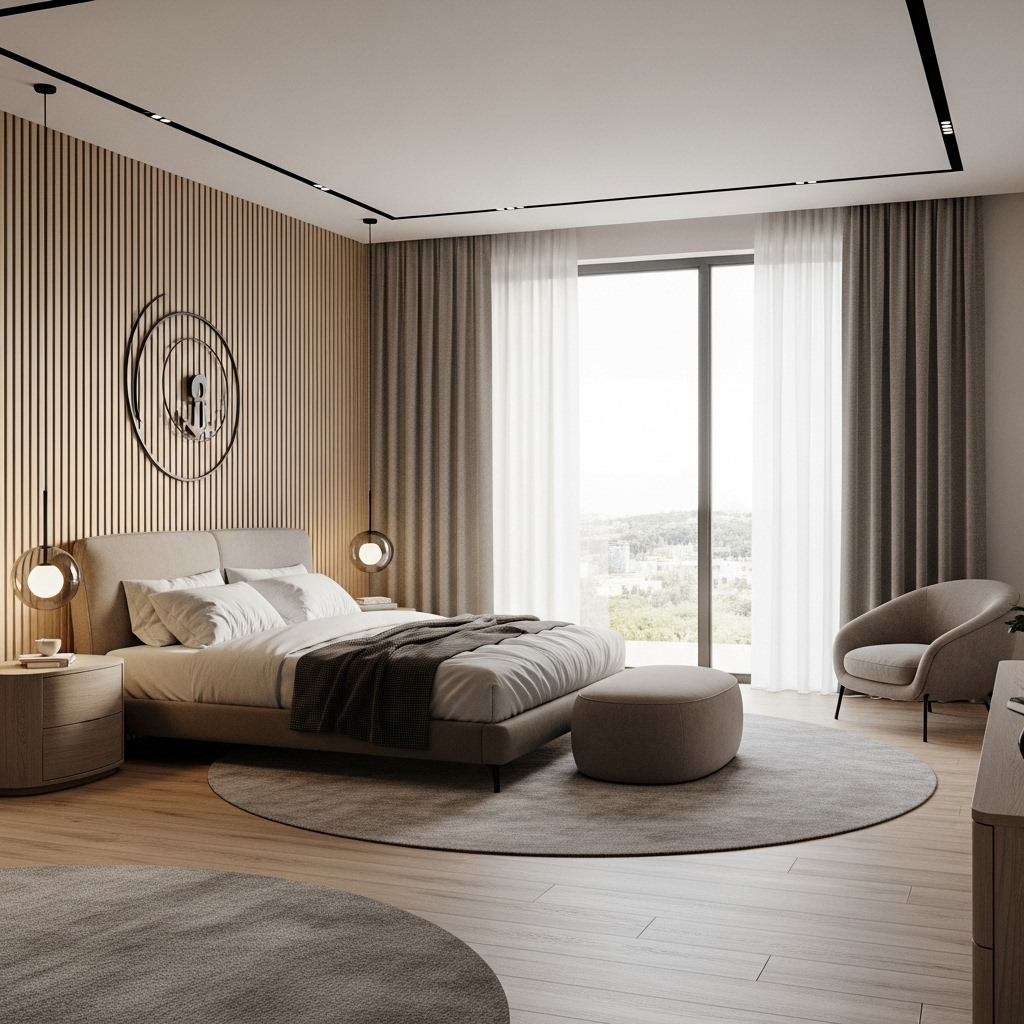
Break up the rigid straight lines often found in modern architecture by introducing circular furniture layouts. Use a large, round rug under the bed or in the center of the room to soften the space.
Complement this with round nightstands or a curved accent chair. If space allows, a round ottoman placed at the foot of the bed can act as a pivot point for traffic flow. This infusion of curves adds a gentle, organic feel that balances the sometimes stark nature of minimalism.
12. The Minimalist Bedside Symmetry
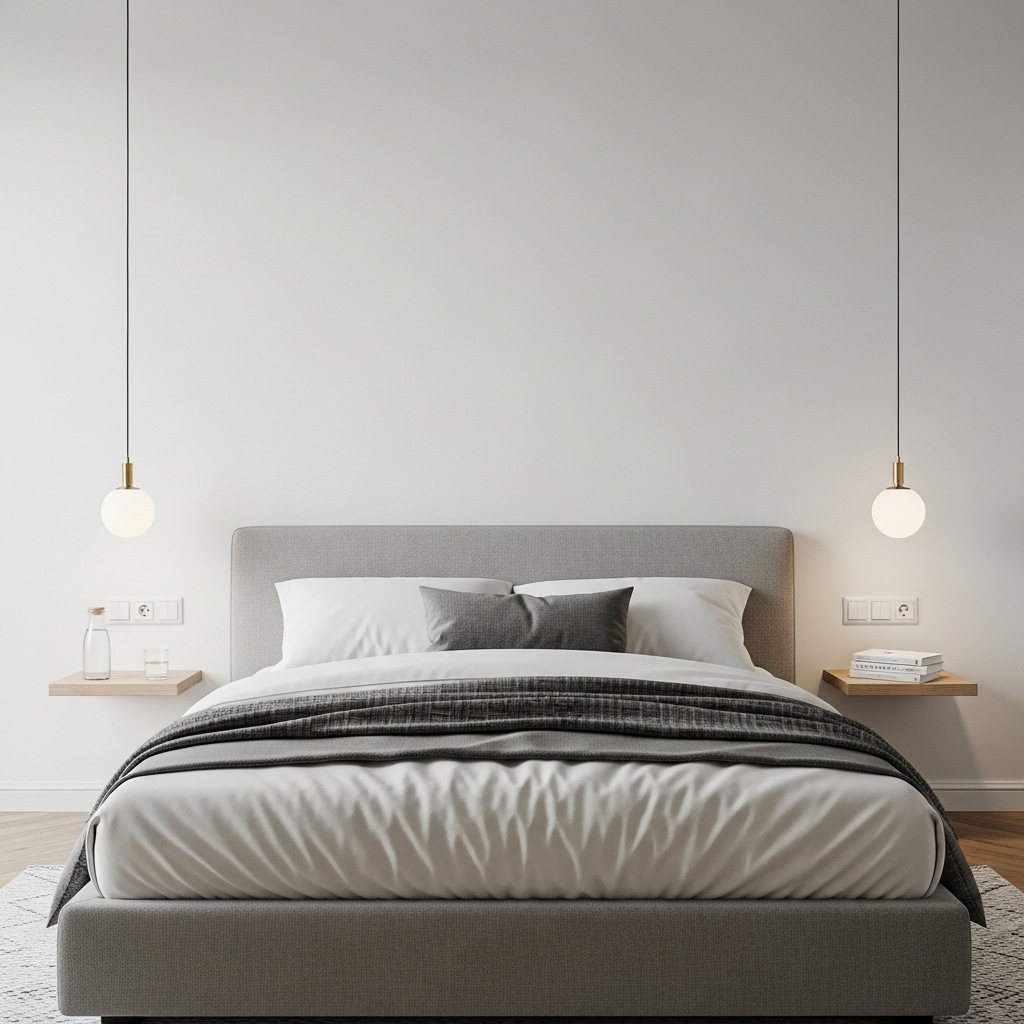
Focus intensely on the area immediately surrounding the bed for a clean, structured look. Let go of the traditional nightstand idea entirely. Instead, install small, floating shelves exactly at mattress height on either side of the bed, just large enough for a glass of water and a book.
Pair these with identical, small pendant lights hanging from the ceiling directly above each shelf. This ultra-stripped-back approach removes visual weight from the floor and creates a highly organized, symmetrical, and peaceful vignette.
Tips for Mastering the Aesthetic
- Palette Discipline: Stick strictly to a neutral color palette. Think muted greens, warm beige, soft greys, cream, and natural wood tones. Black should be used sparingly as an accent to define lines.
- Texture is Key: Because the colors are muted, rely on texture to prevent boredom. Layer linen bedding, chunky knit throws, jute rugs, and raw ceramics.
- Bring the Outside In: No Japandi room is complete without nature. Add a few sculptural branches in a vase or a potted plant with interesting foliage to purify the air and add life.
Conclusion
Creating a Japandi style bedroom isn’t just about following a trend; it’s about crafting a personal retreat that fosters well-being.
By strategically selecting and arranging furniture that balances Scandi comfort with Japanese minimalism, you can build a space that feels gentle, organized, and profoundly restful.
Remember that less is often more; prioritize quality pieces, clear pathways, and negative space to let your bedroom and yourself breathe.
Frequently Asked Questions
Q: Can I do Japandi style in a small bedroom? A: Absolutely. Japandi is perfect for small spaces because it emphasizes decluttering and using low-profile furniture, which makes rooms feel larger and airier.
Q: Is Japandi expensive to achieve? A: Not necessarily. The focus is on simplicity and quality over quantity. You can achieve the look by upcycling existing wooden furniture, decluttering what you have, and investing in a few key textural pieces like linen bedding or a jute rug.
Q: Are dark wood furniture pieces okay for Japandi? A: While light woods like oak, ash, and pine are typical of the Scandi influence, darker woods like walnut can work beautifully to add depth, leaning more into the traditional Japanese aesthetic. The key is balance and ensuring the finish is matte and natural, not glossy.