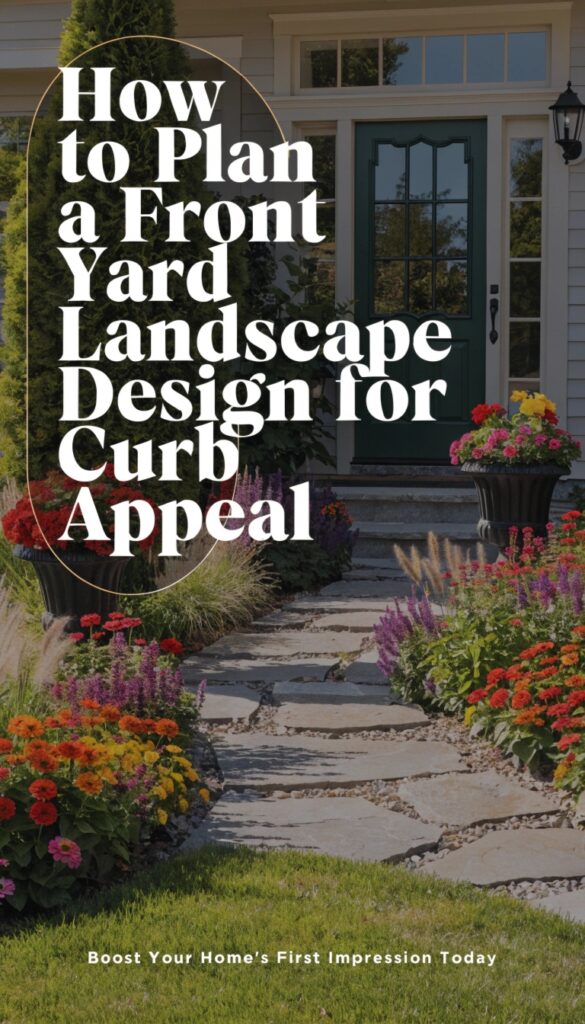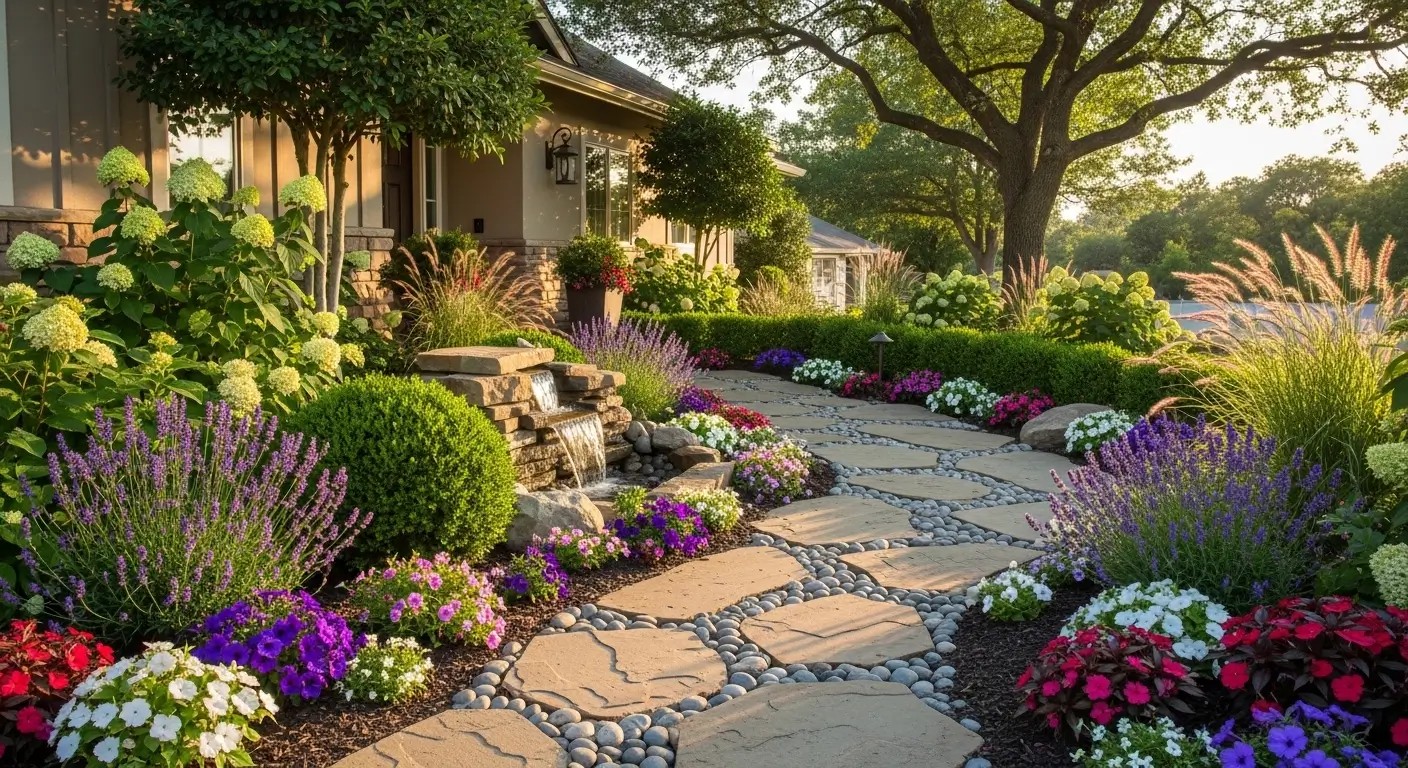
Let’s be real for a second. Your front yard is the first thing people see. It’s the “first date outfit” of your home. You wouldn’t wear sweatpants to a job interview (I hope), so why let your house wear overgrown bushes and a patchy lawn? Curb appeal matters. It boosts your home’s value, makes your neighbors jealous, and honestly, it just feels good to pull into a driveway that looks put together.
I used to look at landscaping magazines and think, “I can do that in a weekend.” Spoiler alert: I couldn’t. I bought random plants because they looked pretty at the nursery, stuck them in the ground, and watched them wither within a month. I learned the hard way that a cohesive look requires a plan, not just a credit card and enthusiasm.
If you want to know how to plan a front yard landscape design for curb appeal without losing your mind (or your savings), you need a strategy. Let’s break this down into manageable steps.
1. Analyze Your Site Before You Buy a Single Plant
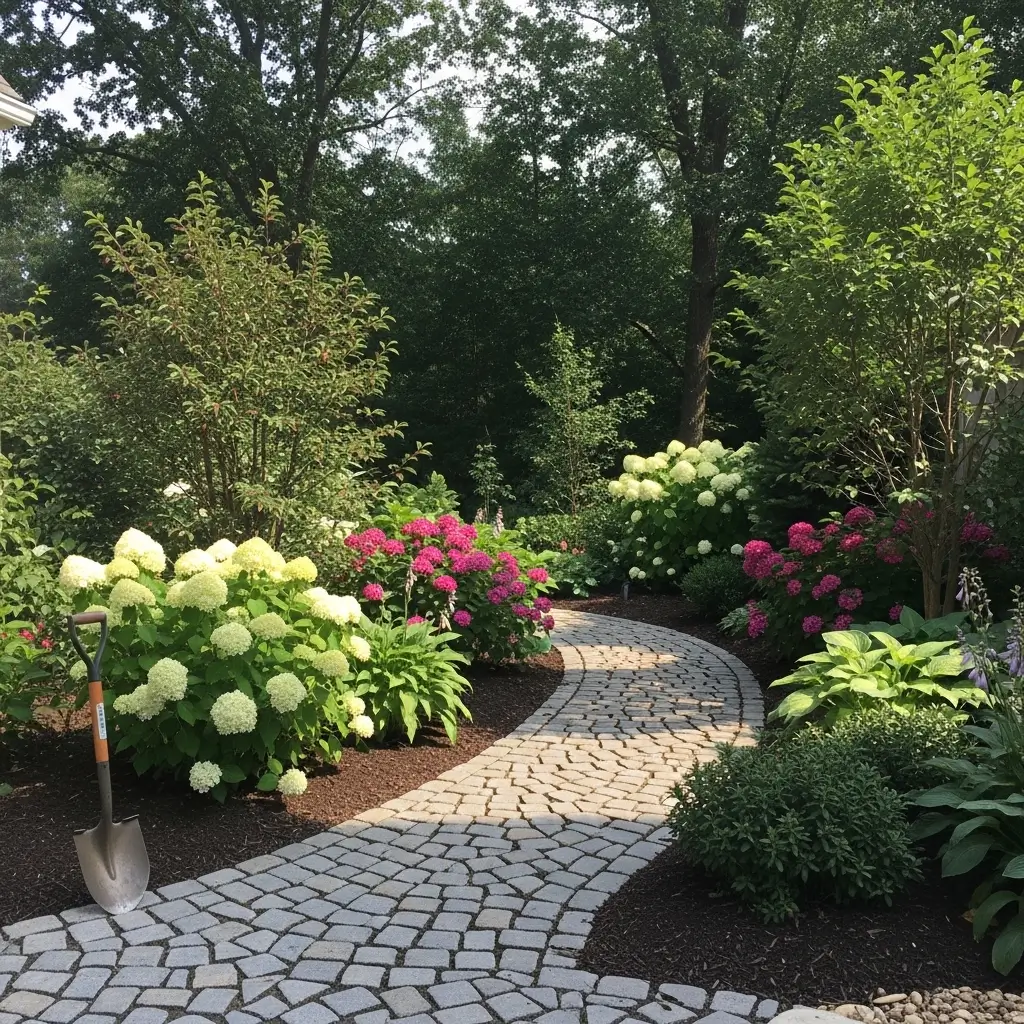
Put the shovel down. Seriously, stop digging. Before you dream of hydrangeas and cobblestone paths, you must understand what you are working with.
Map the Sun and Shade: Stand outside at different times of the day. Which areas bake in the afternoon sun? Which spots stay in deep shadow? I once planted a delicate Hosta in full afternoon sun because I thought it looked nice there. I swear I heard it scream before it turned into a crispy chip.
- Full Sun: 6+ hours of direct light.
- Part Shade: 3–6 hours of sun.
- Full Shade: Less than 3 hours of direct sun.
Check Your Soil: Dirt isn’t just dirt. You either have clay (sticky, holds water), sand (drains too fast), or loam (the holy grail). Grab a handful of moist soil and squeeze it. If it forms a tight ball, you likely have clay. If it crumbles instantly, it’s sandy. Knowing your soil type dictates what plants will actually survive.
Identify the Hardiness Zone: Google your USDA Hardiness Zone immediately. This number tells you which plants survive your winter. If you buy a Zone 9 palm tree and live in Zone 5, you just bought expensive compost. FYI, big box stores often sell plants that aren’t actually hardy for the local region. Don’t fall for it.
2. Define Your Budget (and Be Realistic)
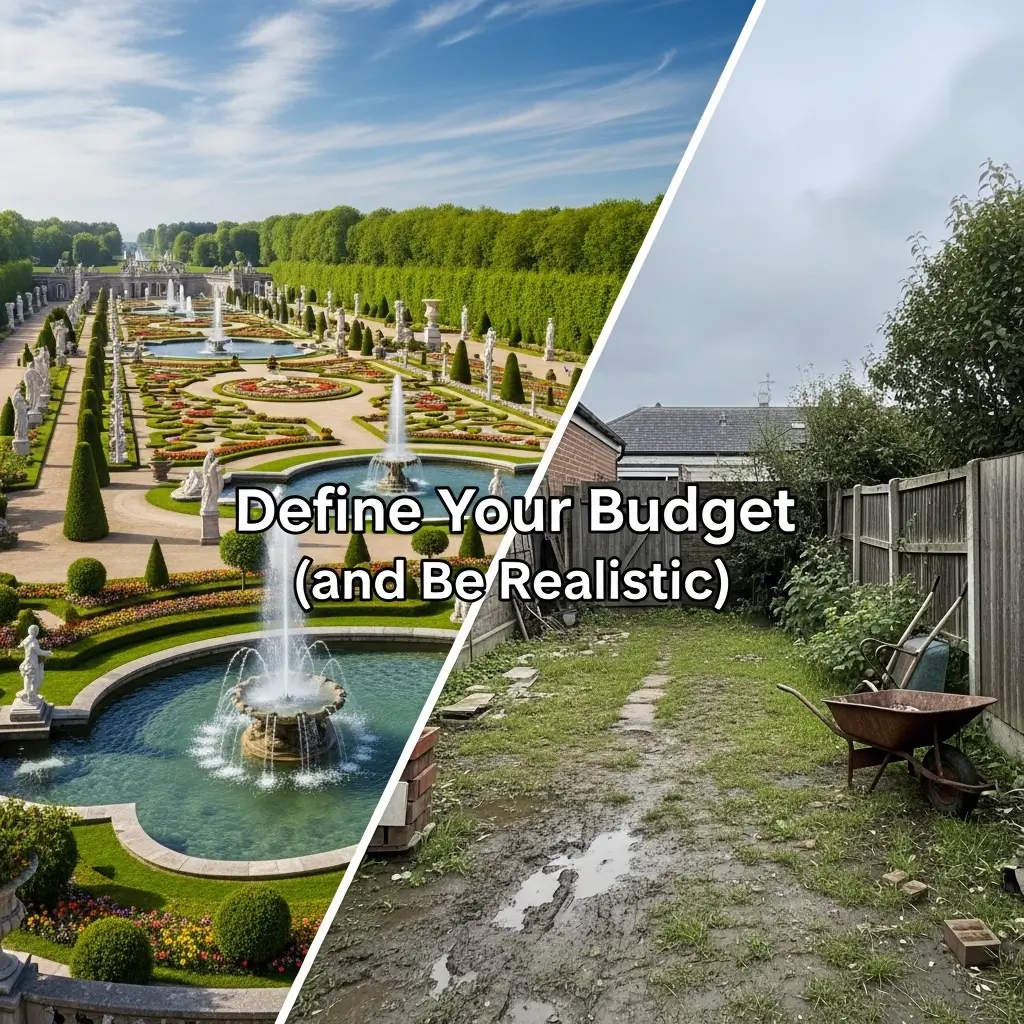
We all want a Versailles garden on a “muddy backyard” budget. Landscaping gets expensive fast, especially if you ignore the math. You need to decide right now how much you want to spend and how much sweat equity you plan to invest.
Hardscaping Costs More: Patios, walkways, and retaining walls eat up the budget quickly. Materials like flagstone or brick cost significantly more than concrete or gravel.
Plant Sizes Matter:
- 5-Gallon Pots: Give you instant impact but cost way more.
- 1-Gallon Pots: Look tiny now but grow fast and save you cash.
I always recommend spending money on the “bones” first—trees and hardscaping. You can always add smaller perennials later. IMO, it’s better to do one section perfectly than the whole yard poorly.
3. Determine Your Design Style
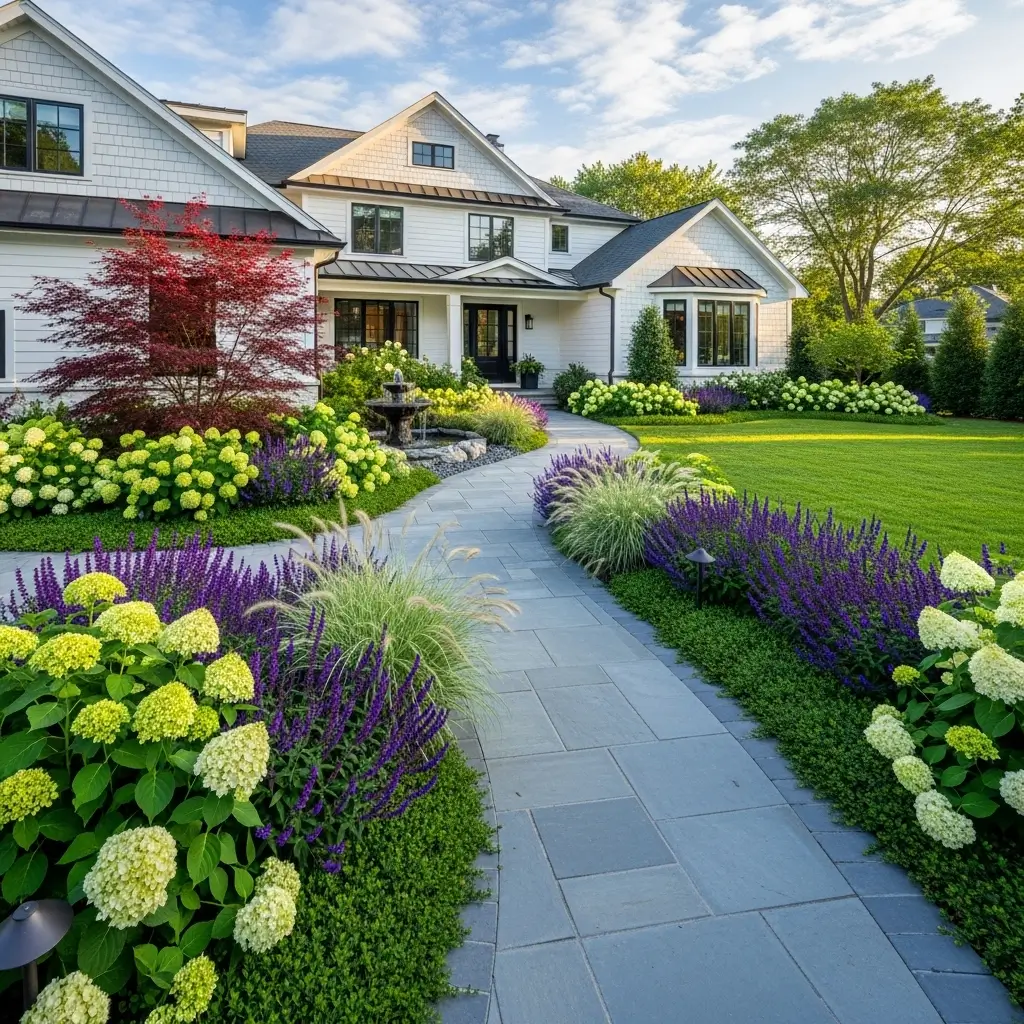
Does your yard match your house? It should. A super-modern, minimalist garden looks bizarre in front of a rustic Victorian cottage. You want the landscape to frame the house, not fight it.
Formal vs. Informal:
- Formal: Think symmetry, straight lines, and clipped hedges. It looks clean but requires frequent trimming.
- Informal: Uses curves, natural plant shapes, and asymmetrical balance. It feels more relaxed and often tolerates a bit of neglect better.
The “Style Consistency” Rule: Look at the architectural lines of your home. If your house has strong vertical lines, tall columnar trees complement it well. If you have a low ranch style, spreading shrubs and lower beds ground the house beautifully.
Ever wondered why some yards just feel “right”? It’s usually because the design style echoes the architecture.
4. Plan the Hardscape: The Skeleton of the Yard
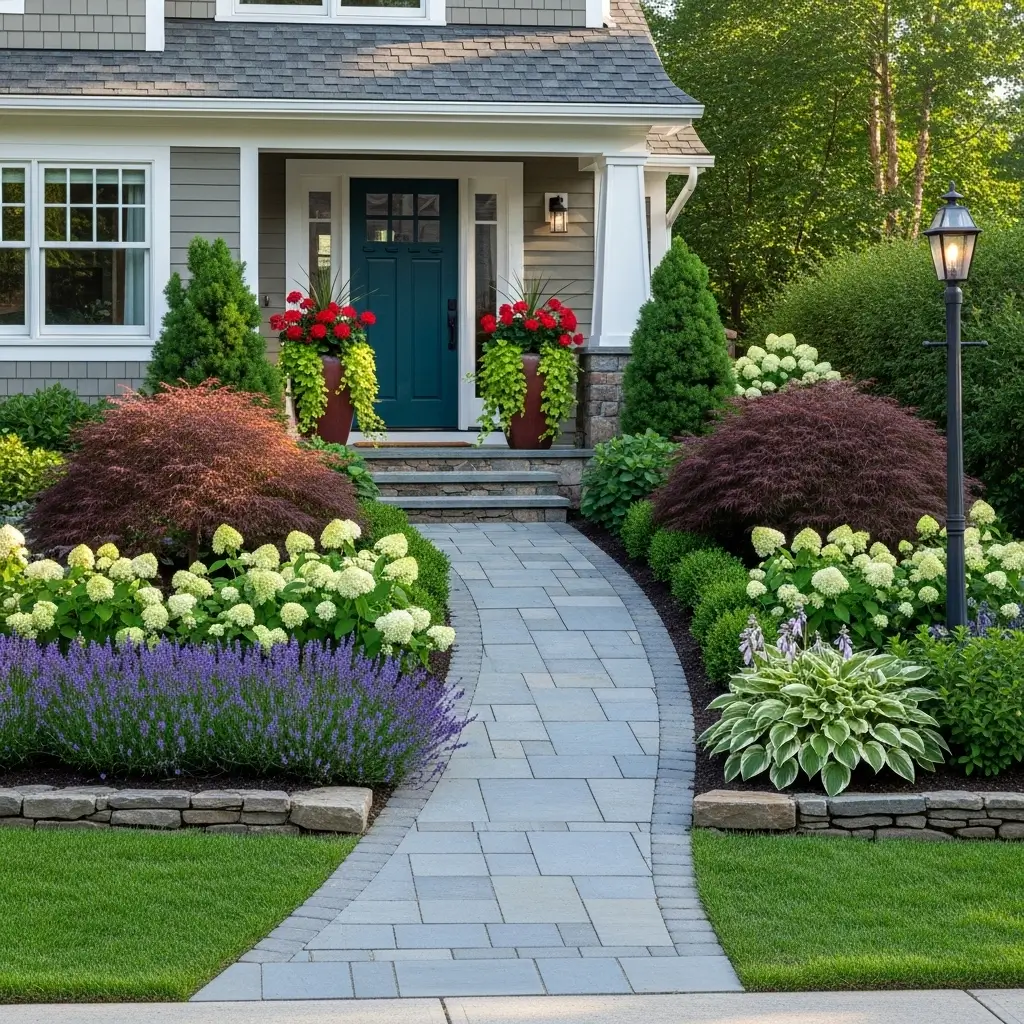
The plants might die (hopefully not), but the hardscape stays forever. This includes your driveway, walkways, porch, and any retaining walls. These elements direct the flow of traffic and define the planting areas.
The Entryway Experience: Your front walk serves as the red carpet to your front door. Make it wide. A standard 3-foot builder’s walk feels cramped. Widen it to at least 4 or 5 feet. Two people should be able to walk side-by-side comfortably.
Material Selection:
- Concrete: Cheap and durable, but can look generic.
- Pavers: Versatile and come in many styles.
- Natural Stone: Expensive but offers unbeatable character.
- Gravel/Crushed Stone: budget-friendly and gives a nice crunch underfoot, but keep it contained with edging.
I suggest using curves for your walkway if you want a softer, more inviting feel. Straight lines feel rigid and rush people to the door. A slight curve forces the visitor to slow down and notice the garden.
5. Creating a Focal Point
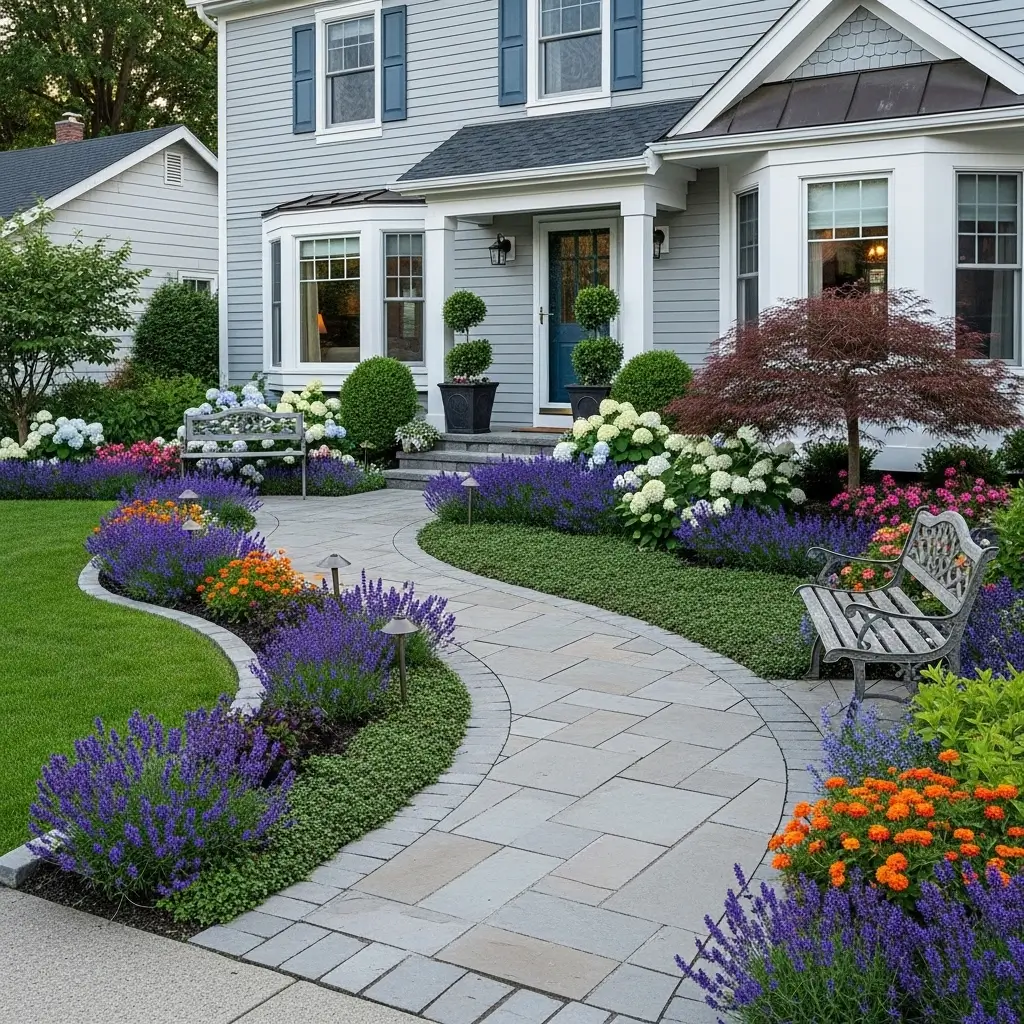
Your design needs a star of the show. Without a focal point, the eye wanders aimlessly, and the yard looks cluttered. The primary focal point should usually be the front door. You want to guide guests straight to the entrance.
Secondary Focal Points: You can add other interest points, but don’t overdo it. One too many garden gnomes and you cross the line from “charming” to “yard sale.”
- A stunning ornamental tree (like a Japanese Maple).
- A water feature.
- A large boulder.
- A colorful container garden.
Use lines of plants or the curve of a walkway to point toward these features.
6. Selecting Plants: The Softscape Strategy
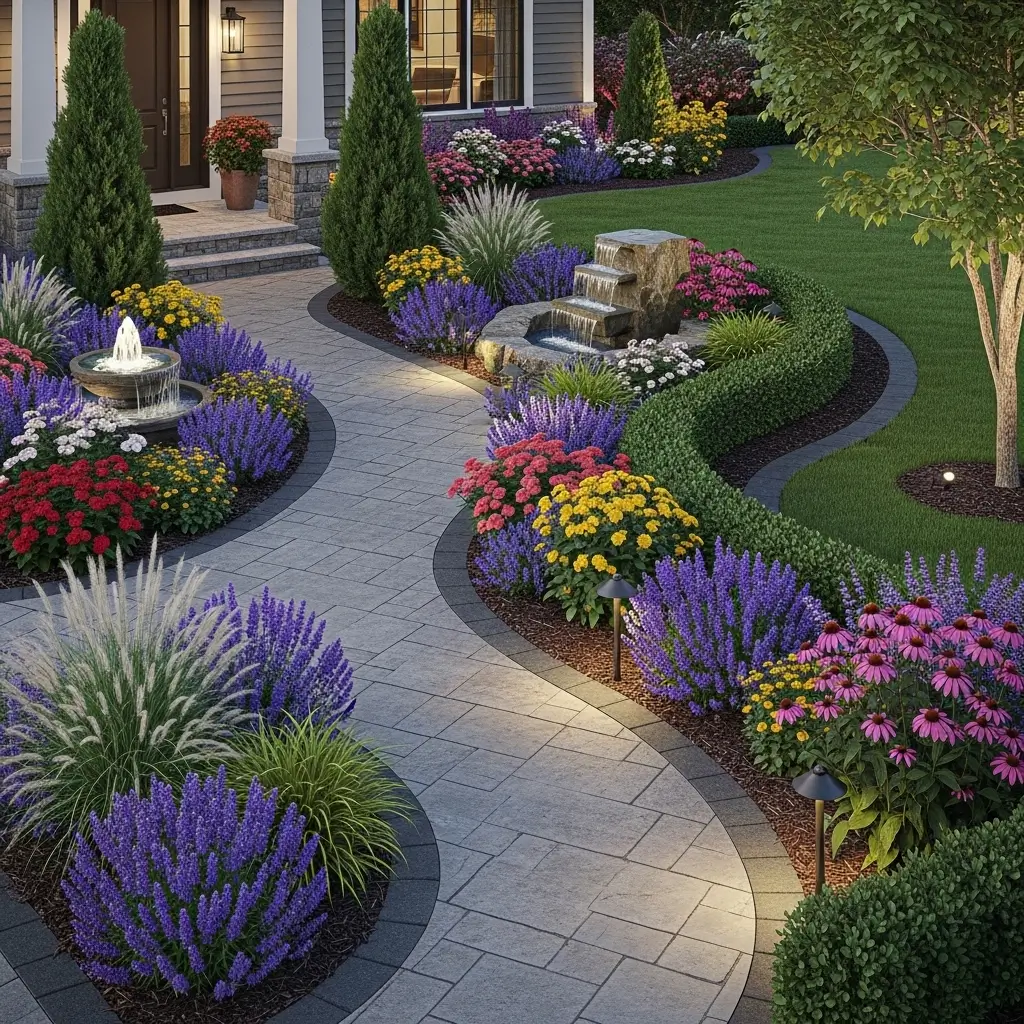
Now for the fun part. Choosing plants is like picking toppings at a frozen yogurt shop it’s easy to go overboard. To keep your curb appeal high and maintenance low, follow a few golden rules.
The Rule of Three (or Odd Numbers): Always plant in odd numbers (3, 5, 7). Our brains find odd numbers more natural and pleasing than even pairs. A row of four bushes looks like soldiers; a cluster of five looks like a landscape.
Layer Your Beds: Think of your garden bed like a choir photo.
- Back Row: Tall shrubs or grasses (provides the backdrop).
- Middle Row: Medium-sized perennials or flowering shrubs (provides the color).
- Front Row: Low groundcovers or annuals (hides the bare stems of the back plants).
Focus on Foliage, Not Just Flowers: Flowers fade. Leaves stick around for months. Choose plants with interesting leaf textures and colors. A mix of silver, burgundy, and chartreuse foliage looks good even when nothing is in bloom.
Don’t Forget Winter Interest: In January, does your yard look like a barren wasteland? Include evergreens. They provide structure when the rest of the garden goes dormant. I made the mistake of planting only perennials once. My yard looked amazing in July and invisible in December. :/
7. Lighting: Don’t Disappear at Night
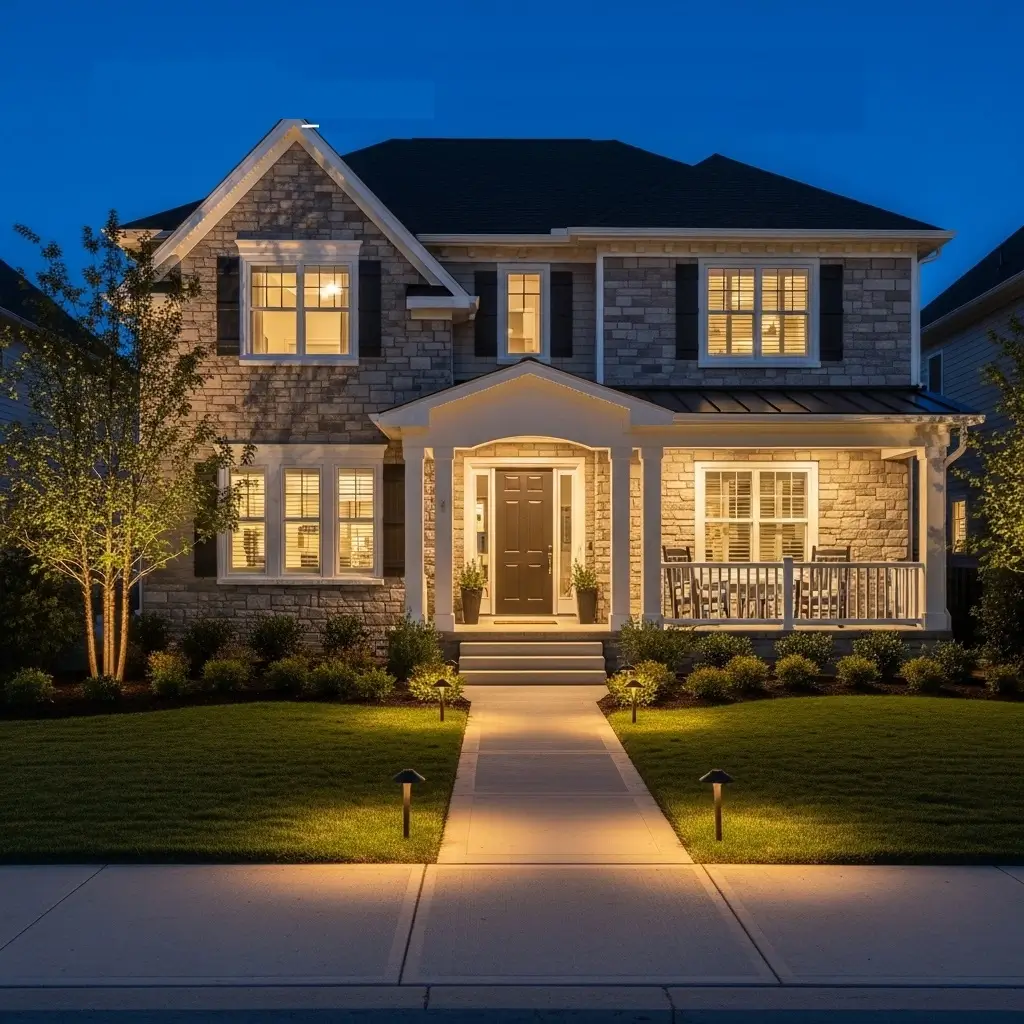
Curb appeal doesn’t stop when the sun goes down. In fact, night lighting often makes a house look better than it does during the day by hiding the flaws and highlighting the features.
Essential Lighting Areas:
- Path Lights: Safety first. illuminate the walkway.
- Up-lighting: Shine lights up into the canopy of trees or against the texture of the house facade.
- Porch Lighting: Ensure the entry is warm and welcoming.
Avoid the “airport runway” look where you place solar lights in two perfect straight lines along the driveway. It looks cheap. Instead, stagger the lights or hide them in garden beds so you see the light, not the fixture.
8. The Reality of Maintenance
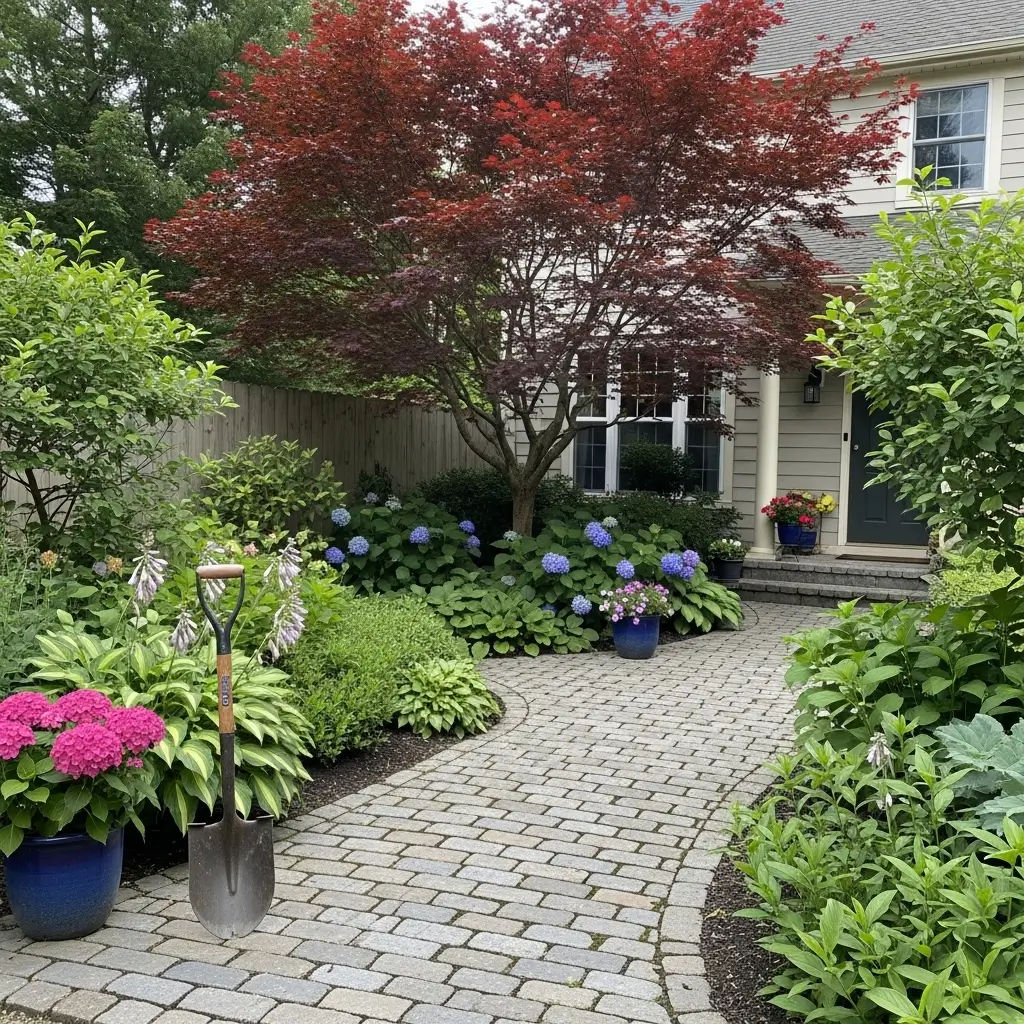
Be honest with yourself: Do you actually enjoy yard work?
If you hate mowing, minimize the lawn size. Use more groundcover or mulch beds. If you hate pruning, don’t plant hedges that need a haircut every two weeks. Low maintenance doesn’t mean no maintenance, but smart choices save you hours of weekend work.
Native Plants are Your Friends: Native plants adapt to your local climate and pests. They need less water and less fertilizer. They basically take care of themselves once established. I fought with exotic roses for years before switching to native coneflowers. The roses died; the coneflowers are practically taking over.
9. Sketching It Out
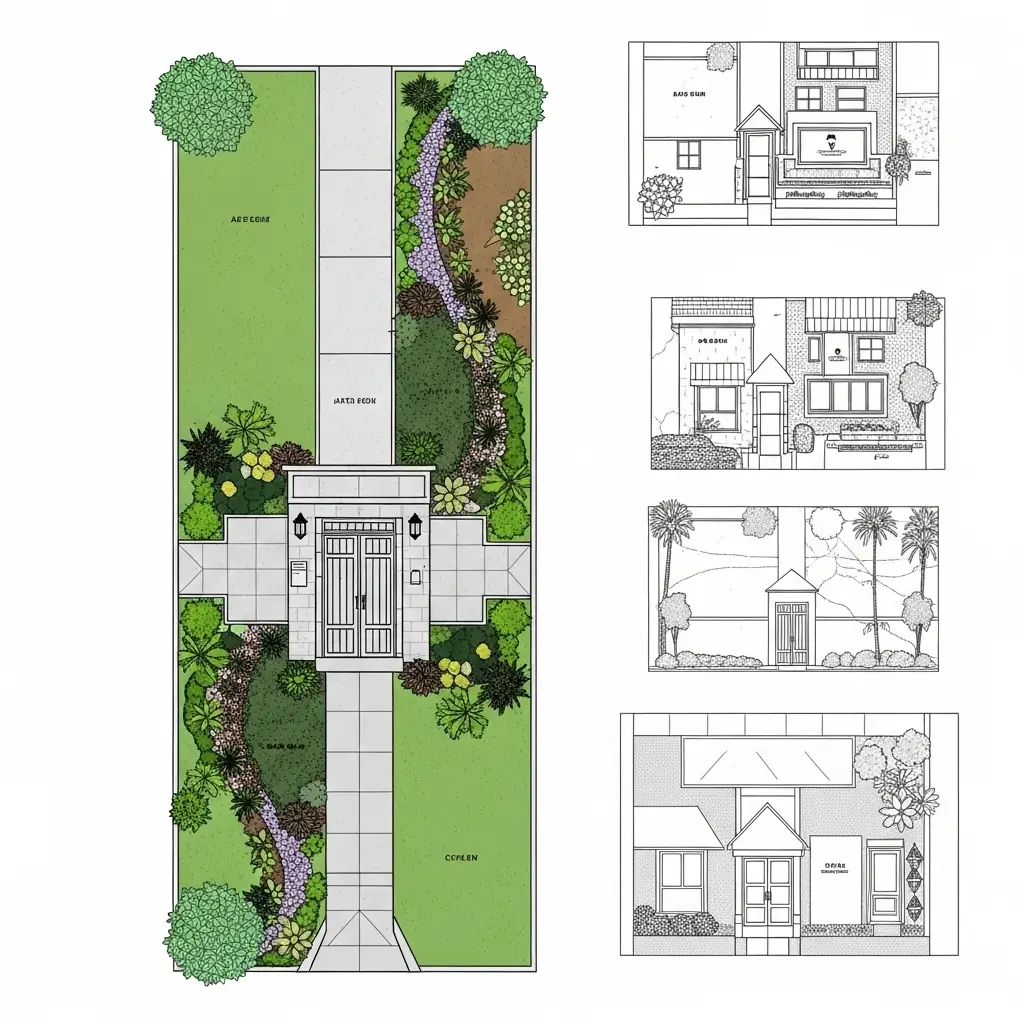
You don’t need a degree in landscape architecture to draw a plan. Grab a piece of graph paper.
- Measure your yard (pace it out if you lack a tape measure).
- Draw the house footprint and existing trees.
- Sketch bubbles where you want plant beds.
- Mark the hardscape areas.
Visualizing this on paper prevents you from buying a tree that grows 40 feet wide for a spot that is only 10 feet wide. It saves you from the “plant shuffle” later.
Conclusion: Just Start Somewhere
Planning a front yard landscape design for curb appeal feels overwhelming, but it’s really just a puzzle. You fit the pieces together budget, site conditions, and style until you see the picture.
Don’t feel pressured to do it all at once. Start with the cleanup. Then fix the hardscape. Then add the trees. Gardens evolve. My front yard took three years to look decent, and I still tweak it every spring.
So, go stand in your driveway. Look at your house with fresh eyes. What does it need? A splash of color? A wider path? Or maybe just fewer weeds?
Whatever you do, make it yours. Your neighbors might admire the view, but you are the one who has to come home to it every day. Make that arrival count.