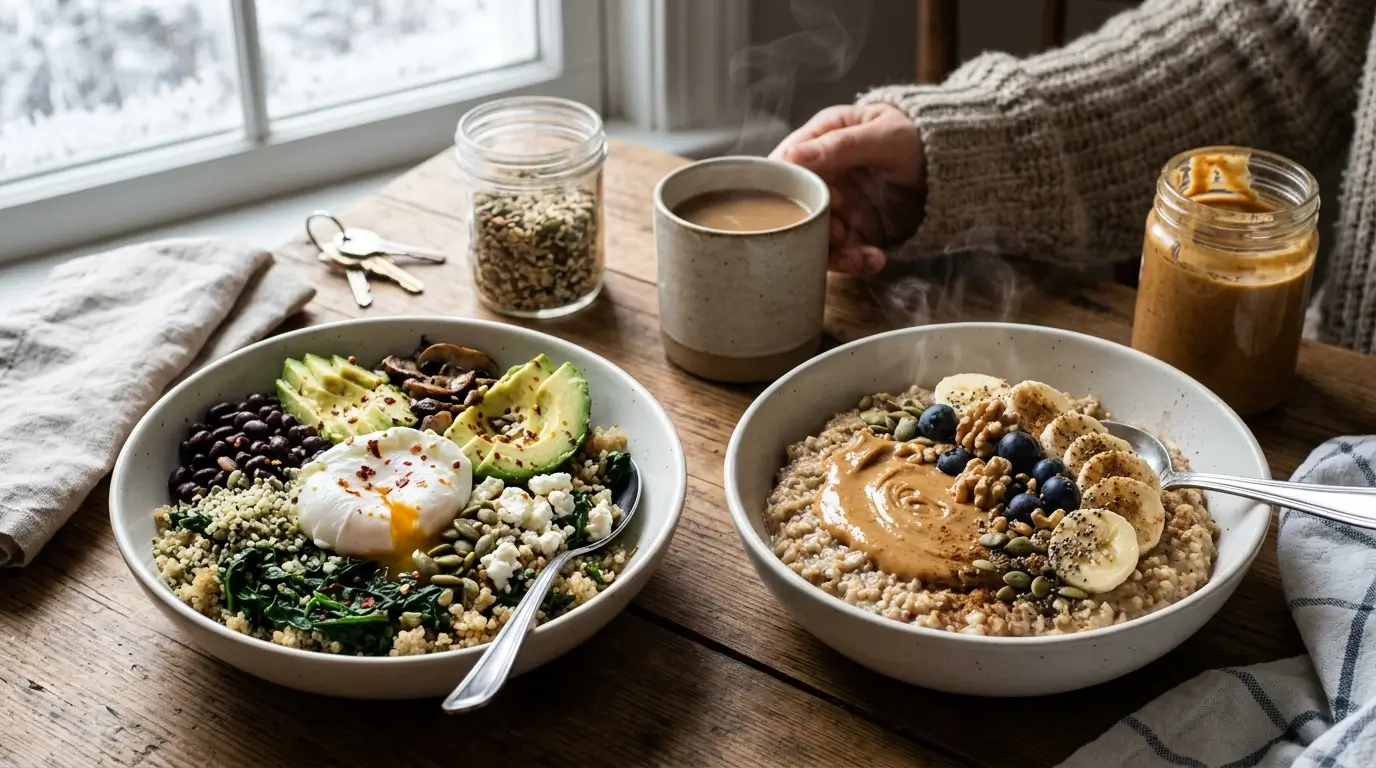
Cold winter mornings can make even the simplest tasks feel like hard work. When it’s time to get ready for the day, spending half an hour preparing breakfast is probably the last thing you want to do. At the same time, skipping breakfast or relying on a sugary snack may leave you looking for something more satisfying before lunchtime.
That’s where high-protein warm winter breakfast bowls come in. They combine comforting ingredients, plenty of flavor, and protein-rich foods in meals that are easy to prepare ahead or assemble on busy mornings.
The best part is that you don’t need expensive ingredients or complicated cooking techniques. Eggs, oats, Greek yogurt, cottage cheese, quinoa, beans, and tofu can all become the foundation of a filling breakfast.
Whether you prefer something sweet with cinnamon and warm fruit or a savory bowl with eggs, vegetables, and roasted sweet potatoes, there is an option here worth adding to your morning routine.
Below are eight high-protein breakfast bowl ideas, including ingredient measurements, preparation instructions, approximate protein amounts, storage recommendations, and simple ways to make each recipe your own.
Table of Contents
- Why Choose High-Protein Warm Winter Breakfast Bowls?
- 8 High-Protein Warm Winter Breakfast Bowls
- Budget-Friendly Ingredients and Optional Upgrades
- How to Prepare Breakfast Bowls Ahead of Time
- Practical Tips for Better Results
- Common Breakfast Bowl Mistakes to Avoid
- Pros and Cons of Make-Ahead Breakfast Bowls
- Frequently Asked Questions
- Key Takeaways
- Final Thoughts
Why Choose High-Protein Warm Winter Breakfast Bowls?
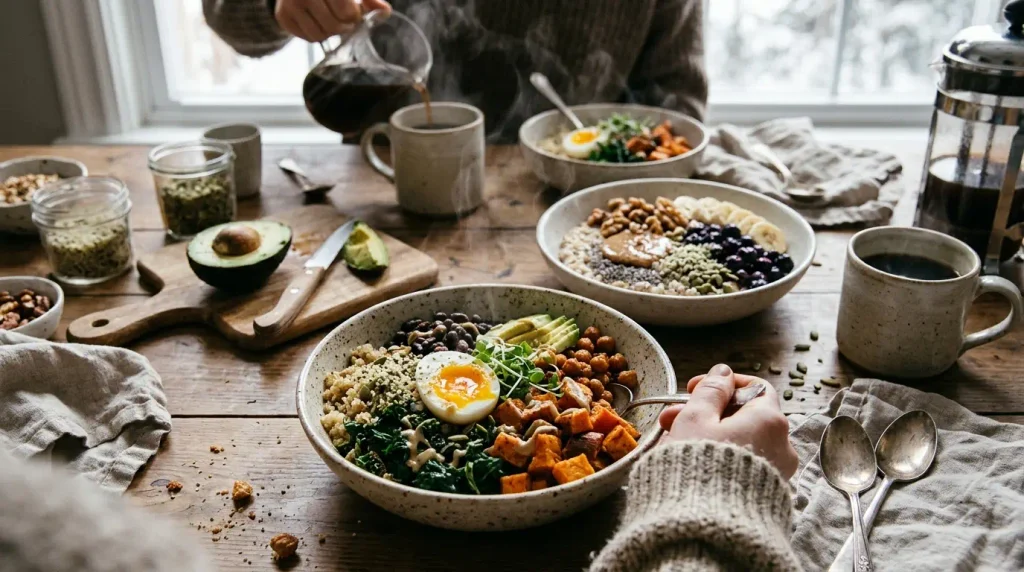
When the weather gets colder, a warm breakfast can be especially appealing. Instead of reaching for cold cereal or a smoothie, you can start the day with a bowl of creamy porridge, savory eggs, roasted vegetables, or warm fruit.
Adding protein makes these meals more satisfying. Protein contributes to muscle maintenance and repair, while foods containing fiber can support digestion and help you feel comfortably full.
A useful starting point is to aim for approximately 25–30 grams of protein in a breakfast, although individual needs vary depending on activity level, age, body size, and overall diet.
Another advantage is flexibility. You don’t have to prepare every ingredient from scratch each morning. Cooking grains, roasting vegetables, preparing sausage, and portioning toppings ahead of time can reduce the amount of work required during the week.
These breakfast bowls also offer variety. You can enjoy a naturally sweet breakfast on one morning and switch to a savory, vegetable-packed option the next.
8 High-Protein Warm Winter Breakfast Bowls
1. Spiced Carrot Cake Baked Protein Oats
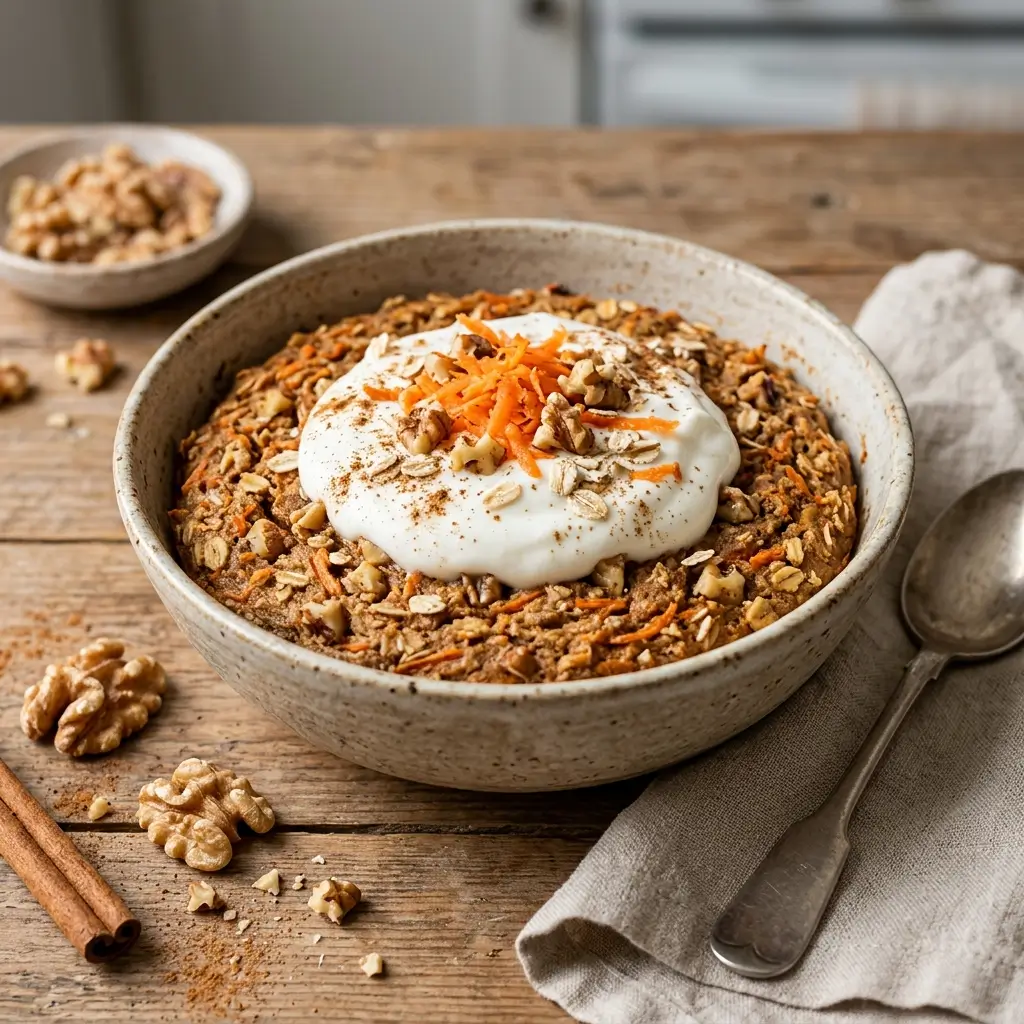
If you enjoy carrot cake, this breakfast bowl brings some of its familiar flavors to your morning routine. Rolled oats, freshly grated carrots, cinnamon, nutmeg, and vanilla create a soft, lightly sweet baked breakfast that feels more like a treat than ordinary porridge.
Protein powder and Greek yogurt make the bowl more filling, while chopped walnuts provide a little crunch.
It’s particularly useful for busy mornings because you can bake several portions at once and refrigerate them for later in the week.
Preparation details
- Preparation time: 5 minutes
- Baking time: 20–25 minutes
- Servings: 1
- Approximate protein: 25–28 grams
Ingredients
- ½ cup rolled oats
- ¼ cup finely grated carrot
- ½ scoop vanilla whey or plant-based protein powder
- 1 egg white
- ¼ cup milk of your choice
- ¼ teaspoon ground cinnamon
- A pinch of nutmeg
- ½ teaspoon baking powder
- 2 tablespoons plain Greek yogurt
- 1 tablespoon chopped walnuts
- 1 teaspoon maple syrup, optional
How to prepare it
- Preheat your oven to 180°C (350°F).
- Combine the rolled oats, grated carrot, cinnamon, nutmeg, and baking powder in a small bowl.
- Add the egg white, milk, and protein powder. Stir until the mixture is evenly combined.
- Transfer everything into a lightly greased oven-safe ramekin.
- Bake for approximately 20–25 minutes, or until the center is set.
- Allow it to cool slightly before adding Greek yogurt and chopped walnuts.
Helpful tip: If the mixture looks too thick before baking, add another tablespoon of milk. Protein powders absorb liquid differently, so adjusting the consistency can help prevent dry baked oats.
Easy variations: Replace the carrot with grated apple, use pecans instead of walnuts, or add raisins for extra sweetness.
Meal-prep advice: Bake individual portions, allow them to cool, and refrigerate in airtight containers. Add the yogurt and nuts after reheating. Use refrigerated portions within 3–4 days.
Useful kitchen addition: Oven-safe ceramic ramekins make portioning and baking individual breakfast servings much easier.
2. Turkey Sausage and Sweet Potato Hash Bowl
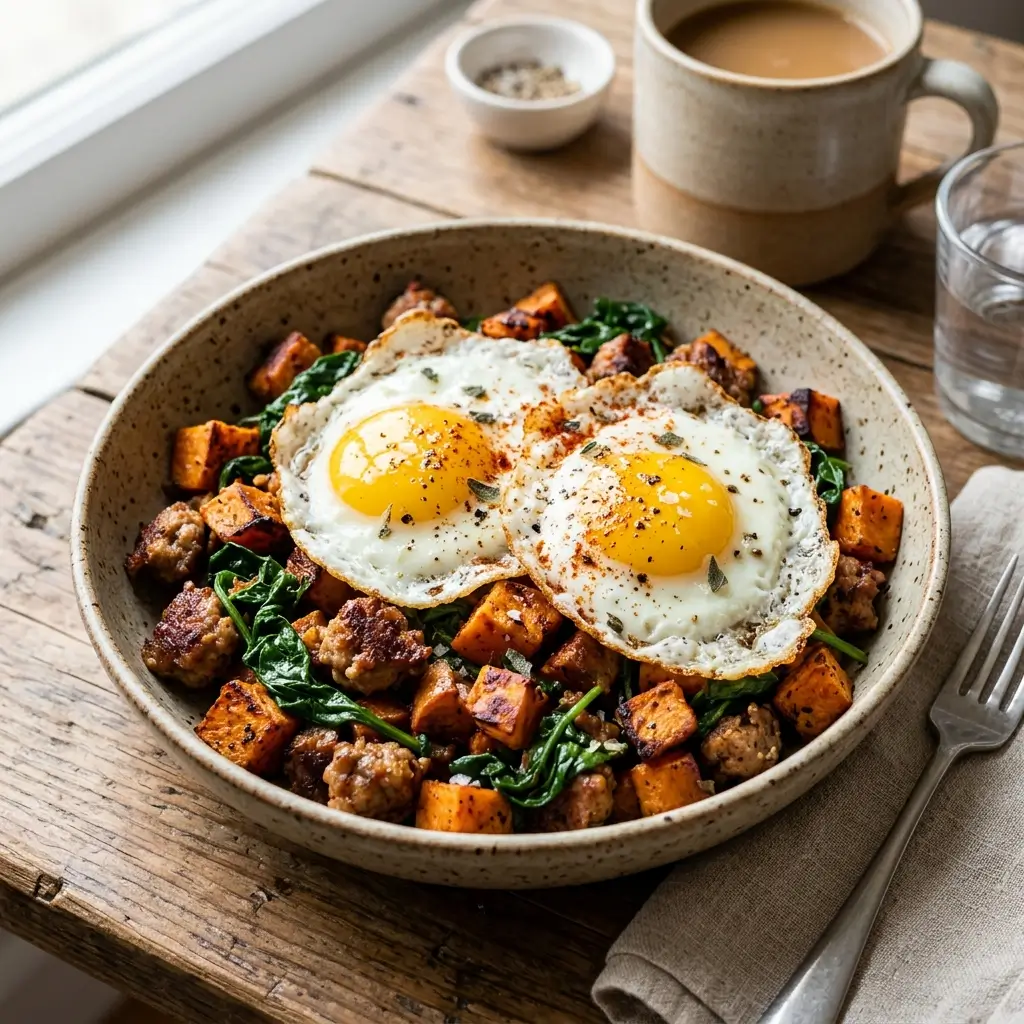
For anyone who prefers a savory breakfast, this turkey sausage and sweet potato bowl is a satisfying alternative to traditional oatmeal.
The combination of browned turkey sausage, tender sweet potatoes, spinach, and eggs provides a mixture of protein, carbohydrates, and vegetables. A little smoked paprika and dried sage bring everything together without requiring complicated seasoning.
It’s also a good choice for people who like preparing breakfast ingredients in advance.
Preparation details
- Preparation time: 10 minutes
- Cooking time: 20–25 minutes
- Servings: 1
- Approximate protein: 27–30 grams
Ingredients
- 100 grams lean turkey breakfast sausage
- 150 grams sweet potato, peeled and diced
- 1 large egg
- 1 cup fresh baby spinach
- 1 teaspoon olive oil
- ¼ teaspoon smoked paprika
- ¼ teaspoon dried sage
- Salt and black pepper to taste
How to prepare it
- Preheat the oven to 200°C (400°F).
- Toss the diced sweet potato with olive oil, smoked paprika, salt, and pepper.
- Spread the potatoes on a baking tray and roast for approximately 20–25 minutes, turning halfway through.
- Meanwhile, cook the turkey sausage in a skillet until fully cooked, following the package instructions.
- Add the spinach and stir until it begins to wilt.
- Cook the egg separately to your preferred consistency.
- Place the roasted sweet potatoes in a breakfast bowl, add the sausage and spinach, and finish with the egg.
Helpful tip: Cut the sweet potatoes into similar-sized pieces so they cook evenly. Smaller cubes also reheat more quickly.
Easy variations: Use chicken breakfast sausage instead of turkey, replace spinach with kale, or add mushrooms and onions for more vegetables.
Meal-prep advice: Roast a larger batch of sweet potatoes and cook the sausage ahead of time. Refrigerate cooked ingredients in separate airtight containers and assemble individual bowls when needed. Add a freshly cooked egg for the best texture.
Useful kitchen addition: Divided glass meal-prep containers help keep cooked vegetables and protein portions organized in the refrigerator.
3. Creamy Cinnamon Quinoa and Hemp Heart Porridge
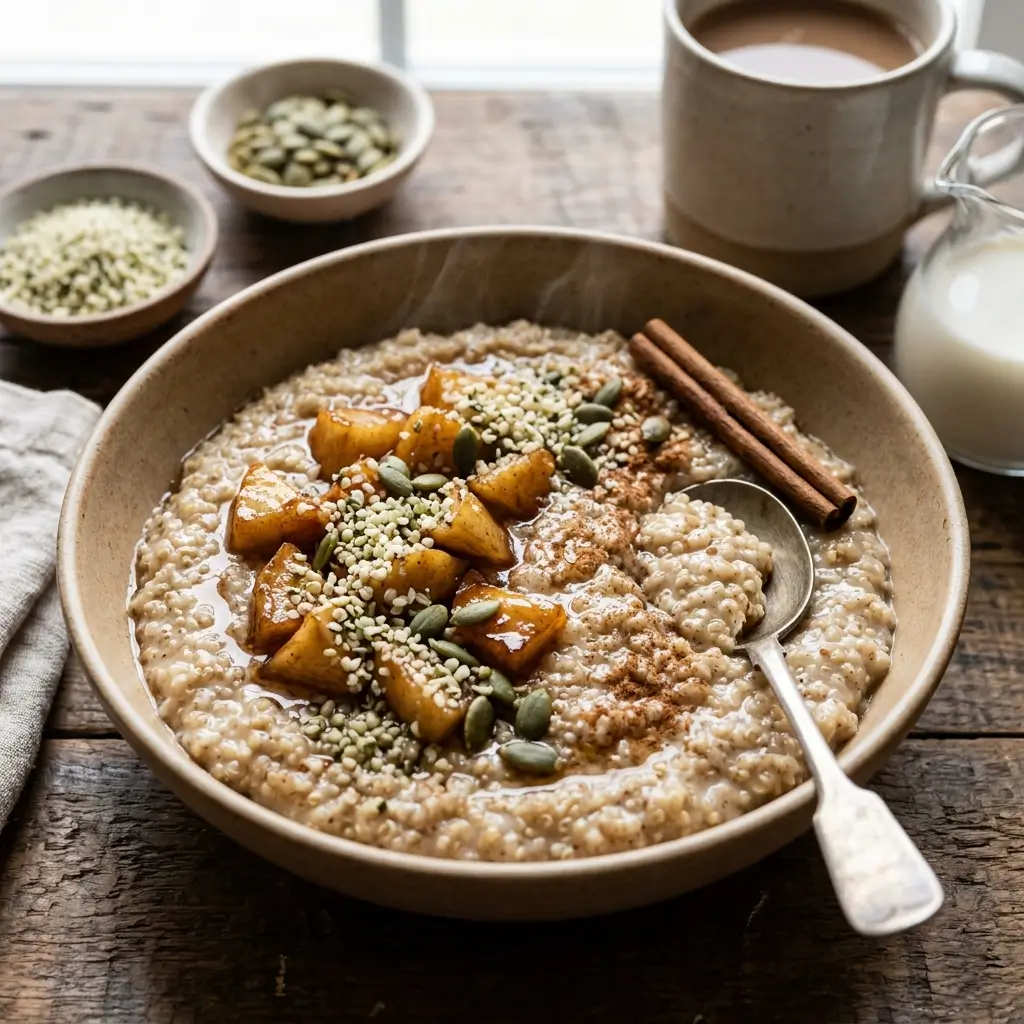
Oatmeal isn’t the only option when you want a warm, comforting breakfast. Quinoa makes an excellent alternative because it has a naturally mild, slightly nutty flavor and contains all nine essential amino acids.
When simmered with milk and cinnamon, cooked quinoa develops a creamy consistency that works beautifully with warm apples, hemp hearts, and pumpkin seeds.
This recipe is especially useful for people who want a change from traditional breakfast cereals or prefer a gluten-free grain option.
Preparation details
- Preparation time: 5 minutes
- Cooking time: 10–15 minutes if starting with uncooked quinoa
- Servings: 1
- Approximate protein: 24–27 grams
Ingredients
- ½ cup uncooked quinoa
- ¾ cup unsweetened soy milk
- 3 tablespoons shelled hemp hearts
- ½ teaspoon ground cinnamon
- ½ small apple, diced
- 1 teaspoon maple syrup
- 1 tablespoon pumpkin seeds
- A small pinch of salt
How to prepare it
- Rinse the quinoa thoroughly under running water.
- Add it to a saucepan with the soy milk and a small pinch of salt.
- Bring the mixture to a gentle boil, then reduce the heat.
- Cover and simmer for approximately 12–15 minutes, or until the quinoa is tender and most of the liquid has been absorbed.
- Stir in the cinnamon and hemp hearts.
- In a separate pan, gently cook the diced apple with a tablespoon of water until softened.
- Transfer the quinoa into a bowl and top with the warm apples, pumpkin seeds, and maple syrup.
Helpful tip: If the porridge becomes too thick, stir in a little additional milk. Soy milk generally provides more protein than many almond or rice milk alternatives, making it a useful choice for this recipe.
Easy variations: Add sliced pear instead of apple, use sunflower seeds instead of pumpkin seeds, or include a few blueberries for a fruity finish.
Meal-prep advice: Cook the quinoa ahead of time and refrigerate it in a sealed container. When ready to eat, reheat it with a splash of milk until steaming hot. Add the hemp hearts and toppings just before serving. Use refrigerated cooked quinoa within 3–4 days.
Useful kitchen addition: A medium stainless-steel saucepan with a lid is ideal for preparing quinoa, oatmeal, and other warm breakfast grains.
4. Whipped Cottage Cheese and Warm Berry Breakfast Bowl
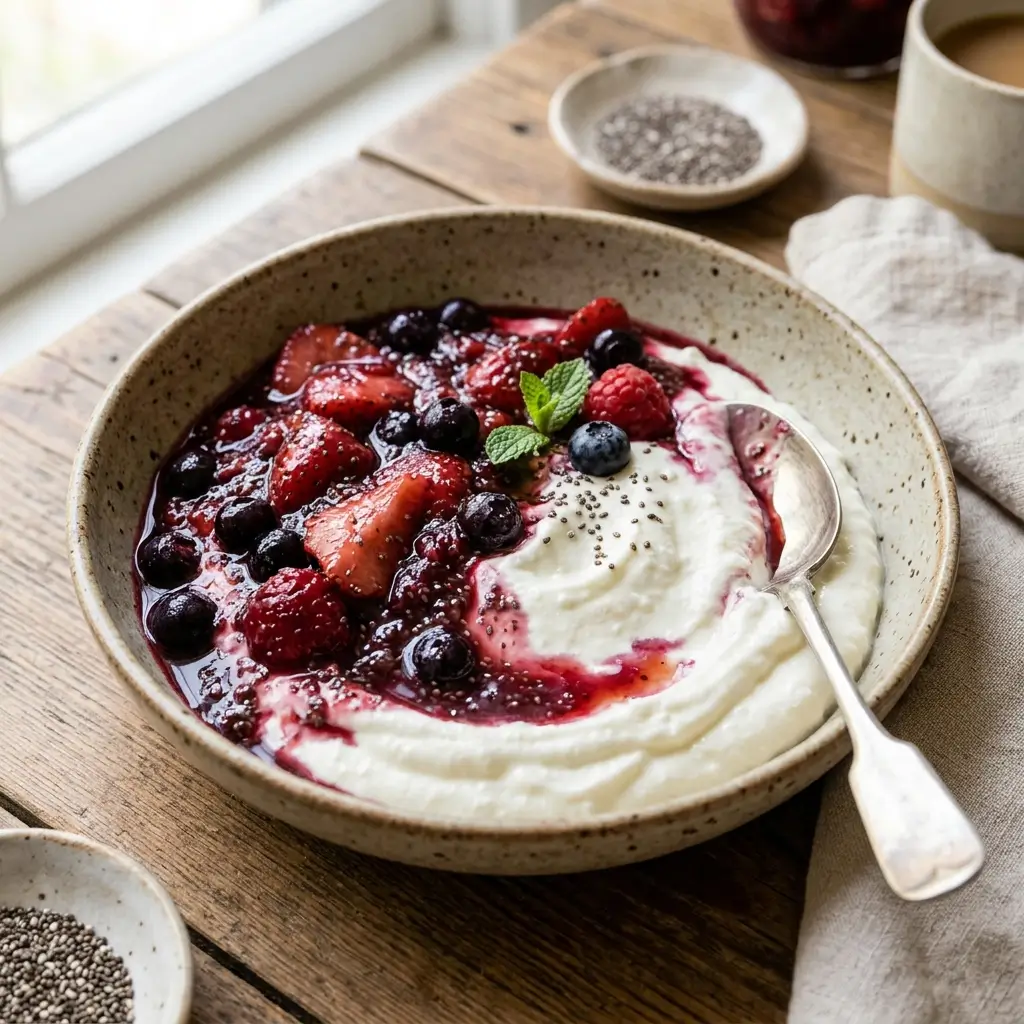
This breakfast is a wonderful option when you want something creamy and fruity without spending much time in the kitchen.
Cottage cheese provides the protein-rich base, while warm blueberries, strawberries, and raspberries create a naturally sweet topping. A little chia seed thickens the fruit juices into a soft compote that pairs beautifully with the smooth cheese.
Blending cottage cheese is an optional step, but it gives the bowl a softer texture that some people prefer.
Preparation details
- Preparation time: 5 minutes
- Cooking time: 4–5 minutes
- Servings: 1
- Approximate protein: 25–28 grams
Ingredients
- 1 cup plain low-fat cottage cheese
- ½ cup frozen mixed berries
- 1 teaspoon chia seeds
- 1 teaspoon lemon juice
- ½ teaspoon honey, optional
- 1 tablespoon chopped almonds or pumpkin seeds
How to prepare it
- Place the frozen berries in a small saucepan.
- Add the lemon juice and cook over low to medium heat for approximately 3–4 minutes.
- Stir in the chia seeds and allow the fruit to thicken slightly.
- Spoon the cottage cheese into a serving bowl.
- For a smoother consistency, blend the cottage cheese before serving.
- Add the warm berry mixture over the top.
- Finish with chopped almonds or pumpkin seeds and a little honey if desired.
Helpful tip: Avoid boiling cottage cheese directly. High heat can cause the dairy to separate and become grainy. Keeping the cottage cheese cool or at room temperature and adding the warm fruit on top gives you a much better texture.
Easy variations: Use chopped peaches, stewed apples, or warm cherries instead of mixed berries. You can also replace almonds with sunflower seeds.
Meal-prep advice: Prepare the berry topping a day or two ahead and store it separately. Assemble the bowl shortly before eating to maintain the best texture.
Useful kitchen addition: A compact immersion blender or small food processor makes it easy to create smooth cottage cheese without using several kitchen appliances.
5. Southwest Green Chile Egg and Black Bean Bowl
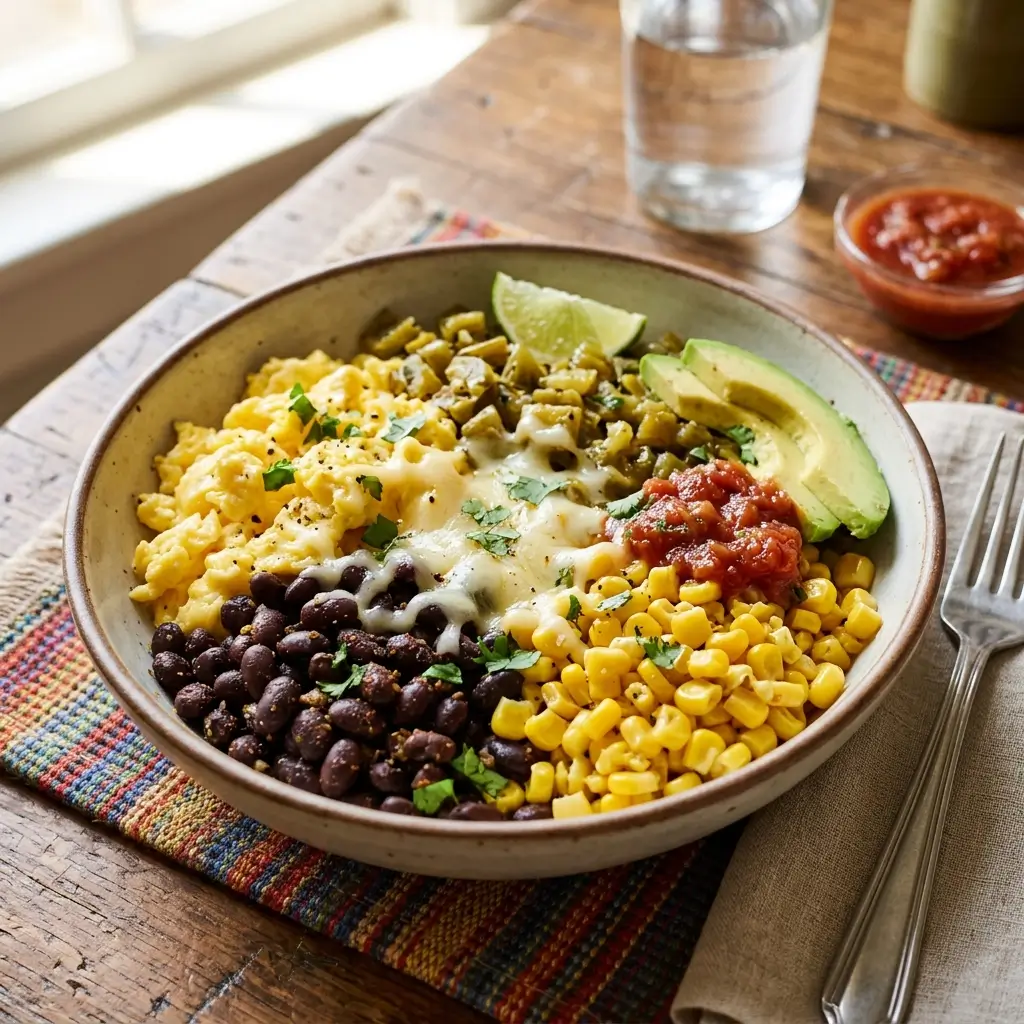
Not every breakfast needs to be sweet. This Southwest-inspired bowl combines fluffy scrambled eggs, black beans, sweet corn, and green chiles for a warm, savory meal with plenty of flavor.
The beans provide additional plant-based protein and fiber, while eggs and Monterey Jack cheese contribute more protein and a creamy texture.
It’s also one of the more affordable options on this list because most of the ingredients are easy to find in regular grocery stores.
Preparation details
- Preparation time: 5 minutes
- Cooking time: 5–7 minutes
- Servings: 1
- Approximate protein: 25–28 grams
Ingredients
- 2 large eggs
- ½ cup cooked black beans, drained and rinsed
- ¼ cup sweet corn
- 2 tablespoons diced mild green chiles
- ¼ cup shredded Monterey Jack cheese
- 1 teaspoon olive oil
- ¼ teaspoon ground cumin
- 1 tablespoon chopped fresh cilantro
- ¼ avocado, sliced
- Salt and black pepper to taste
How to prepare it
- Warm the black beans and corn in a small saucepan with the ground cumin and a tablespoon of water.
- Heat the olive oil in a nonstick skillet.
- Whisk the eggs with a little salt and pepper.
- Pour the eggs into the skillet and gently stir until softly scrambled and fully cooked.
- Place the warm black bean mixture in a serving bowl.
- Add the scrambled eggs and sprinkle the cheese over the top.
- Finish with green chiles, sliced avocado, and fresh cilantro.
Helpful tip: If you prefer a little heat, add a pinch of cayenne pepper or a spoonful of your favorite salsa. For a milder breakfast, reduce the green chiles.
Easy variations: Replace the eggs with scrambled tofu for an egg-free version, use black-eyed peas instead of black beans, or add sautéed bell peppers.
Meal-prep advice: Cook the beans and corn ahead of time and store them separately. Prepare the eggs fresh when possible. Add the avocado and cilantro immediately before eating.
Useful kitchen addition: A good nonstick frying pan makes scrambled eggs easier to prepare without sticking or requiring excessive cooking oil.
6. Gingerbread Protein Cream of Rice Bowl
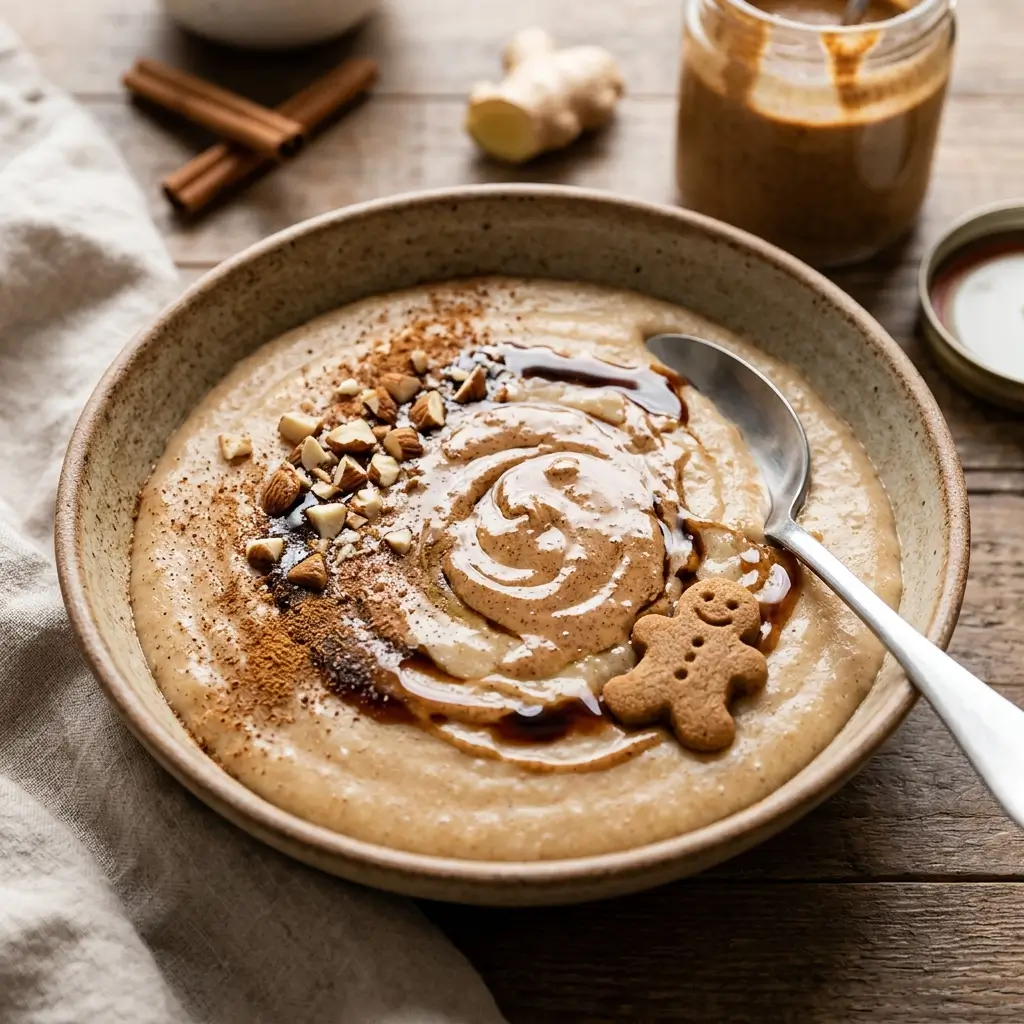
When you want something warm, smooth, and easy to eat, cream of rice is worth considering.
Unlike rolled oats, cream of rice has a fine consistency that creates a soft porridge. Adding cinnamon, ginger, nutmeg, and a little molasses gives it the familiar flavor of gingerbread.
To increase the protein content, use whey or a suitable plant-based protein powder. A spoonful of almond butter adds richness and makes the bowl more satisfying.
Preparation details
- Preparation time: 2 minutes
- Cooking time: 3–5 minutes
- Servings: 1
- Approximate protein: 27–32 grams, depending on the protein powder and milk used
Ingredients
- ¼ cup dry cream of rice cereal
- ¾ cup milk of your choice
- 1 scoop vanilla whey or plant-based protein powder
- 1 tablespoon almond butter
- ½ teaspoon ground ginger
- ¼ teaspoon cinnamon
- A small pinch of nutmeg
- 1 teaspoon molasses
- A little extra milk for adjusting consistency
How to prepare it
- Add the cream of rice cereal and milk to a small saucepan.
- Cook over medium-low heat, stirring continuously until the mixture thickens.
- Remove the saucepan from the heat.
- In a separate small bowl, mix the protein powder with a little cool milk until smooth.
- Stir the protein mixture into the warm cereal.
- Add the ginger, cinnamon, nutmeg, and molasses.
- Transfer everything to a bowl and finish with almond butter.
Helpful tip: Don’t add protein powder directly to rapidly boiling cereal. Mixing it with a little cool liquid first helps prevent lumps and creates a smoother consistency.
A note about collagen: Collagen peptides can be included as an optional ingredient, but they should not replace a complete protein source when your goal is to increase dietary protein. Whey, soy, or a suitable plant-protein blend is a better primary choice.
Easy variations: Replace almond butter with sunflower seed butter, add sliced banana, or use a little date syrup instead of molasses.
Meal-prep advice: This recipe is best prepared fresh because cream of rice thickens considerably as it cools. Keep the dry ingredients portioned in advance to make morning preparation quicker.
Useful kitchen addition: A small silicone whisk is helpful for mixing protein powder into warm cereal without leaving dry clumps.
7. Maple Miso Tofu Scramble and Brown Rice Bowl
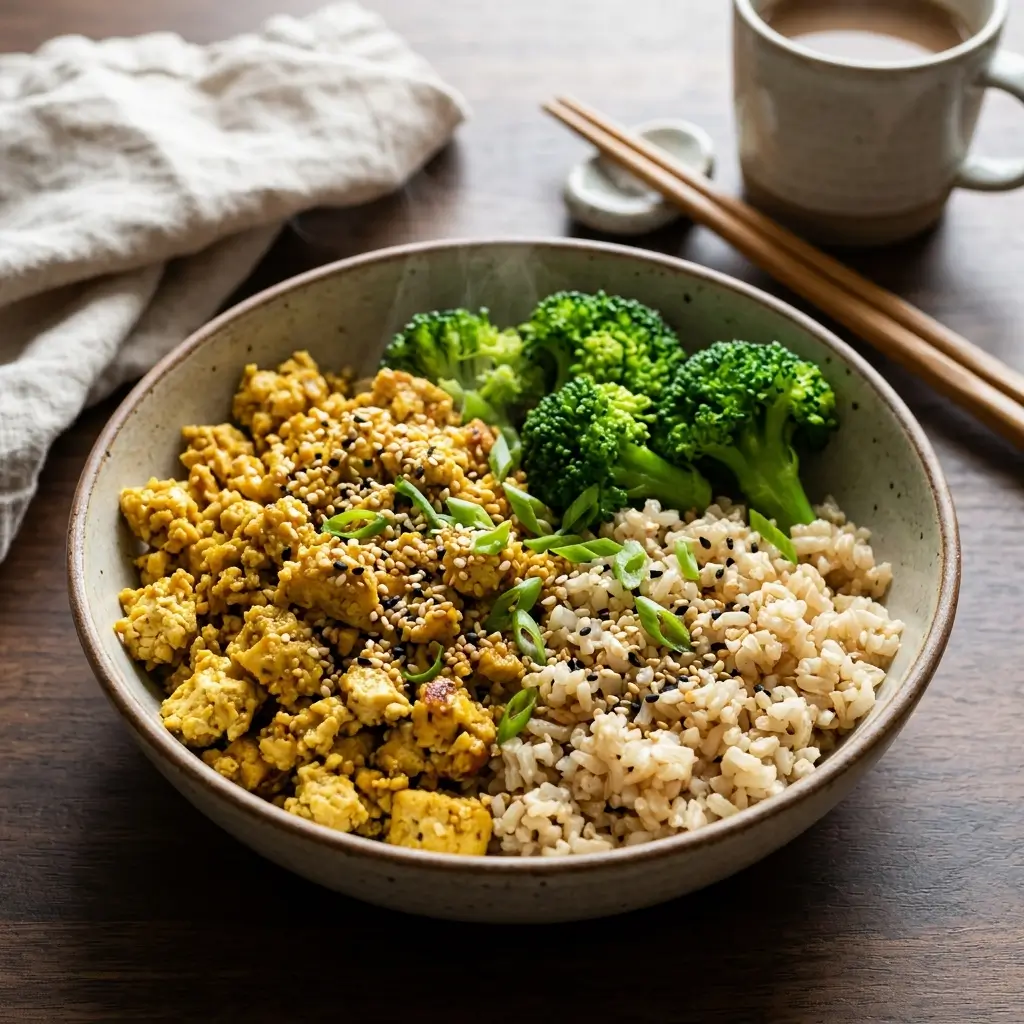
A warm breakfast doesn’t have to contain eggs or dairy to provide a satisfying amount of protein.
This tofu scramble combines crumbled extra-firm tofu with white miso, nutritional yeast, and a small amount of maple syrup. The result is a savory mixture with a gentle sweetness and a rich, almost cheesy flavor.
Served over brown rice with steamed broccoli and sesame seeds, it makes a balanced breakfast that is suitable for people following a vegan diet.
Preparation details
- Preparation time: 5 minutes
- Cooking time: 7–10 minutes
- Servings: 1
- Approximate protein: 28–32 grams
Ingredients
- 200 grams extra-firm tofu
- ½ cup cooked brown rice
- ½ cup broccoli florets
- 1 tablespoon nutritional yeast
- 1 teaspoon white miso paste
- 1 teaspoon maple syrup
- 1 teaspoon sesame oil
- 1 tablespoon water
- 1 teaspoon toasted sesame seeds
- ¼ teaspoon garlic powder
- Black pepper to taste
How to prepare it
- Drain the tofu and gently press out excess water using a clean kitchen towel or tofu press.
- Crumble the tofu into small pieces using your hands or a fork.
- Mix the miso paste, maple syrup, nutritional yeast, garlic powder, and water in a small bowl.
- Heat the sesame oil in a skillet over medium heat.
- Add the crumbled tofu and cook for approximately 3–4 minutes.
- Pour in the miso mixture and stir until the tofu is evenly coated.
- Steam or microwave the broccoli until tender.
- Warm the brown rice and transfer it to a serving bowl.
- Add the tofu scramble and broccoli, then finish with toasted sesame seeds.
Helpful tip: Extra-firm tofu gives this recipe a better scramble-like texture than soft tofu. Pressing it first also helps it absorb the seasoning more effectively.
Easy variations: Replace broccoli with spinach or bok choy, add sliced mushrooms, or use quinoa instead of brown rice.
Meal-prep advice: Prepare the tofu scramble and rice ahead of time. Store them in separate airtight containers and refrigerate promptly. Reheat thoroughly before serving.
Useful kitchen addition: A tofu press can remove excess moisture with less effort, especially if tofu is a regular part of your weekly meal preparation.
8. Warm Apple Pie Greek Yogurt and Oat Crumble Bowl
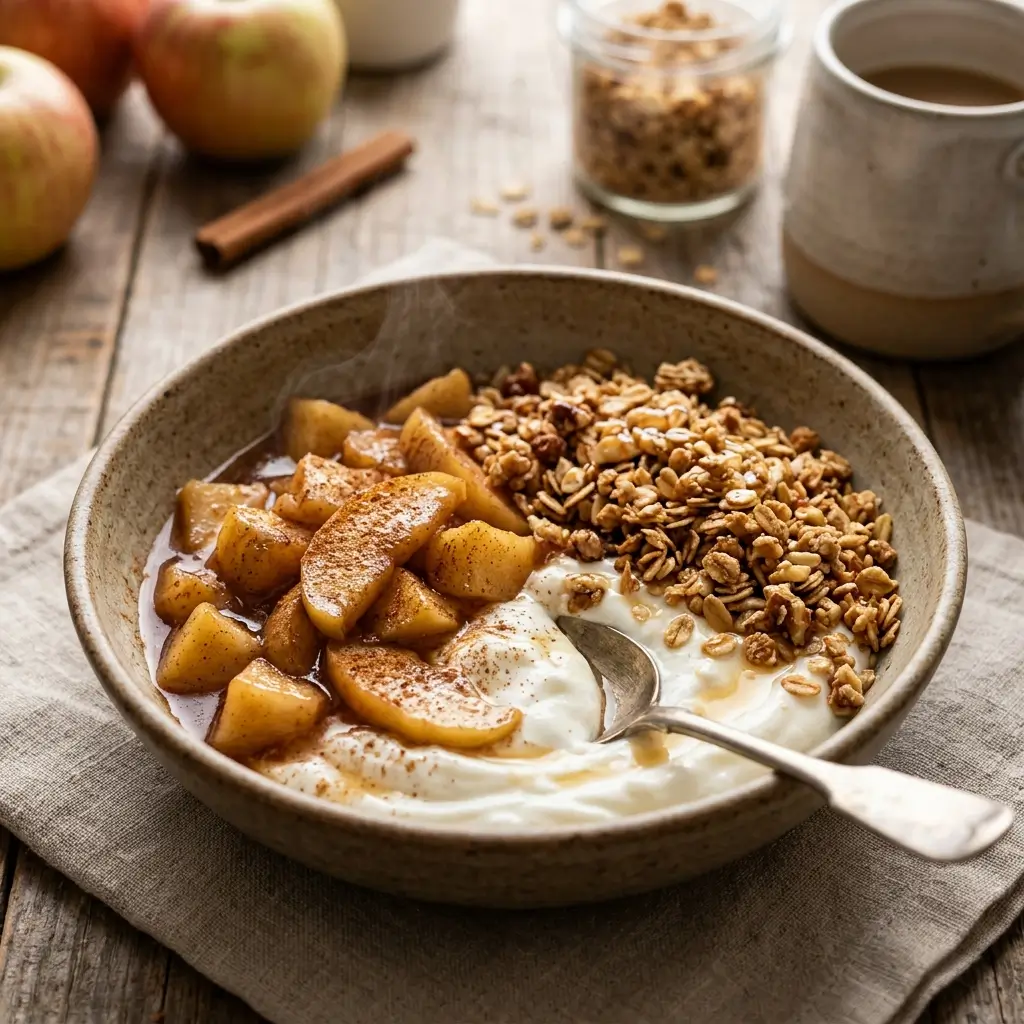
This bowl is ideal for anyone who enjoys sweet breakfasts but wants something more substantial than a pastry or ordinary fruit yogurt.
Soft cinnamon apples sit on top of thick Greek yogurt, while toasted oats or high-protein granola provide a crunchy finishing layer.
The contrast between the warm fruit and cool yogurt makes the bowl especially enjoyable on chilly mornings. Rather than heating the yogurt directly, warm the apples separately and spoon them over the yogurt just before serving.
Preparation details
- Preparation time: 3 minutes
- Cooking time: 4–5 minutes
- Servings: 1
- Approximate protein: 25–28 grams, depending on the yogurt and granola
Ingredients
- 1 cup plain high-protein Greek yogurt or Skyr
- ½ medium apple, diced
- ¼ cup high-protein granola
- ¼ teaspoon ground cinnamon
- 1 teaspoon maple syrup
- 1 tablespoon water
- 1 tablespoon chopped walnuts
- A small pinch of nutmeg
How to prepare it
- Place the diced apple in a small skillet.
- Add the water, cinnamon, nutmeg, and maple syrup.
- Cook over medium-low heat for approximately 4–5 minutes, stirring occasionally until the apple softens.
- Spoon the Greek yogurt into a serving bowl.
- Add the warm cinnamon apples over the yogurt.
- Sprinkle with granola and chopped walnuts.
- Serve immediately while the fruit is still warm.
Helpful tip: Choose plain Greek yogurt or Skyr with a higher protein content and check the nutrition label before purchasing. Protein levels vary considerably between brands.
Easy variations: Use pears instead of apples, add dried cranberries, or replace walnuts with pumpkin seeds. If you want a warmer, more filling base, add a few spoonfuls of cooked oats beneath the yogurt.
Meal-prep advice: Prepare the cinnamon apples ahead and refrigerate them separately. Warm them before serving and add fresh yogurt and granola at the end so the granola stays crunchy.
Useful kitchen addition: Deep ceramic breakfast bowls are convenient for serving yogurt, warm fruit, porridge, and other layered breakfasts.
Quick Comparison: Which Breakfast Bowl Should You Make?
If you’re unsure where to start, this comparison makes it easier to choose a recipe based on your schedule and preferences.
| Breakfast bowl | Approximate protein | Preparation time | Best for |
|---|---|---|---|
| Carrot Cake Protein Oats | 25–28g | 25–30 min | Sweet breakfast meal prep |
| Turkey Sausage Hash | 27–30g | 30–35 min | Savory, filling breakfasts |
| Cinnamon Quinoa Porridge | 24–27g | 15–20 min | Plant-forward eating |
| Cottage Cheese and Berries | 25–28g | 5 min | Very busy mornings |
| Southwest Egg and Bean Bowl | 25–28g | 10–12 min | Budget-friendly savory meals |
| Gingerbread Cream of Rice | 27–32g | 5–7 min | Quick, smooth porridge |
| Maple Miso Tofu Bowl | 28–32g | 12–15 min | Vegan breakfasts |
| Apple Pie Yogurt Bowl | 25–28g | 7–8 min | Quick sweet breakfasts |
Protein amounts are estimates, not laboratory-tested nutritional values. Actual amounts depend on ingredient brands, portion sizes, and substitutions. Check product labels for more precise figures.
Budget-Friendly Ingredients and Optional Upgrades
You don’t need to fill your kitchen with expensive specialty products to prepare high-protein winter breakfasts. Most of these recipes rely on everyday ingredients that can be purchased in larger quantities and used across several meals.
Budget-friendly ingredients
Eggs: Eggs are versatile and can be used in breakfast bowls, baked oats, scrambles, and other quick meals.
Rolled oats: A bag of oats can provide the foundation for several different breakfasts. Add fruit, yogurt, milk, or protein powder to increase variety and protein content.
Canned beans: Black beans are convenient because they’re already cooked. Drain and rinse them before adding them to breakfast bowls.
Frozen berries: Frozen fruit is useful when fresh berries are expensive or unavailable. It also works particularly well in warm breakfast toppings.
Plain Greek yogurt: Larger tubs are often more economical than individually packaged portions. Choose a variety with a protein content that suits your needs.
Tofu: Extra-firm tofu is a useful plant-based protein source and can be used in scrambles, rice bowls, and savory breakfast dishes.
Optional upgrades worth considering
Some additional ingredients and kitchen tools can make breakfast preparation easier, although none are essential.
- Hemp hearts: Add a mild, nutty flavor and extra protein to quinoa porridge and oatmeal.
- Protein powder: A convenient way to increase protein in baked oats and warm cereal.
- Chia seeds: Help thicken fruit toppings while adding fiber.
- Ceramic ramekins: Useful for baking individual portions of oatmeal.
- Glass meal-prep containers: Make it easier to organize cooked grains, vegetables, and proteins.
- A nonstick frying pan: Helps with preparing eggs, tofu, and breakfast hash.
The best approach is to buy ingredients you’ll use regularly rather than purchasing several specialty products for just one recipe.
How to Prepare High-Protein Breakfast Bowls Ahead of Time
A little preparation can make a noticeable difference when mornings are busy. Instead of cooking an entire breakfast from scratch every day, prepare the ingredients that take the longest and assemble them when needed.
Here is a simple approach.
1. Choose two or three breakfasts for the week
You don’t need eight different recipes every week. Pick a few that use overlapping ingredients.
For example, Greek yogurt can be used in the carrot cake oats and apple pie bowl, while eggs, spinach, and sweet potatoes can form the basis of several savory breakfasts.
2. Prepare the ingredients that take the longest
Roast sweet potatoes, cook quinoa, prepare brown rice, and make the berry topping ahead of time.
Allow cooked foods to cool promptly before refrigerating them in shallow, airtight containers.
3. Keep fresh toppings separate
Ingredients such as avocado, granola, nuts, fresh herbs, and seeds are best added immediately before serving.
This helps preserve their texture and prevents crunchy ingredients from becoming soft.
4. Portion ingredients in advance
Divide cooked grains, vegetables, and proteins into individual servings. Label containers with the preparation date so you can keep track of how long everything has been stored.
5. Reheat food thoroughly
Reheat cooked ingredients until steaming hot throughout. Add a splash of water or milk to grains if they have become too thick during refrigeration.
For food safety, refrigerate perishable cooked food within two hours, keep the refrigerator at 4°C (40°F) or below, and generally use refrigerated leftovers within three to four days. Freeze portions that you won’t eat within that period.
Practical Tips for Getting the Best Results
Small preparation details can make a big difference to the final texture and flavor of your breakfast.
Mix protein powder carefully. Some powders become lumpy when added directly to hot liquid. Mix the powder with a little cool milk first, then stir it into warm oats or cream of rice after removing the saucepan from the heat.
Don’t overcook your eggs. Eggs can become rubbery when reheated. Cook them gently and avoid leaving them in the microwave for too long.
Adjust the consistency of your porridge. Oats, quinoa, and cream of rice absorb liquid as they cook. Add a little extra milk or water if the mixture becomes thicker than you prefer.
Use frozen fruit when necessary. Frozen berries and other fruits are convenient, economical, and easy to turn into warm toppings. Cook them until thoroughly heated.
Keep crunchy toppings separate. Add nuts, granola, seeds, and toasted coconut after reheating.
Use the right serving bowl. A microwave-safe ceramic bowl with enough depth helps prevent food from spilling while heating. Always check that the bowl is suitable for microwave use.
Common Breakfast Bowl Mistakes to Avoid
Even simple recipes can become disappointing when a few basic details are overlooked.
Adding protein powder to boiling porridge
High heat can make some protein powders clump or develop an unpleasant texture. Remove the porridge from direct heat and mix the powder separately with a little cool liquid before combining.
Heating Greek yogurt or cottage cheese too aggressively
Cultured dairy products can separate when exposed to high temperatures. Warm the fruit or grains separately and add them over the yogurt or cottage cheese just before serving.
Preparing too many breakfasts in advance
Making seven different meals on Sunday may sound convenient, but some ingredients won’t retain their best texture for that long.
Prepare a few components in advance and refrigerate or freeze portions according to safe storage guidance.
Forgetting about portion sizes
A bowl may look high in protein, but the actual amount depends on how much of each ingredient you use.
For example, a small spoonful of hemp hearts contributes some protein, but it won’t provide the same amount as a full serving of Greek yogurt, tofu, or eggs.
Use the ingredient quantities in the recipes as a starting point and adjust them according to your appetite and nutritional requirements.
Adding toppings too early
Granola, seeds, nuts, and fresh herbs can lose their texture when stored with warm ingredients.
Keep them in separate containers and add them immediately before eating.
Pros and Cons of Make-Ahead Breakfast Bowls
Preparing breakfast ahead of time offers several advantages, although it isn’t the perfect solution for every ingredient.
| Pros | Cons |
|---|---|
| Reduces cooking and preparation time on busy mornings. | Some toppings lose their crunch when refrigerated. |
| Makes it easier to plan protein-rich breakfasts. | Requires some preparation time during the week. |
| Helps use ingredients before they go to waste. | Refrigerator space may become limited. |
| Makes portion control and meal planning easier. | Eggs and certain vegetables taste better when freshly cooked. |
| Allows you to prepare different sweet and savory options. | Some meals need additional liquid when reheated. |
The easiest approach is to prepare grains, roasted vegetables, and fruit toppings ahead while leaving delicate ingredients and crunchy garnishes until serving time.
Frequently Asked Questions
1. How much protein should a winter breakfast bowl contain?
Aiming for approximately 25–30 grams of protein is a useful starting point for many adults. However, the amount you need depends on your overall diet, body size, activity level, and personal nutritional requirements.
Eggs, Greek yogurt, cottage cheese, tofu, beans, and protein powder can all help increase the protein content of a breakfast bowl.
2. Can you warm up Greek yogurt without it curdling?
Greek yogurt is best served cool or at room temperature when paired with warm breakfast ingredients.
Rather than heating the yogurt directly, prepare warm apples, berries, or oats separately and spoon them over the yogurt. This gives you the temperature contrast without risking an unpleasant grainy texture.
3. What are the best egg-free high-protein warm breakfast options?
Several options work well without eggs.
Cinnamon quinoa porridge with hemp hearts, maple miso tofu with brown rice, cottage cheese and warm berries, and protein-fortified baked oats are all useful choices.
For a fully plant-based breakfast, tofu, soy milk, hemp hearts, beans, and suitable plant-based protein powders are good ingredients to consider.
4. How long do prepared breakfast bowls last in the refrigerator?
Most cooked breakfast components, including eggs, turkey sausage, grains, and vegetables, should generally be used within three to four days when properly refrigerated at 4°C (40°F) or below.
Store wet and crunchy toppings separately. Freeze portions that you don’t plan to eat within the recommended refrigerated storage period.
5. Is oatmeal alone high enough in protein for a busy morning?
Oatmeal contains some protein, but a typical half-cup serving of dry rolled oats provides only around 5 grams.
If you want a higher-protein breakfast, add Greek yogurt, milk, egg whites, hemp hearts, or protein powder.
6. Can you prepare high-protein breakfast bowls without protein powder?
Absolutely. Protein powder is convenient, but it isn’t necessary.
Eggs, cottage cheese, Greek yogurt, quinoa, tofu, beans, and soy milk can all contribute protein naturally. Combining a few of these ingredients can create a filling breakfast without relying on supplements.
7. What is the easiest high-protein breakfast bowl for extremely busy mornings?
The cottage cheese and warm berry bowl is one of the quickest options. It takes approximately five minutes to prepare and requires very little cooking.
The gingerbread cream of rice bowl is another quick choice if you prefer a warm, smooth breakfast.
8. How can I make a breakfast bowl more filling?
Start with a protein-rich ingredient, then add a source of fiber and some healthy fat.
For example, combine Greek yogurt with oats, fruit, and nuts, or pair eggs with black beans, sweet potatoes, and vegetables.
The combination of protein, fiber, and fat can make a breakfast more satisfying than a bowl consisting mainly of refined carbohydrates.
Key Takeaways
- Choose a protein-rich base: Eggs, Greek yogurt, cottage cheese, tofu, and soy milk are useful ingredients for building satisfying breakfasts.
- Aim for balanced portions: Combine protein with fiber-rich foods such as oats, beans, fruit, and vegetables.
- Prepare ingredients ahead: Cooking grains, roasting vegetables, and portioning toppings can make weekday breakfasts much easier.
- Keep toppings fresh: Add granola, nuts, seeds, and avocado after reheating to preserve their texture.
- Use safe storage practices: Refrigerate cooked food promptly and use most prepared leftovers within three to four days.
- Experiment with different flavors: Alternate between sweet options such as carrot cake oats and apple yogurt bowls and savory meals such as turkey hash or tofu scrambles.
Final Thoughts
Busy winter mornings don’t have to mean settling for an unbalanced breakfast or skipping the meal altogether. With a few dependable ingredients and some simple preparation, you can put together warm, satisfying bowls that fit different tastes, budgets, and schedules.
These eight high-protein breakfast bowls offer plenty of variety, whether you’re craving cinnamon-spiced oats, a savory egg and bean combination, creamy quinoa porridge, or a plant-based tofu scramble.
You don’t need to prepare all eight recipes at once. Start with two favorites, perhaps one sweet and one savory, and see which ones fit most naturally into your routine.
Once you’ve prepared a few ingredients ahead of time, getting a satisfying breakfast on the table becomes much easier, even on the coldest and busiest mornings.