Affiliate Disclosure: This article contains affiliate links. If you purchase a product through one of these links, we may earn a small commission at no additional cost to you. This helps support our website and allows us to continue creating helpful home decorating content. Product prices, availability, and specifications may change, so check the retailer’s website before making a purchase.
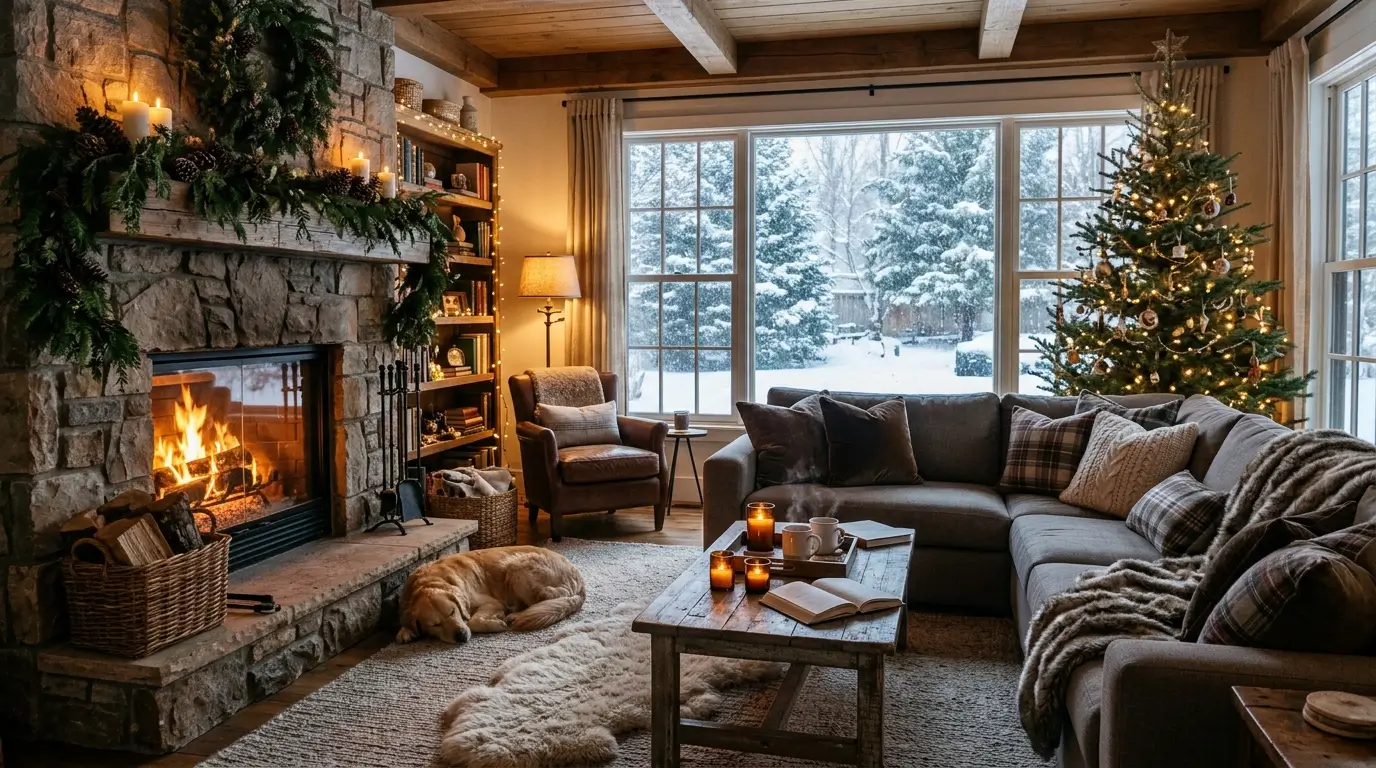
When winter arrives, the living room often becomes the place where everyone wants to spend a little more time. It’s where you settle down with a warm drink, watch your favorite shows, catch up with family, or simply enjoy a quiet evening after a long day. Naturally, you want this space to feel comfortable rather than cold, dull, or uninviting.
The good news is that creating a beautiful winter living room aesthetic doesn’t mean buying an entirely new furniture set or spending a fortune on seasonal decorations. Sometimes, a few thoughtful changes make all the difference. A chunky blanket draped over the sofa, warm lighting in a forgotten corner, or a soft rug beneath your feet can completely change how a room feels.
The secret is to combine comfortable fabrics, natural materials, warm colors, and carefully arranged accessories. Instead of filling every available surface with decorations, focus on a few pieces that make the room both attractive and practical.
Whether you live in a spacious house, a small apartment, or a rental with limited decorating freedom, these eight winter living room ideas will help you create a relaxing retreat that feels inviting throughout the colder months.
Table of Contents
- Why Give Your Living Room a Winter Refresh?
- 8 Winter Living Room Aesthetic Ideas
- How to Decorate a Small Living Room for Winter
- Winter Living Room Color Combinations That Work
- How to Create a Cozy Look on a Budget
- Common Winter Decorating Mistakes to Avoid
- Pros and Cons of Seasonal Living Room Decorating
- Frequently Asked Questions
- Final Thoughts
Why Give Your Living Room a Winter Refresh?
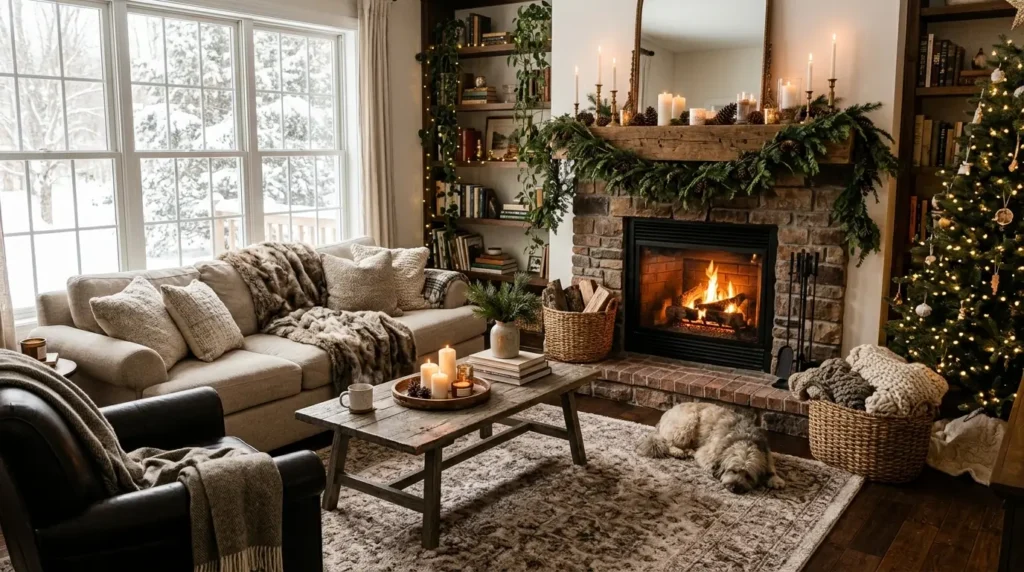
Winter changes how we use our homes. With shorter days and colder evenings, comfortable indoor spaces become more important. A living room that feels bright and airy during summer might benefit from softer textures, warmer colors, and more inviting lighting when the seasons change.
A winter refresh also gives you an opportunity to make better use of the furniture and accessories you already own.
For instance, replacing lightweight cushion covers with velvet alternatives can make a familiar sofa feel completely different. Adding a thick rug can make a hard floor more comfortable, while a table lamp can create a relaxing atmosphere that an overhead ceiling light simply cannot achieve.
There are several reasons to consider a seasonal update:
- Greater comfort: Soft blankets, supportive cushions, and warm rugs make everyday relaxation more enjoyable.
- A more inviting atmosphere: Warm lighting and natural materials help create a welcoming environment for family and guests.
- A fresh appearance: Changing a few accessories can give your existing furniture a new look without requiring a major makeover.
- Decor that lasts beyond the holidays: Neutral colors, greenery, and timeless accessories keep your living room looking appropriate after Christmas decorations come down.
- Better use of existing space: A reading corner, organized coffee table, or thoughtfully arranged seating area can make your room more functional.
You don’t have to change everything at once. Start with the areas you use most often and introduce additional touches as your budget allows.
1. Add Oversized Chunky Knit Throw Blankets
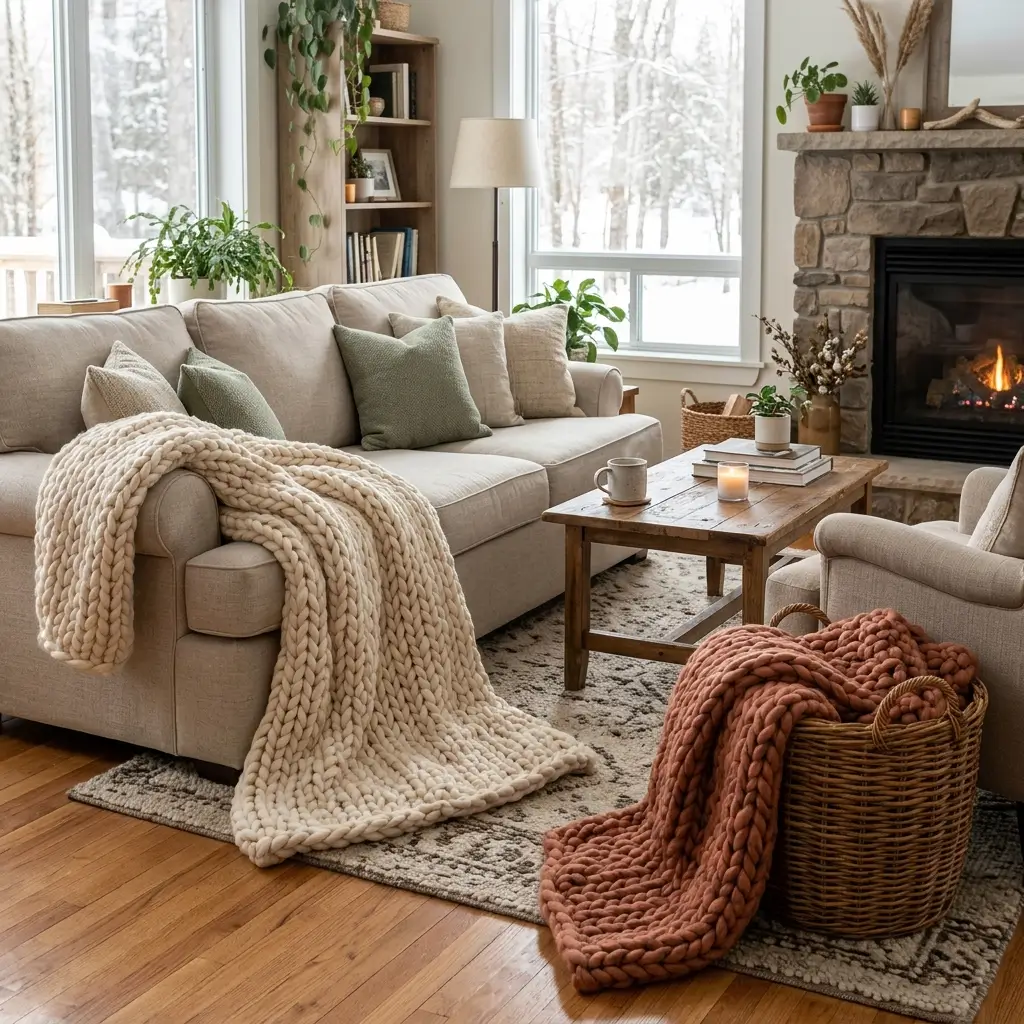
Few things make a living room feel more comfortable than a beautifully textured throw blanket. During winter, chunky knit blankets are particularly appealing because their thick appearance adds softness and visual depth to an otherwise ordinary sofa.
Drape one loosely over the arm of your couch, fold it across the backrest, or place it in a woven basket beside your favorite chair. The idea is to make the blanket accessible without making the furniture look untidy.
Color selection matters, too. Cream, oatmeal, beige, warm gray, and soft brown are excellent choices for neutral living rooms. If your furniture is mostly white or light gray, a forest-green or muted rust blanket can introduce a little color without overpowering the rest of the decor.
Before purchasing a chunky knit throw, consider its material and construction. Some loosely knitted blankets can snag easily, particularly in homes with pets. Tighter cotton or chenille blends may be more practical for everyday use, while wool blends offer a traditional, substantial feel. Always check the care instructions, especially if the blanket will be used frequently.
Styling tip: Avoid covering the entire sofa with a single oversized blanket. A casually folded throw on one side, paired with two complementary cushions, generally looks more intentional.
What to look for when shopping:
- A size large enough to cover your legs comfortably.
- A texture that complements your existing upholstery.
- Care instructions that suit your household.
- A color that works with your cushions, curtains, and rug.
Browse chunky knit throw blankets on Amazon
2. Create a Warm Atmosphere with Table and Floor Lamps
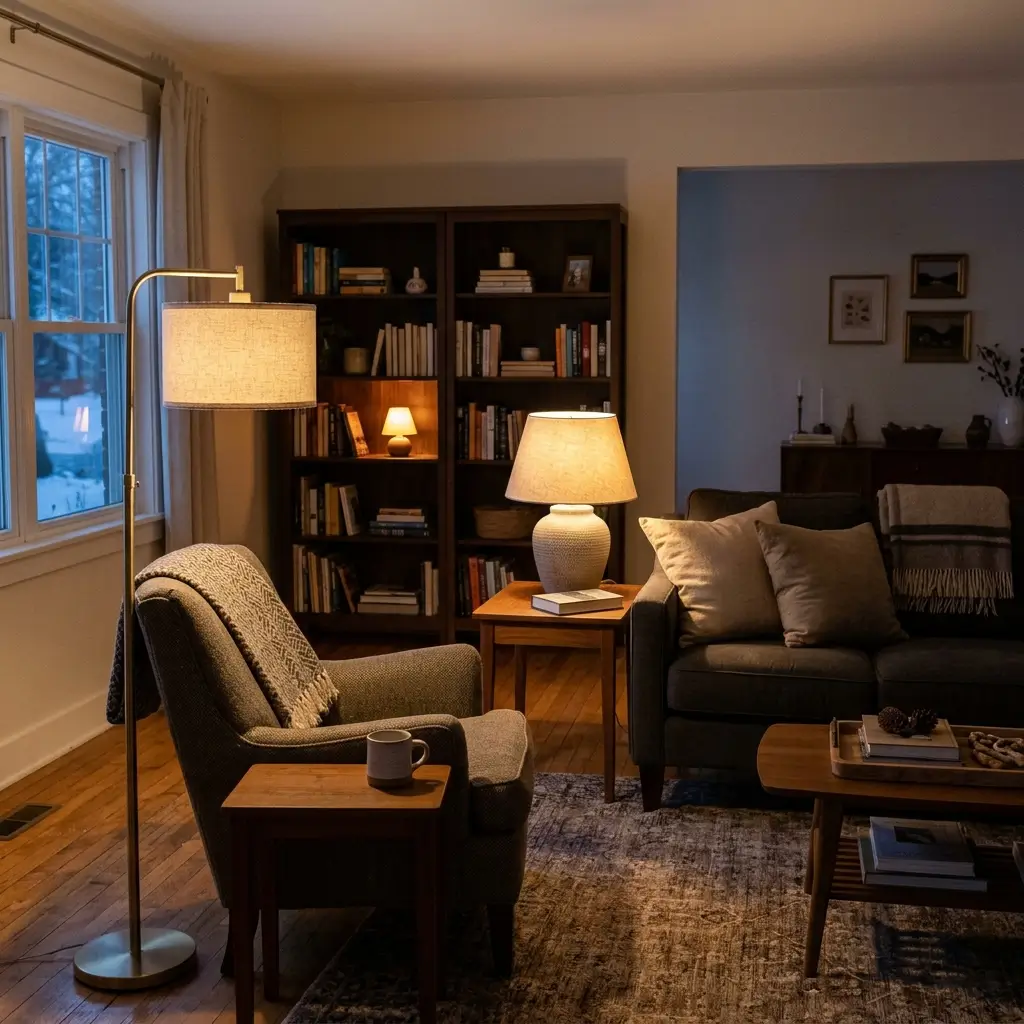
Lighting can change the entire personality of a living room. A space with beautiful furniture and accessories can still feel uncomfortable if the only light comes from a bright ceiling fixture.
For a softer winter atmosphere, introduce several smaller light sources around the room. A table lamp beside the sofa, a floor lamp next to an armchair, and a small accent light on a bookshelf can create a much more relaxed setting.
Warm-white LED bulbs are particularly useful. Look for bulbs around 2700K if you want a gentle, warm glow rather than the bluish appearance associated with cooler lighting. If you prefer brighter lighting for reading, choose an appropriate brightness for the task while keeping the overall room lighting comfortable.
The lamps themselves can become part of the decoration. Ceramic bases, linen shades, brushed brass finishes, and wooden details work beautifully with winter-inspired interiors.
Think about where the light falls before choosing a lamp. A floor lamp placed behind an armchair can illuminate a reading area, while a table lamp on a sideboard can make an otherwise empty corner feel more finished.
For small living rooms, consider lamps with narrow bases or wall-mounted alternatives to avoid taking up valuable floor space.
Styling tip: Use a combination of ambient lighting and task lighting. Ambient lighting makes the room feel welcoming, while task lighting provides enough visibility for reading, writing, or other activities.
Explore warm linen-shade table lamps on Amazon
3. Introduce Bouclé and Velvet Accent Pillows
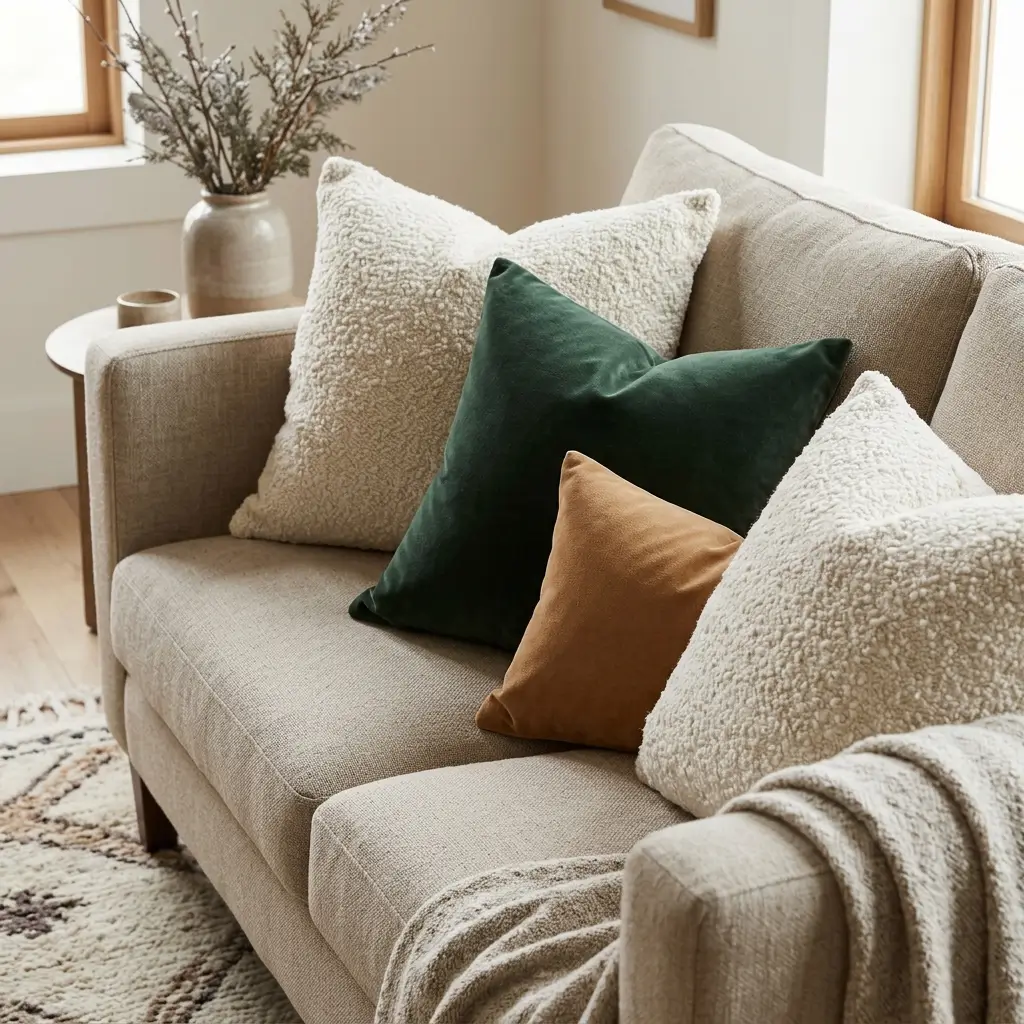
If replacing furniture isn’t part of your winter decorating plans, changing your cushion covers is an easy way to refresh the room.
Bouclé and velvet are two materials worth considering. Bouclé has a slightly raised, looped texture that creates a soft, cozy appearance. Velvet, on the other hand, has a smoother surface and a subtle sheen that gives sofas and armchairs a more polished finish.
Using both materials together creates contrast without requiring a complicated decorating scheme.
For example, imagine a beige sofa with two ivory bouclé cushions, one deep-green velvet cushion, and a smaller cushion in warm caramel. The different textures make the seating area look more layered while keeping the color palette under control.
You don’t need to use the same number of cushions on every sofa. On a smaller two-seater, two or three well-proportioned cushions may be enough. A larger sectional can accommodate more, provided there is still room for people to sit comfortably.
Pay attention to cushion inserts as well. Inserts that are slightly larger than their covers generally create a fuller appearance, although the exact fit depends on the fabric and construction.
Removable covers are especially practical because they can be washed or stored when the season changes.
Styling tip: Choose one dominant color, one complementary color, and a neutral shade. This creates a coordinated look without making every cushion identical.
Shop bouclé and velvet throw pillow covers on Amazon
4. Layer Natural Fiber and Plush Area Rugs
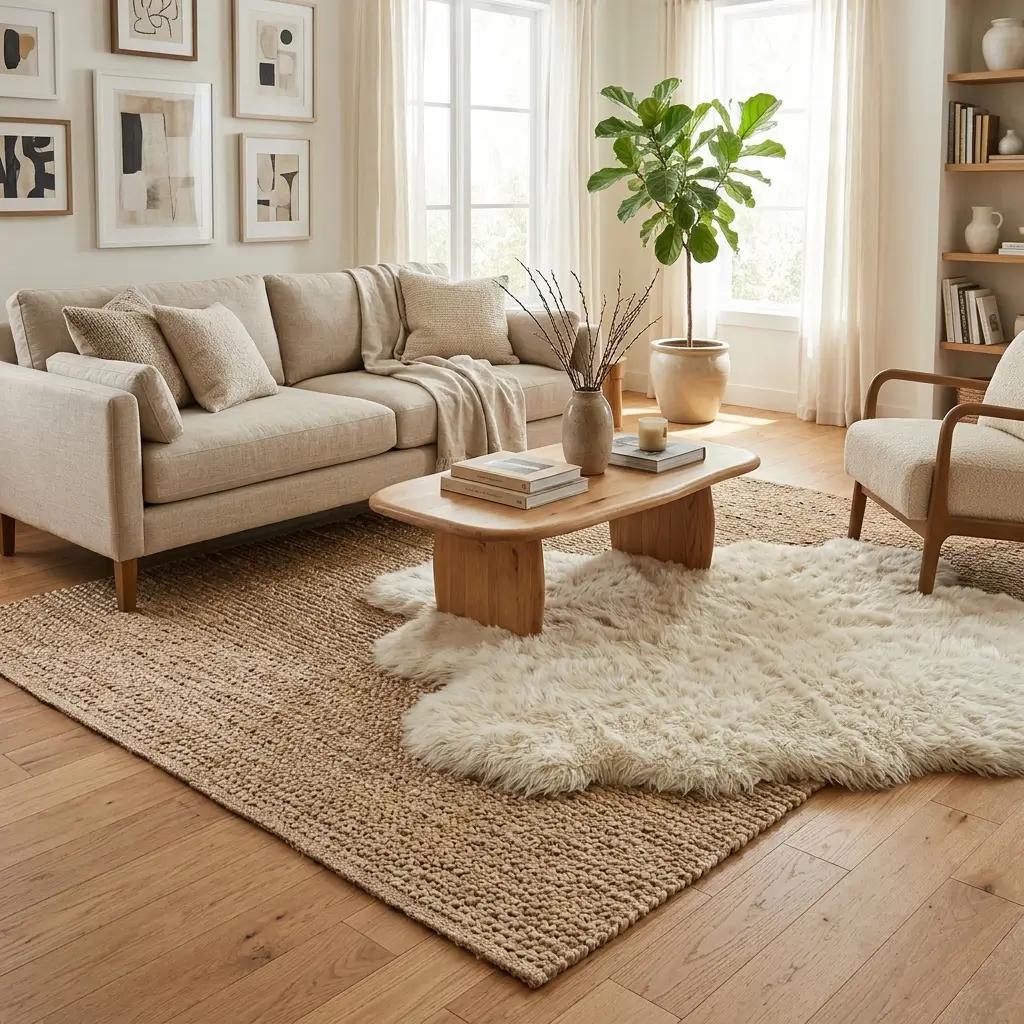
A beautiful living room can lose some of its appeal when the floor feels cold or the seating area looks disconnected. Rugs help solve both problems.
Instead of relying on a single small rug, consider layering two different textures. A large flat-weave jute or wool rug can establish the foundation, while a smaller plush rug adds softness beneath the coffee table or beside the sofa.
This combination works particularly well in living rooms with hardwood, laminate, or tile flooring.
The size of the main rug is important. Ideally, it should extend far enough beneath the seating arrangement to visually connect the sofa and surrounding chairs. In many living rooms, placing the front legs of the main seating pieces on the rug creates a more balanced appearance.
A smaller faux-sheepskin rug can then be positioned where it provides the most visual impact. Try placing it near an armchair or partially beneath the coffee table rather than allowing it to float randomly in the middle of the floor.
When shopping, check the actual measurements rather than relying on product photographs. A rug that appears generous in an online listing might be much smaller than expected.
Also consider practical details such as backing, cleaning requirements, and whether you need an anti-slip rug pad. This is especially important on smooth flooring, where unsecured rugs can slide.
Styling tip: If your furniture already has strong patterns, choose a relatively simple rug. When your sofa and cushions are neutral, a patterned Moroccan-inspired design can introduce more personality.
Find plush faux-sheepskin area rugs on Amazon
5. Decorate with Dried Botanicals and Evergreen Stems
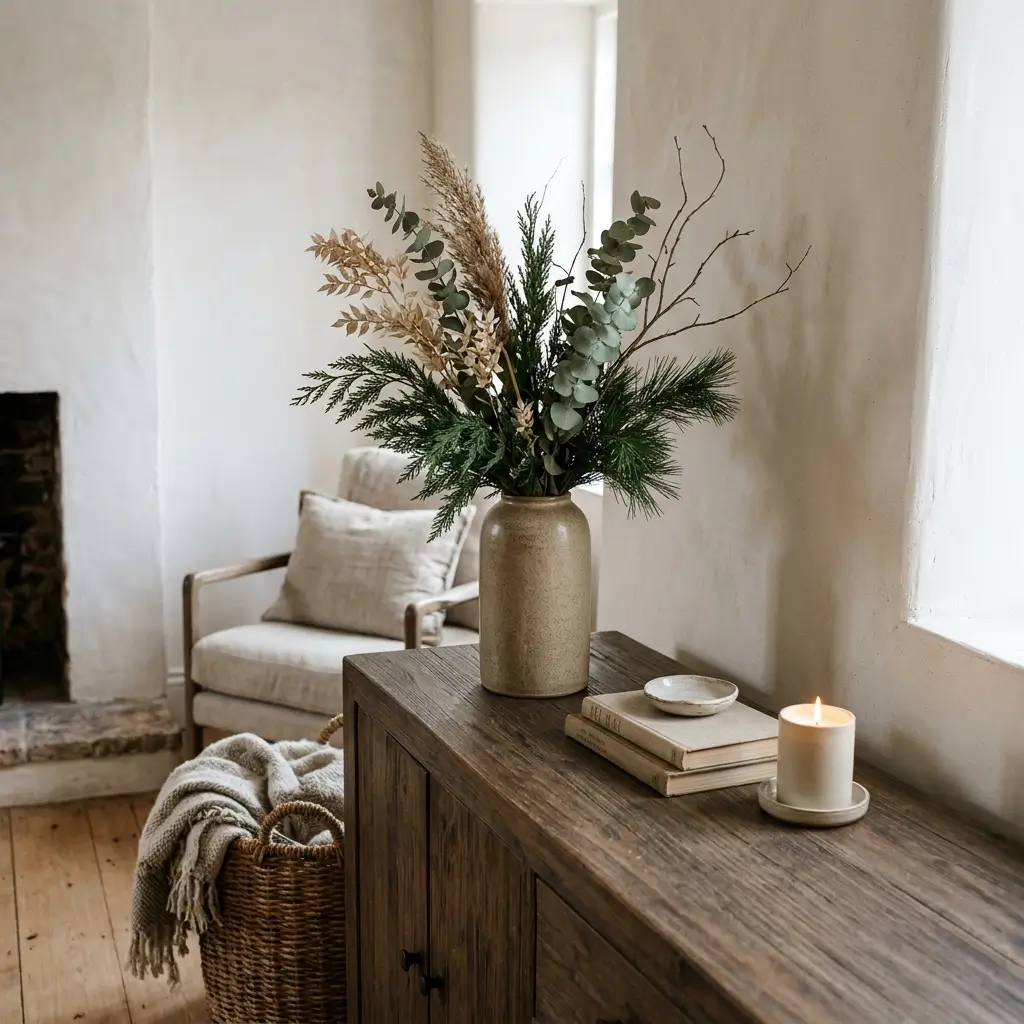
Natural details help prevent winter decorating from feeling too artificial or overly themed.
Dried botanicals, preserved greenery, and evergreen branches introduce organic shapes that balance the straight lines of shelves, coffee tables, and upholstered furniture.
For an understated arrangement, choose a matte ceramic or stoneware vase and fill it with a few carefully selected stems. Faux cedar, preserved eucalyptus, dried ruscus, and seasonal branches can all work well, depending on the style you prefer.
The beauty of this approach is that the arrangement doesn’t need to be complicated. A small group of stems with varying heights often looks more natural than a tightly packed bouquet.
Consider placing a taller vase on a sideboard or fireplace mantel, where it can act as a focal point without taking up valuable seating space. A shorter arrangement works better on a coffee table, especially if you want to keep sightlines open when people are sitting across from one another.
You can also reuse existing vases instead of purchasing new containers. A simple glass vase, ceramic jug, or textured pot may already fit the look you’re trying to achieve.
If you have pets or young children, choose non-toxic plant varieties and secure fragile containers in places where they are less likely to be knocked over.
Styling tip: Combine greenery with natural materials such as wood, linen, and woven baskets. These details help create a relaxed winter look that doesn’t need to be removed immediately after the holidays.
Shop matte stoneware vases and faux winter stems on Amazon
6. Style Your Coffee Table with Warm Wood and Decorative Trays
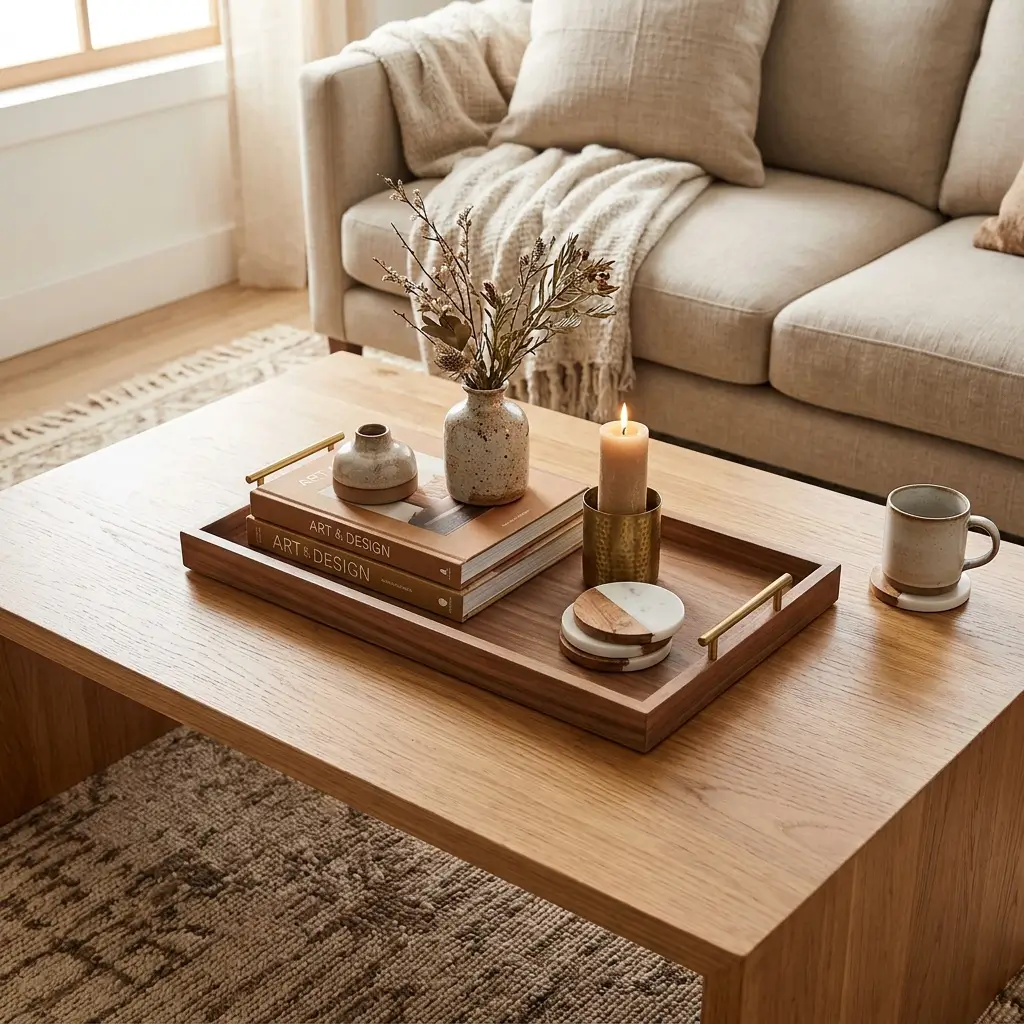
The coffee table is one of the most visible surfaces in a living room, yet it can easily become a collection point for remote controls, cups, magazines, and everyday clutter.
A decorative tray offers a simple solution. It gives smaller accessories a defined place while making the overall arrangement look more deliberate.
Wooden trays made from walnut, acacia, or oak are particularly suitable for winter interiors because their natural tones bring warmth to the room. If you prefer a more refined appearance, consider a stone or travertine-style tray.
Once you’ve selected a tray, arrange a few items inside it. A small vase, a stack of books, a candle holder, and a pair of decorative coasters can make a lovely combination.
Vary the heights and shapes of the objects to keep the display interesting. For example, a short stack of books can provide a base for a small ceramic accessory, while a taller vase adds height to one side.
The trick is knowing when to stop. Leave enough empty space for everyday activities such as placing a mug, serving snacks, or playing a board game.
If your living room is particularly small, a tray on an ottoman can serve the same purpose. You can simply move it when you need the ottoman for extra seating or relaxation.
Styling tip: Repeat one or two materials already present in your room. A wooden tray paired with wooden furniture or brass accessories creates a more connected appearance.
Browse acacia wood and travertine decorative trays on Amazon
7. Add Taper Candles and Brass Holders for a Soft Evening Glow
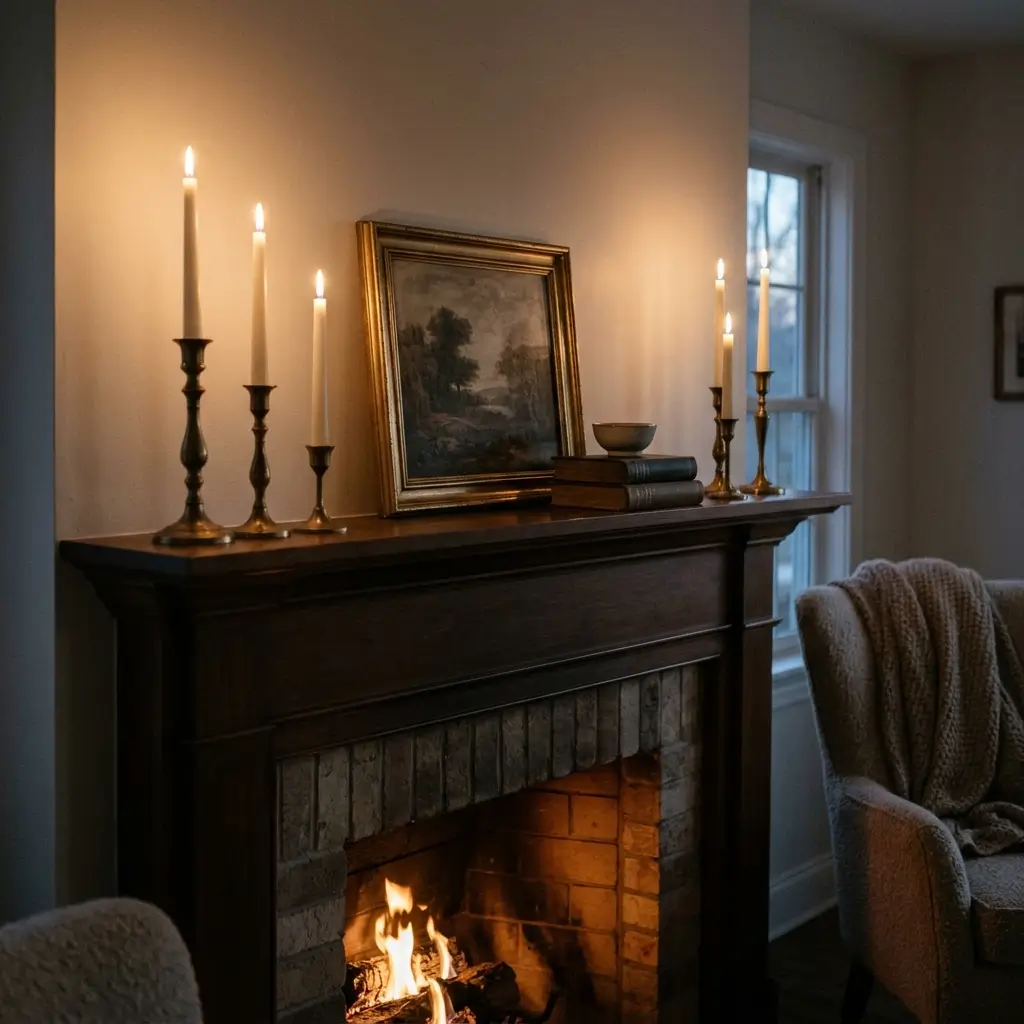
Candles bring a gentle visual warmth that works especially well during winter evenings. Their simple shapes can also add elegance to a fireplace mantel, console table, or bookshelf.
Taper candles are a particularly attractive option because their height creates visual interest without requiring large decorative objects.
Choose holders in aged brass, brushed gold, matte black, or ceramic finishes. These materials complement many decorating styles, from traditional interiors to contemporary spaces.
For a balanced arrangement, group two or three holders of different heights. Place them together on a mantel or sideboard, leaving enough room around them so the display doesn’t feel crowded.
Ivory and cream candles are versatile choices, but muted sage, burgundy, and warm brown can introduce a little seasonal color.
If you prefer to avoid an open flame, flameless LED taper candles offer a similar decorative effect and are generally easier to use around children and pets.
Important safety reminder: Never leave burning candles unattended. Keep them away from curtains, dried foliage, blankets, and other combustible materials. Place them on stable, heat-resistant surfaces and extinguish them before leaving the room or going to sleep.
Styling tip: Keep candle arrangements simple. A few well-positioned holders usually look more elegant than filling every available surface with candles.
Shop assorted-height brass taper candle holders on Amazon
8. Create a Cozy Reading Nook with a Sherpa Accent Chair
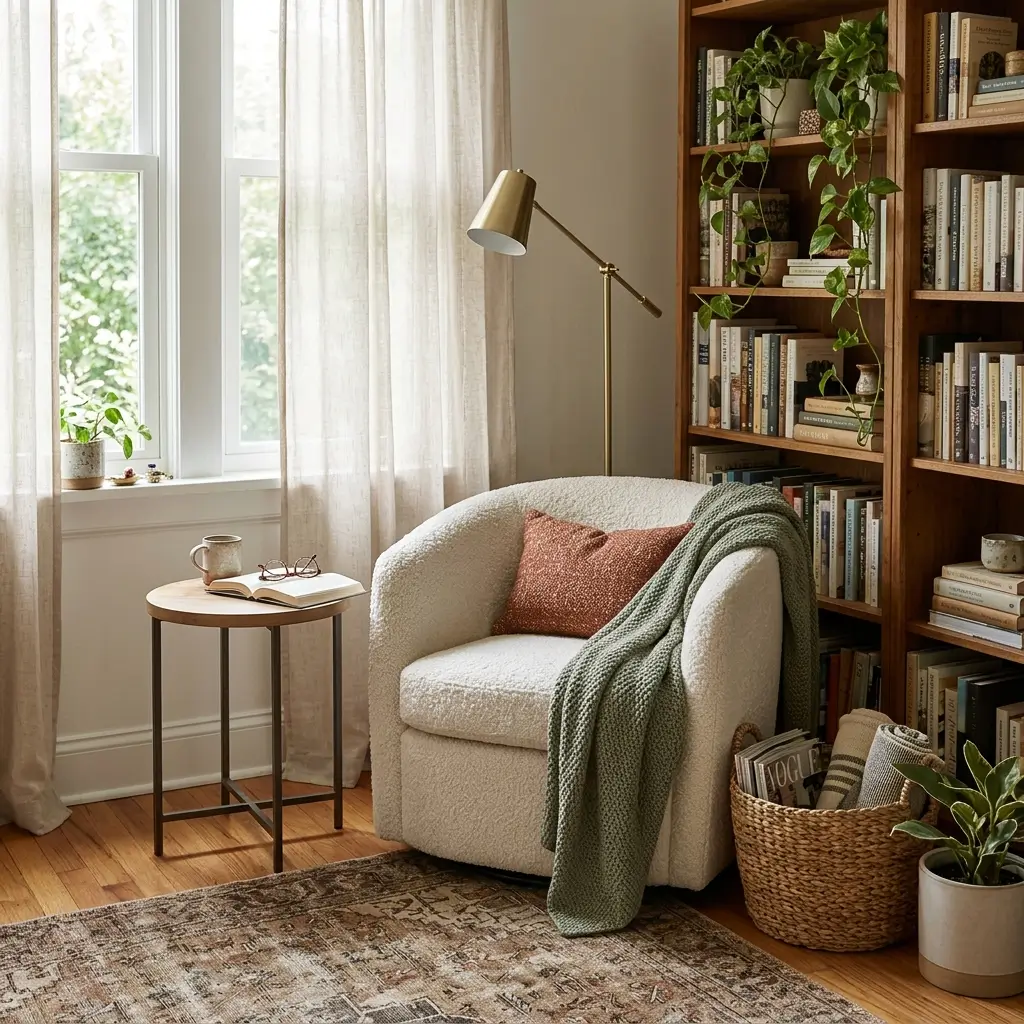
Not every corner of your living room needs to serve the same purpose. If you have an unused area beside a window, bookshelf, or empty wall, consider turning it into a small reading nook.
A comfortable accent chair is a good starting point. Sherpa, bouclé, and other textured upholstery options can make the seating area feel softer and more inviting.
Choose a chair that fits the available space rather than buying the largest design you can find. A compact barrel chair or slipper chair may be more practical in an apartment, while a wider upholstered armchair can work beautifully in a spacious living room.
Next, add a small side table where you can place a book, reading glasses, or a warm drink. A slim C-shaped table is particularly useful because it can slide beneath the chair when it isn’t needed.
Good lighting is essential. Position a floor lamp or adjustable reading lamp close enough to illuminate your book without creating uncomfortable glare.
Finally, introduce one or two personal touches. A soft throw, a small cushion, and a woven basket for magazines can make the corner feel complete.
You don’t need to purchase everything at once. An existing armchair, a spare cushion, and a lamp may be enough to establish the space before you decide whether an additional furniture purchase is worthwhile.
Styling tip: If the nook is close to a window, avoid blocking natural light with oversized furniture. Keeping the arrangement relatively compact will help the corner feel open during the day and comfortable in the evening.
Explore sherpa upholstered accent chairs on Amazon
How to Decorate a Small Living Room for Winter
A small living room can feel just as inviting as a large one. In fact, limited space can make it easier to create an intimate atmosphere, provided you choose decorations carefully.
The main challenge is avoiding unnecessary clutter. Instead of adding several large accessories, concentrate on a few pieces that improve both comfort and appearance.
Here are some practical ways to do it:
Use interchangeable cushion covers: Rather than storing several complete sets of cushions, purchase removable covers that fold flat. This makes seasonal decorating easier and saves cupboard space.
Choose a rug that fits the seating area: A rug that’s too small can make a compact room feel disconnected. Measure the available floor space before ordering, and consider placing the front legs of the sofa on the rug.
Make use of vertical space: Wall shelves, tall floor lamps, and carefully arranged artwork can add interest without taking up additional floor area.
Choose furniture with more than one purpose: An upholstered storage ottoman can provide extra seating, a footrest, and a place to store blankets.
Keep the coffee table simple: One decorative tray and a small arrangement are often enough. Leave room for everyday items instead of turning the entire table into a display.
Use mirrors strategically: A mirror placed opposite a window can reflect natural light and help the room feel more open. Choose a frame that complements the rest of your decor.
One more thing: don’t push every piece of furniture against the walls automatically. Depending on the room’s layout, leaving a little breathing space around the furniture can make the arrangement look more intentional.
Winter Living Room Color Combinations That Work
Choosing the right colors can make seasonal decorating much easier. You don’t need to introduce an entirely new palette; instead, build on the shades already present in your furniture, walls, and flooring.
Here are five combinations worth considering.
1. Cream, Beige, and Warm Brown
This combination is ideal if you prefer a calm, understated living room. Cream cushions, beige throws, and warm wooden furniture create a soft appearance without relying on strong seasonal colors.
It’s particularly suitable for Scandinavian-inspired and minimalist interiors.
2. Forest Green, Ivory, and Natural Wood
Forest green adds depth while ivory keeps the room from feeling too dark. Introduce wooden trays, neutral upholstery, and a few green cushions to create a balanced look.
This combination works particularly well with traditional, rustic, and contemporary furniture.
3. Charcoal Gray, Camel, and Cream
If your living room already has gray furniture, camel and cream accessories can soften its appearance. A warm-colored throw, textured cushions, and wooden details help prevent the space from feeling overly cool.
4. Rust, Oatmeal, and Muted Sage
These earthy shades create a relaxed seasonal atmosphere. Rust-colored cushions add warmth, oatmeal provides a neutral foundation, and muted sage introduces a natural accent.
Use the stronger colors in smaller amounts so the room remains balanced.
5. Navy Blue, Soft Gray, and Warm Wood
For a slightly more dramatic winter look, combine deep navy accents with light gray textiles and natural wooden finishes. The contrast adds sophistication without making the room feel excessively formal.
A useful decorating rule: Start with your largest surfaces, such as the sofa, walls, and rug. Choose your smaller accessories around those existing colors rather than buying individual items that don’t work together.
How to Create a Cozy Winter Living Room on a Budget
You don’t need an expensive decorating budget to make your living room feel different. Some of the most noticeable improvements come from changing the way existing items are arranged.
If you’re working with limited money, prioritize the things that have the greatest effect on everyday comfort.
| Budget level | What to focus on | Practical examples |
|---|---|---|
| Very low budget | Rearranging and reusing existing decor | Fold blankets neatly, move lamps, reuse vases, and rearrange cushions. |
| Small budget | Affordable textile and lighting updates | Buy new cushion covers, a soft throw, or warm-white bulbs. |
| Moderate budget | Larger comfort improvements | Add a suitable area rug, a decorative lamp, or a storage ottoman. |
| Higher budget | Long-term furniture investments | Consider a quality accent chair, durable rug, or solid wood furniture. |
Here are a few more ways to keep costs under control:
- Shop your home first: Look for blankets, baskets, vases, and cushions stored in other rooms. You may already own items that suit your winter color scheme.
- Replace covers instead of cushions: New covers are usually easier to store and allow you to refresh your sofa without purchasing complete cushion sets.
- Buy versatile accessories: Choose neutral throws, wooden trays, and simple ceramic pieces that can be used throughout the year.
- Avoid decorating every surface: Focus on the sofa, coffee table, and one additional focal point, such as a mantel or reading corner.
- Measure before buying: Checking furniture and room dimensions helps prevent expensive purchasing mistakes.
If you’re unsure where to begin, start with the sofa. It is often the largest visual feature in a living room, so a new throw and a few coordinated cushions can make a noticeable difference.
Practical Winter Living Room Styling Tips
Once you’ve selected your main decorations, a few finishing touches can help bring the entire space together.
Balance warm and cool tones. If your room has gray walls, silver hardware, or cool-colored flooring, introduce warmer elements through wooden accessories, cream textiles, and amber-colored accents.
Vary textures instead of using too many colors. A neutral living room can still feel interesting when you combine velvet, knitted fabrics, linen, wood, and woven materials.
Keep surfaces functional. A coffee table should still have room for drinks and everyday activities. Decorative objects should make the space more attractive, not interfere with how you use it.
Pay attention to proportions. Oversized cushions can overwhelm a small sofa, while tiny accessories may disappear on a large coffee table. Consider the dimensions of your furniture before purchasing decorations.
Keep walkways clear. Rugs, baskets, side tables, and accent chairs should not make it difficult to move around the room.
Maintain your textiles. Follow the manufacturer’s cleaning instructions for wool blankets, velvet covers, and high-pile rugs. Regularly removing dust and loose fibers helps preserve their appearance.
Common Winter Living Room Decorating Mistakes to Avoid
Even attractive accessories can look out of place when they’re not arranged thoughtfully. Before finishing your seasonal refresh, watch out for these common mistakes.
Overusing Christmas Decorations
Red-and-green ornaments, novelty signs, and holiday-themed cushions can look beautiful in December. However, relying too heavily on these decorations may make the living room feel outdated once the holidays are over.
How to avoid it: Choose winter-inspired materials and colors rather than decorations that are specifically associated with Christmas. Neutral textiles, natural greenery, and warm wood can remain in place throughout the season.
Depending on One Overhead Light
A single ceiling fixture may illuminate the room, but it doesn’t always create a relaxing atmosphere.
How to avoid it: Introduce table lamps, floor lamps, and other suitable light sources at different heights. Use warm-white bulbs for a softer evening environment.
Buying a Rug Without Measuring
A rug that’s too small can make the furniture arrangement appear disconnected. A rug that’s too large may interfere with doorways and walking areas.
How to avoid it: Measure your seating area before purchasing. Consider how far the rug should extend beneath the sofa and chairs, and check the product dimensions carefully.
Adding Too Many Decorative Accessories
Filling every shelf, table, and empty corner with decorations can make a room feel crowded rather than comfortable.
How to avoid it: Choose a few pieces that complement one another. Leave some empty space around decorative arrangements so individual items can stand out.
Ignoring Everyday Maintenance
Thick blankets, plush rugs, and textured cushion covers can collect dust, hair, and debris.
How to avoid it: Check care labels before purchasing, vacuum rugs using appropriate settings, and choose removable cushion covers where possible. Practical maintenance matters just as much as appearance.
Choosing Trendy Pieces Without Considering Your Existing Furniture
An accessory may look beautiful in a product photograph but feel out of place in your home.
How to avoid it: Consider your sofa color, flooring, wall finishes, and available space before purchasing. A product should complement your existing decor rather than force you to replace several other items.
Pros and Cons
A seasonal refresh can make your home more comfortable, but it’s worth considering the practical side before buying new accessories.
| Pros | Cons |
|---|---|
| Makes the living room feel more comfortable and inviting. | Seasonal accessories require storage space. |
| Refreshes existing furniture without a complete renovation. | Frequently changing decorations can become expensive. |
| Allows you to experiment with different textures and colors. | Heavy fabrics and plush rugs may require additional cleaning. |
| Creates a relaxing environment for family gatherings and quiet evenings. | Poorly selected accessories can create unnecessary clutter. |
| Neutral winter decorations can remain useful beyond the holiday season. | Some seasonal trends may not complement existing furniture. |
The best approach is to choose versatile pieces that serve a practical purpose. A quality throw blanket, for example, can be used throughout the year, while removable cushion covers make it easy to change the appearance of your sofa without buying new furniture.
Frequently Asked Questions
1. How can I make my living room look cozy for winter without using Christmas decorations?
Focus on comfortable materials and warm lighting rather than traditional holiday ornaments. Add chunky knit blankets, velvet or bouclé cushions, wooden accessories, and a soft area rug. You can also introduce natural greenery in a ceramic vase.
These elements create a seasonal appearance without making the room feel like it’s permanently decorated for Christmas. The result is a living space that remains attractive throughout winter.
2. What colors work best for a winter living room aesthetic?
Warm neutrals such as ivory, oatmeal, beige, camel, and taupe provide an excellent foundation. You can add deeper shades such as forest green, burgundy, rust, navy, and espresso brown for contrast.
The best combination depends on your existing furniture and wall colors. If your room already has dark furniture, lighter accessories can help balance the appearance. For a mostly white or cream living room, deeper accent colors can add personality without overwhelming the space.
3. How do I make a living room warmer without replacing my furniture?
Start by improving the textiles and lighting. Add a thick throw to the sofa, replace lightweight cushion covers with textured alternatives, and introduce a suitable area rug.
You can also rearrange your furniture to create a more comfortable seating arrangement. If the room feels dark in the evenings, add a table lamp or floor lamp with a warm-white bulb.
These changes can improve the overall atmosphere without requiring a major furniture purchase.
4. What type of lighting makes a living room feel cozy in winter?
Warm-white lighting is generally a good choice for a relaxing living room. Bulbs around 2700K produce a warm appearance that works well with neutral fabrics, wooden furniture, and soft seasonal decorations.
Rather than relying entirely on a ceiling fixture, combine table lamps, floor lamps, and other suitable accent lights. This allows you to adjust the lighting depending on whether you’re reading, watching television, or relaxing.
5. How can I decorate a small living room for winter without making it look crowded?
Use a few carefully selected accessories instead of filling the room with decorations. A soft throw, two or three coordinated cushions, a suitably sized rug, and a small table lamp can make a noticeable difference.
Consider multifunctional furniture, such as a storage ottoman, and use wall shelves to introduce decorative details without taking up floor space.
Keeping the coffee table and walkways relatively clear will also help the room feel more comfortable.
6. How can I decorate my living room for winter on a tight budget?
Begin by using items you already own. Rearrange your cushions, bring a blanket from another room, reuse decorative vases, and create a simple coffee table arrangement.
If you have money for only one or two purchases, prioritize items that improve everyday comfort. A suitable throw blanket or warm lighting upgrade may provide more value than several small decorative ornaments.
7. Are neutral colors good for winter living room decor?
Yes. Neutral colors are particularly versatile because they work with many furniture styles and can remain in place after winter.
Cream, beige, oatmeal, taupe, and warm gray create a calm foundation. To prevent the room from looking flat, introduce different materials such as velvet, chunky knits, natural wood, and woven accessories.
8. How do I store winter living room decorations when spring arrives?
Wash or clean your textiles according to their care labels before storing them. Allow everything to dry completely to reduce the risk of unpleasant odors or mildew.
Fold blankets and removable cushion covers into labeled storage containers. Wrap fragile ceramic decorations separately, and keep small accessories together so they’re easier to find next winter.
For bulky textiles, breathable storage bags or appropriately sized fabric containers are useful options. Avoid compressing delicate materials if doing so could damage their shape or texture.
9. What should I put on a coffee table for winter?
A decorative tray, a small vase, a few books, and a candle holder can create a simple seasonal arrangement.
Choose materials that complement the rest of the room, such as wood, ceramic, stone, or brass. Keep the arrangement low enough to maintain visibility across the seating area, and leave some free space for everyday use.
10. How can I make my living room look warm if it has gray walls and furniture?
Gray can be an excellent foundation for a winter living room, but using too many cool shades may make the space feel uninviting.
Introduce cream and oatmeal textiles, warm wooden accessories, and accent colors such as camel, rust, or forest green. A textured rug and a few warm table lamps can also soften the overall appearance.
You don’t need to remove your gray furniture. The key is to balance its cooler tones with warmer materials and finishes.
Key Takeaways: Creating a Cozy Winter Living Room
A welcoming winter living room doesn’t require a complete makeover. A few thoughtful changes can make the space more comfortable while keeping your existing furniture and personal style intact.
Here are the most important ideas to remember:
- Start with the sofa: A chunky throw and coordinated cushions are simple ways to introduce seasonal texture.
- Improve your lighting: Warm-white bulbs and strategically placed lamps create a more relaxing evening atmosphere.
- Choose practical floor coverings: A properly sized rug adds visual structure and makes hard flooring more comfortable.
- Introduce natural details: Wooden trays, ceramic vases, and evergreen stems help balance softer fabrics.
- Make small spaces work harder: Use multifunctional furniture, removable cushion covers, and simple decorative arrangements.
- Think beyond winter: Choose versatile accessories that can remain useful throughout the year.
Final Thoughts
Creating a beautiful winter living room aesthetic is really about making your everyday surroundings feel more comfortable. You don’t need expensive furniture, elaborate decorations, or a room full of seasonal accessories to achieve that feeling.
Sometimes, the smallest changes have the greatest impact. A soft blanket within reach, a comfortable reading chair, warm lighting in the evening, or a thoughtfully arranged coffee table can make your living room feel like a place you genuinely look forward to spending time in.
Start with the area that needs the most attention. If your sofa looks a little bare, introduce textured cushions and a cozy throw. If your room feels cold or unfinished, consider a suitable rug and warmer lighting. You can gradually build on these changes as your needs and budget allow.
Most importantly, choose decorations that suit your home and the way you live. A winter living room should look beautiful, certainly, but it should also feel comfortable enough to enjoy every day.