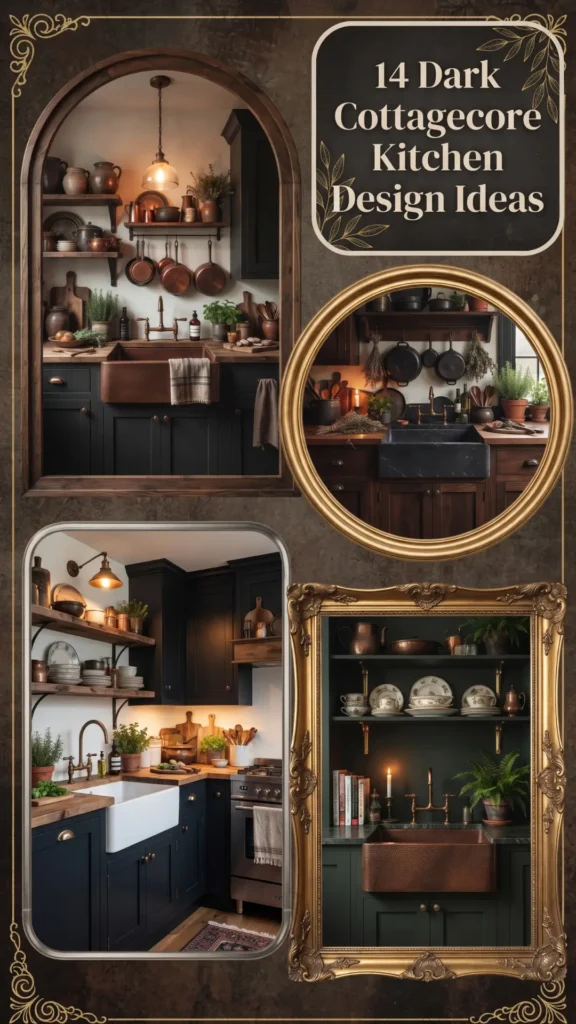
If you have ever dreamt of a kitchen that feels like a cozy, hidden sanctuary deep within an enchanted forest, you are not alone.
While bright, modern white kitchens have dominated interior trends for years, homeowners and design enthusiasts are increasingly turning toward a richer, more moody aesthetic: Dark Cottagecore.
Combining rustic countryside nostalgia with dramatic, nature-inspired tones, dark cottagecore kitchen design creates an intimate, storybook atmosphere where slow cooking, baking, and quiet conversations take center stage.
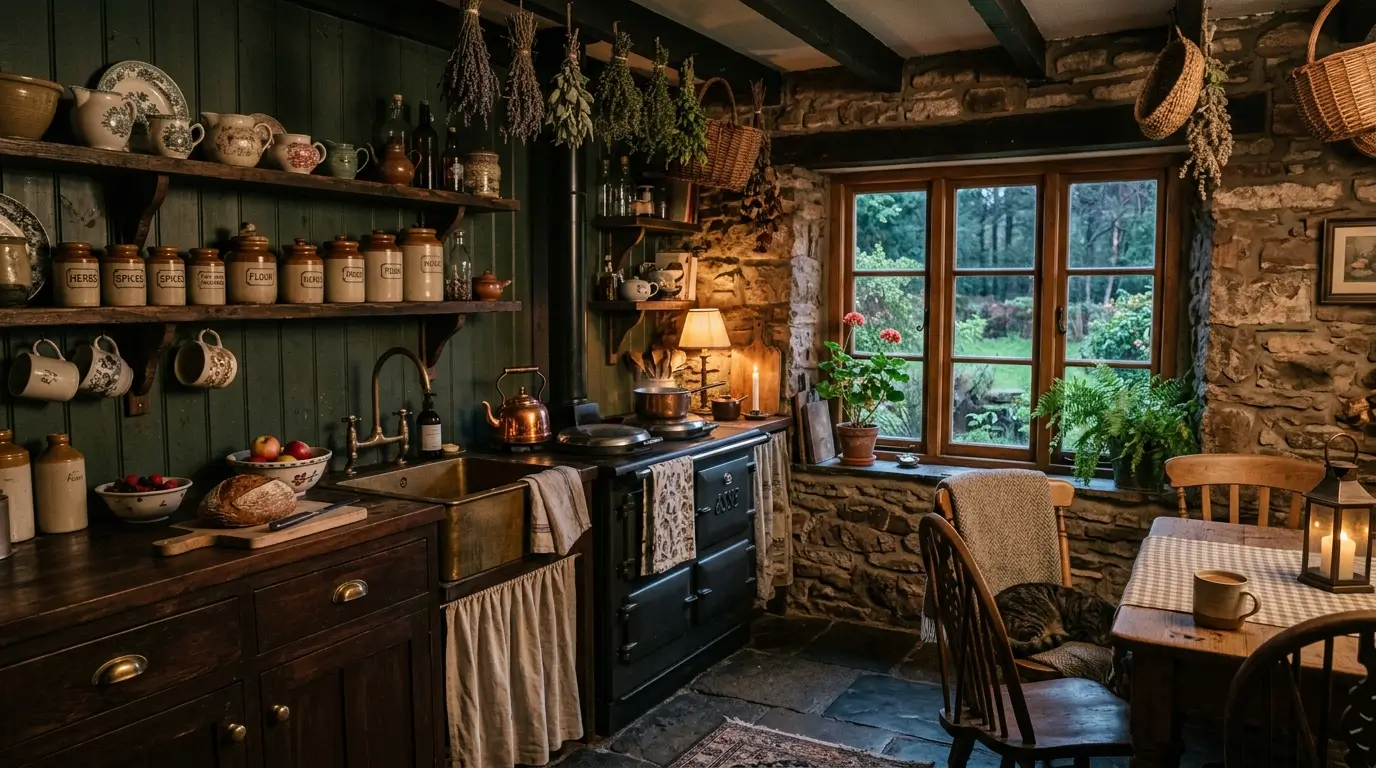
Notice how the soft candlelight, warm wood shelving, and deep color scheme work together to turn a functional kitchen into a welcoming haven:
Why Choose Dark Cottagecore Kitchen Design?
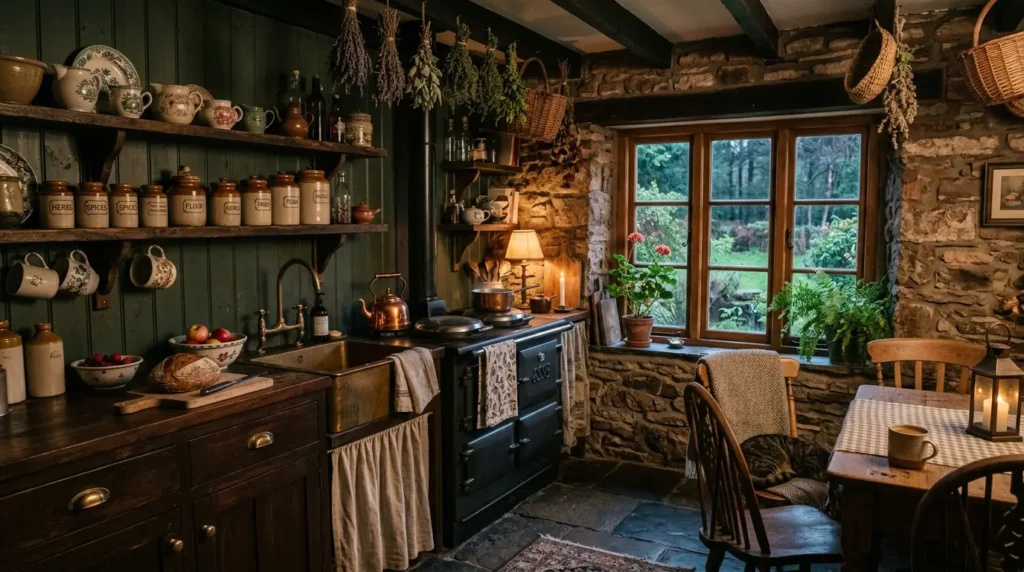
Choosing a dark cottagecore style allows you to step away from overly sterile, high-gloss kitchen layouts. It blends drama with grounded comfort, making your kitchen feel deeply personal and lived-in rather than like a showroom.
- Cozy Atmospheric Depth: Deep forest greens, rich charcoals, and shadowy plum tones envelop the room in warmth.
- Celebration of Natural Materials: Reclaimed wood, natural stone, ceramic, and copper patinas take center stage.
- Forgiving and Durable: Darker matte surfaces and weathered textures hide everyday minor wear far better than stark white finishes.
- Timeless Nostalgia: It emphasizes thrifted, antique, and heirloom elements that never go out of style.
Reasons to “Travel” into a Dark Cottagecore Aesthetic
Transforming your kitchen into a dark cottagecore space is much like creating an inviting domestic destination right inside your home.
- A Daily Retreat at Home: Every morning feels like waking up in a secluded woodland cabin or historic stone cottage.
- Encourages Slow Living: The calming, moody ambiance naturally invites you to slow down, brew tea, bake fresh bread, and enjoy the process.
- An Escape from Modern Digital Fatigue: Natural timber textures, candlelight, and botanical accents create an organic haven away from glowing screens.
1. Deep Forest Green Cabinets
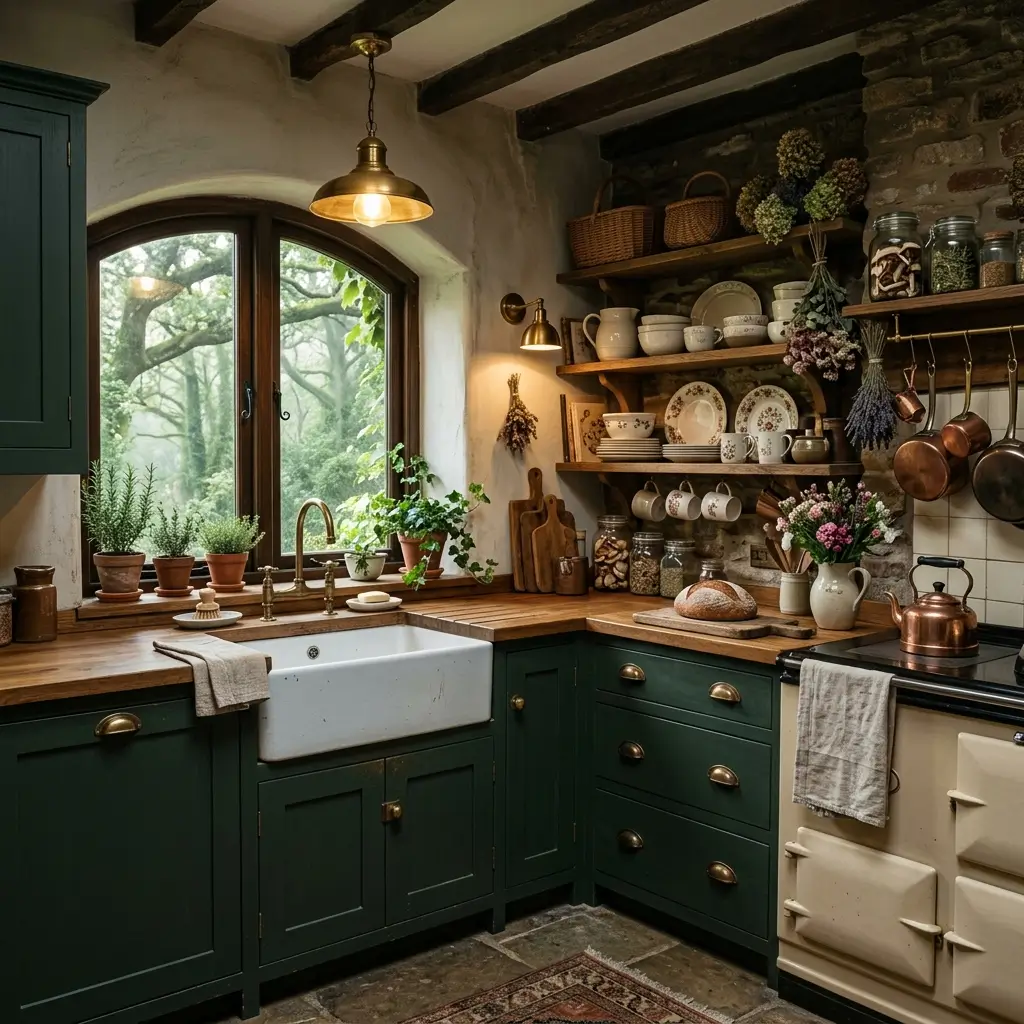
Deep forest green cabinets serve as the ultimate foundational element for a dark cottagecore kitchen.
This rich, nature-inspired shade adds drama while maintaining a grounded connection to the outdoors.
Unlike harsh black paint, forest green introduces a moody warmth that pairs seamlessly with natural timber and vintage metal finishes.
Choosing a soft matte or eggshell finish prevents glare from harsh light fixtures, enhancing the cozy, old-world aesthetic.
It creates an inviting atmosphere that feels like stepping into a peaceful, enchanted woodland cottage every single morning.
2. Rustic Dark Wood Ceiling Beams
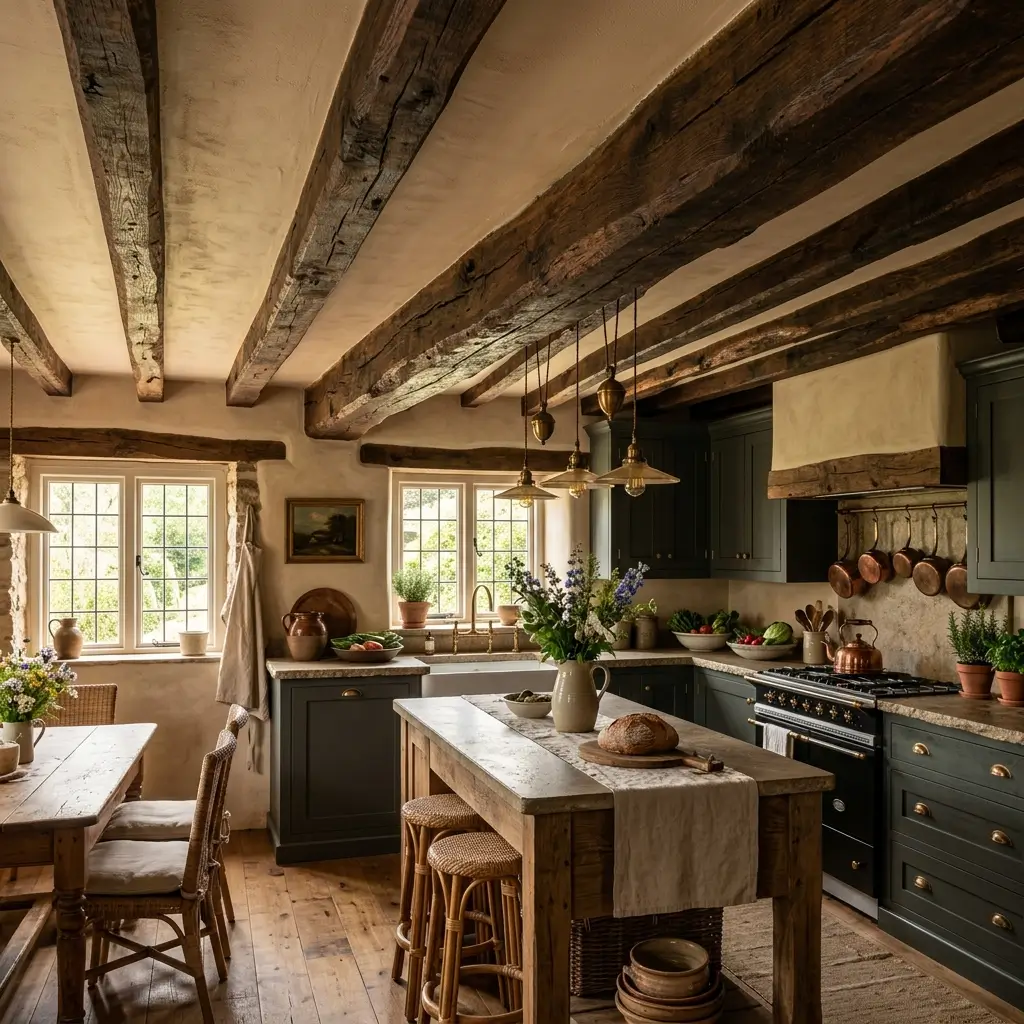
Exposed ceiling beams crafted from dark, reclaimed timber instantly infuse your cooking space with historic character and architectural texture.
Even decorative wooden beams can completely transform a modern flat ceiling into a cozy, storybook retreat.
The deep brown tones visually anchor the room, drawing the eye upward while adding a sense of rustic craftsmanship.
When paired with moody cabinet colors and warm lighting, these wooden structural elements enhance the feeling of living in a secluded country home filled with timeless warmth and authentic heritage charm.
3. Aged Antique Brass Hardware
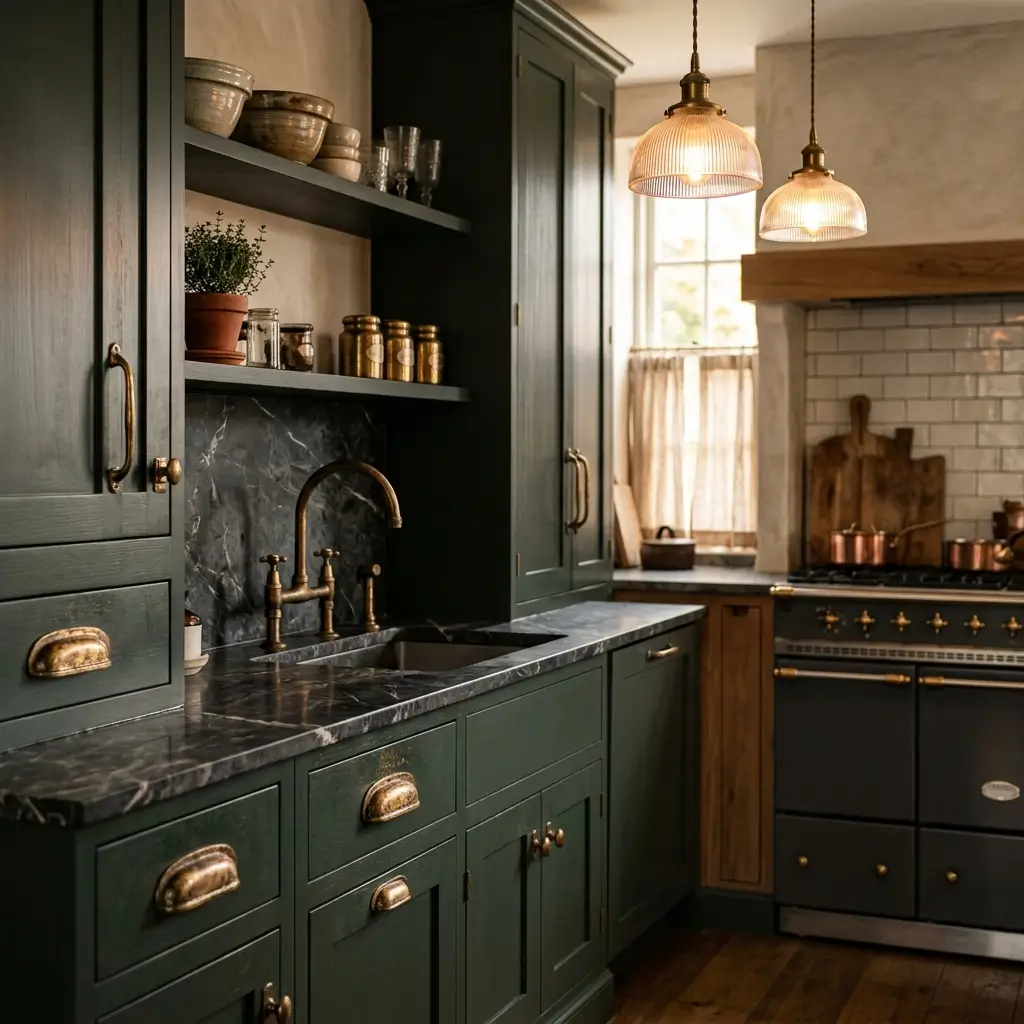
Swapping out modern chrome fixtures for antique brass handles, drawer pulls, and faucets adds a touch of understated metallic brilliance to dark surfaces.
Aged brass features a subtle patina that feels carefully collected over decades rather than freshly manufactured.
Against deep charcoal, dark teal, or forest green cabinetry, these golden-hued accents act like subtle jewelry, catching ambient light without creating cold reflections.
The soft, warm glow of aged brass balances heavy dark hues, elevating the room into a delightfully nostalgic and refined sanctuary.
4. Dark Botanical Floral Wallpaper
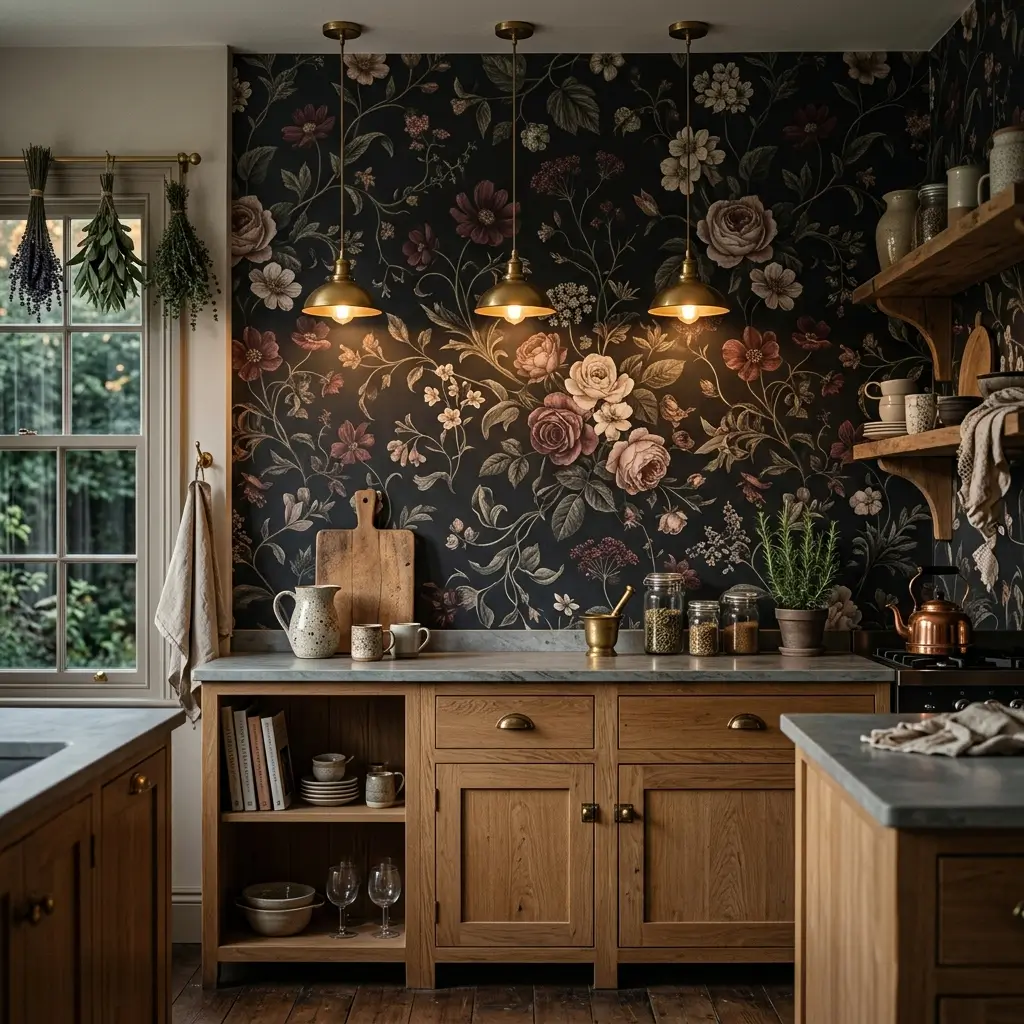
Installing vintage-inspired botanical wallpaper with a dark background brings instant storybook drama and artistic texture to your kitchen walls.
Moody floral patterns featuring muted wildflowers, leafy vines, or woodland illustrations soften hard countertop edges and cabinet lines.
Choose water-resistant wall coverings specifically designed for kitchen environments to ensure lasting durability near preparation areas.
This botanical touch injects a whimsical, romantic energy into the room, creating an immersive atmosphere that wraps you in nature’s quieter, more mysterious nocturnal aesthetic throughout the entire day.
5. Open Walnut Wood Shelving
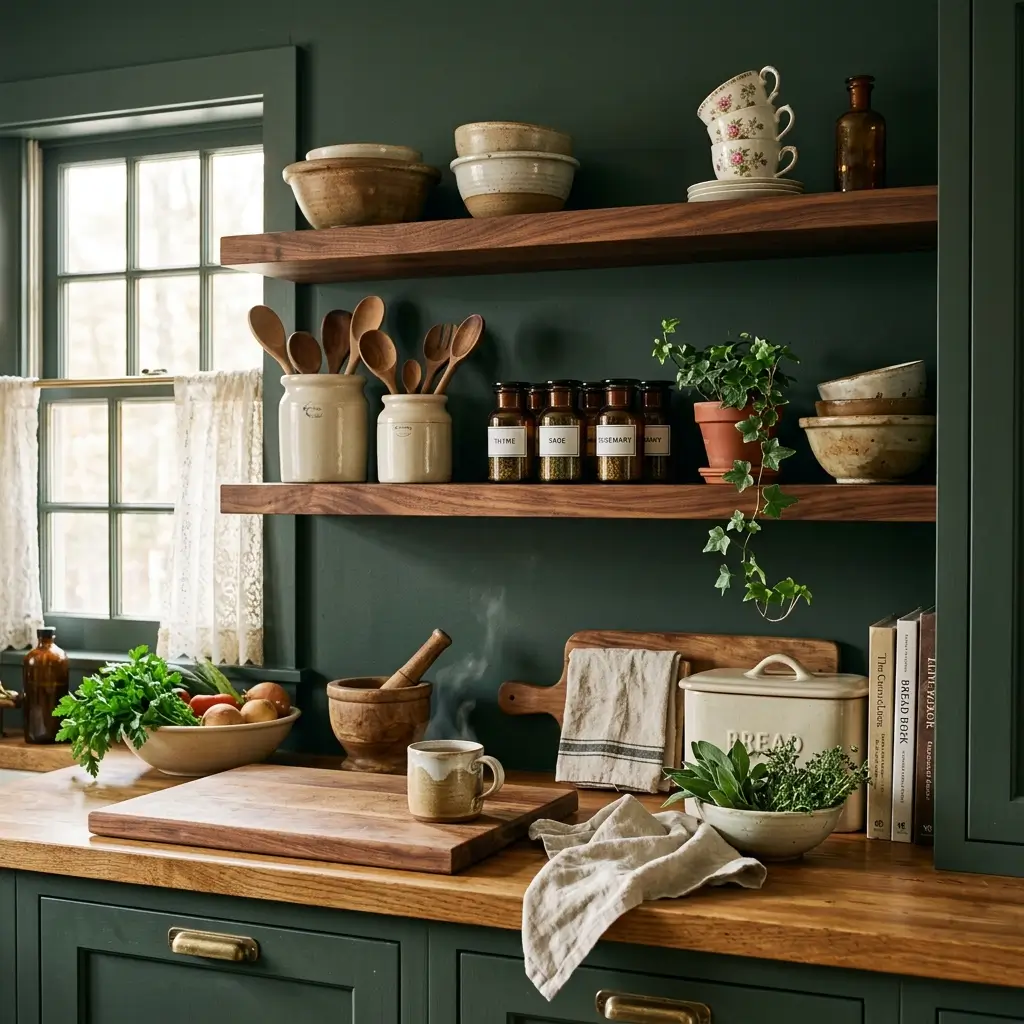
Replacing standard upper cabinets with thick, open walnut or oak shelving prevents a dark kitchen from feeling overly claustrophobic or heavy.
These natural timber ledges offer functional storage while serving as an attractive display platform for everyday kitchenware.
Arrange ceramic crocks, vintage teacups, glass spice jars, and small potted plants against dark painted walls for striking visual contrast.
Open shelving encourages a curated, lived-in feel, making essential tools accessible while showcasing the cozy, handmade character that defines authentic cottagecore kitchen styling.
6. Hanging Vintage Copper Cookware
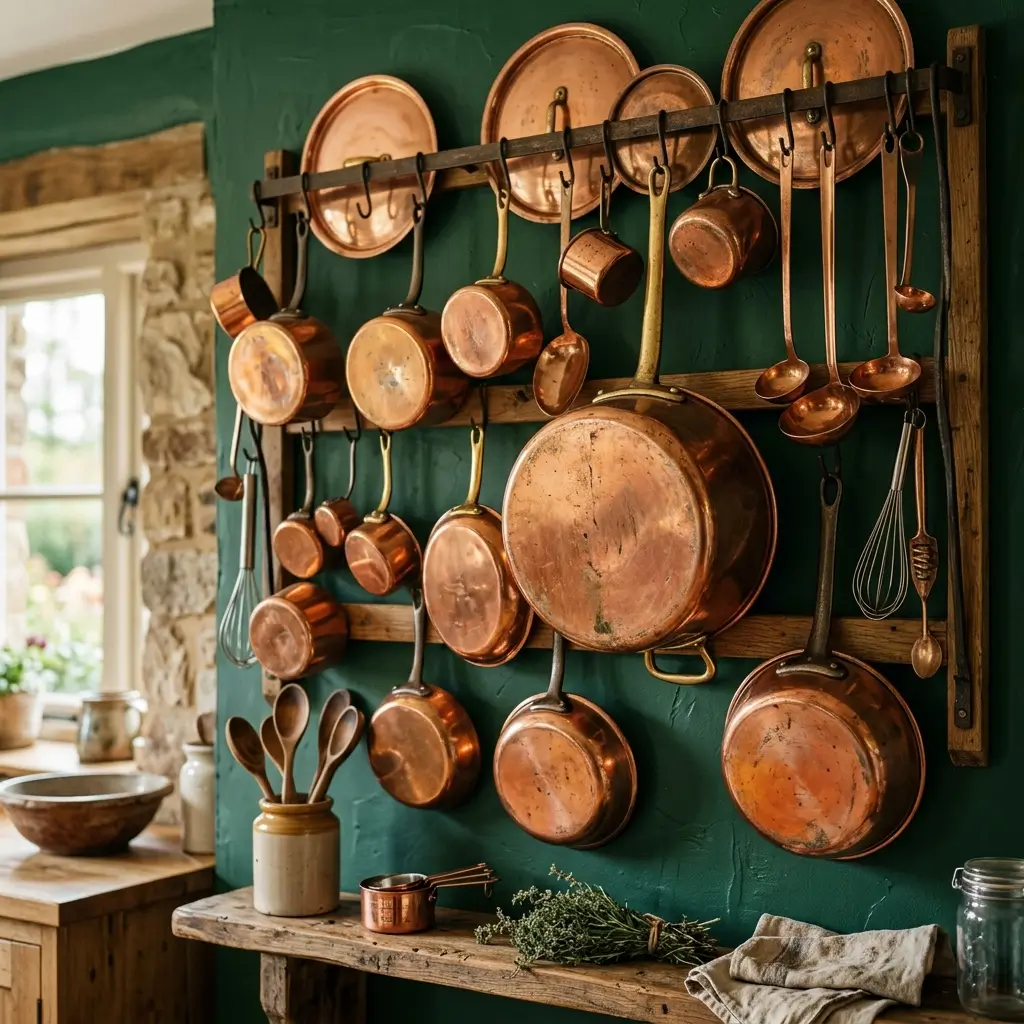
Displaying seasoned copper pots, pans, and ladles on open wall racks or ceiling mounts introduces warm metallic tones and rich historical culinary flair.
The golden reddish hue of authentic copper offers an exceptional warm contrast against dark green, plum, or charcoal background walls.
Beyond simple visual appeal, keeping your heavy cookware within easy arm’s reach emphasizes practical home cooking and domestic warmth.
Over time, the gentle patina on copper cookware creates a cherished, time-honored look, easily converting everyday functional kitchen tools into eye-catching artistic focal points.
7. Soapstone or Black Granite Countertops
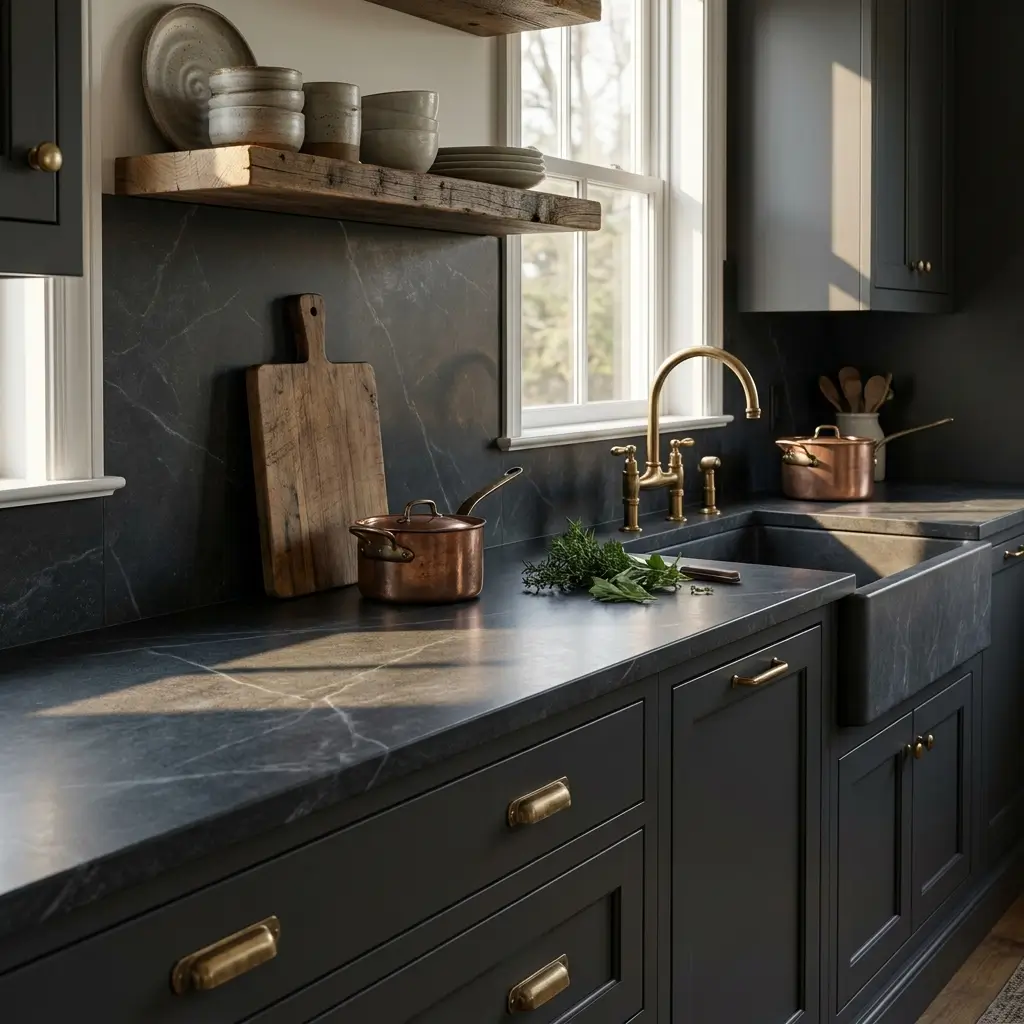
Honed soapstone or dark matte granite countertops deliver a grounding texture, remarkable durability, and tactile sophistication to your overall kitchen design.
Soapstone in particular develops a deep, silky charcoal patina over time when regularly treated with natural mineral oil.
Its subtle grayish veining introduces soft organic patterns that gracefully break up solid dark cabinet fronts.
These dark natural stone surfaces hold up exceptionally well against heat while offering an understated, tactile foundation that feels deeply connected to traditional, old-world stonemasonry craftsmanship.
8. Classic Apron-Front Farmhouse Sink
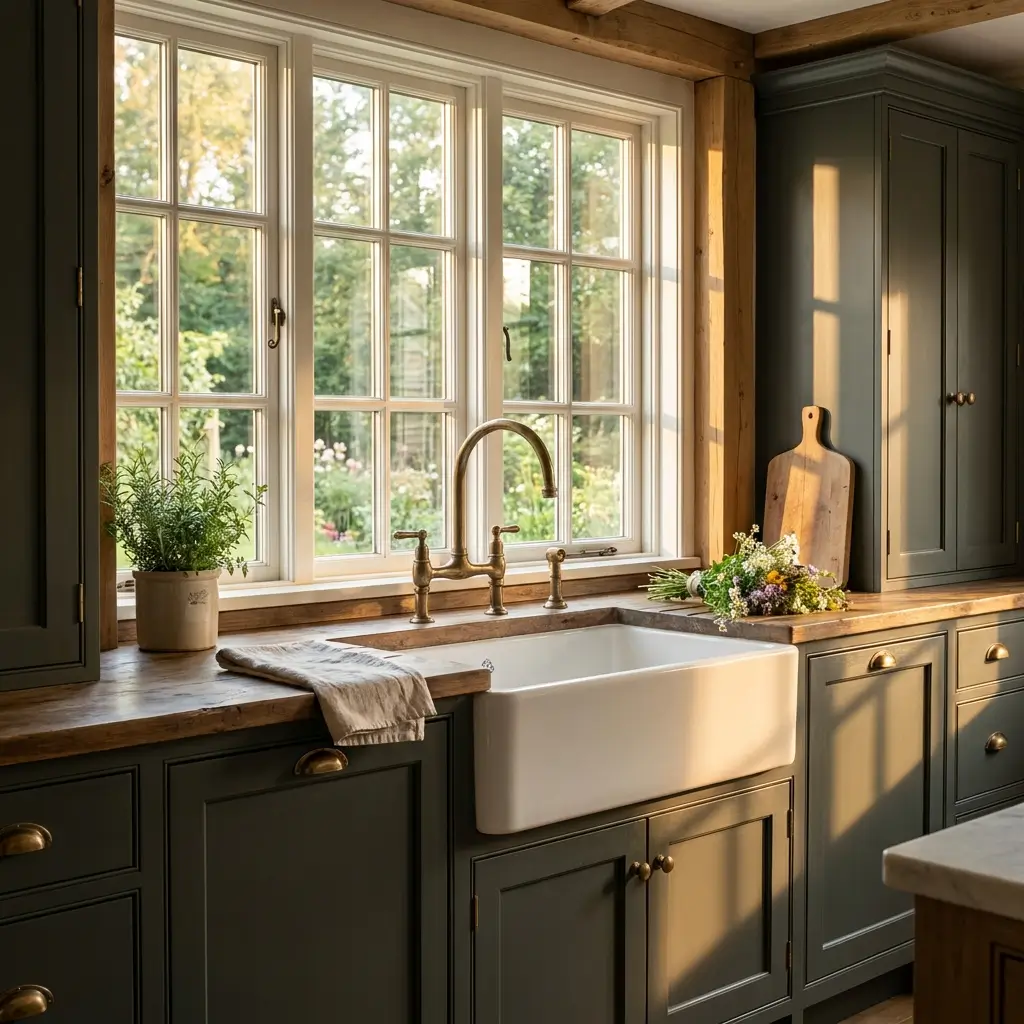
A deep, apron-front farmhouse sink constructed from white fireclay or dark slate creates an undeniable anchor in your cooking space.
The exposed front panel interrupts uniform cabinet rows, introducing traditional architectural geometry.
If you choose a crisp white ceramic sink, it creates a striking focal contrast against surrounding dark cabinetry, keeping the prep area bright and practical.
Pair it with a bridge faucet in aged brass or oil-rubbed bronze to solidify the vintage, handcrafted charm that makes washing dishes feel like an inviting, nostalgic ritual.
9. Dried Herb and Botanical Displays
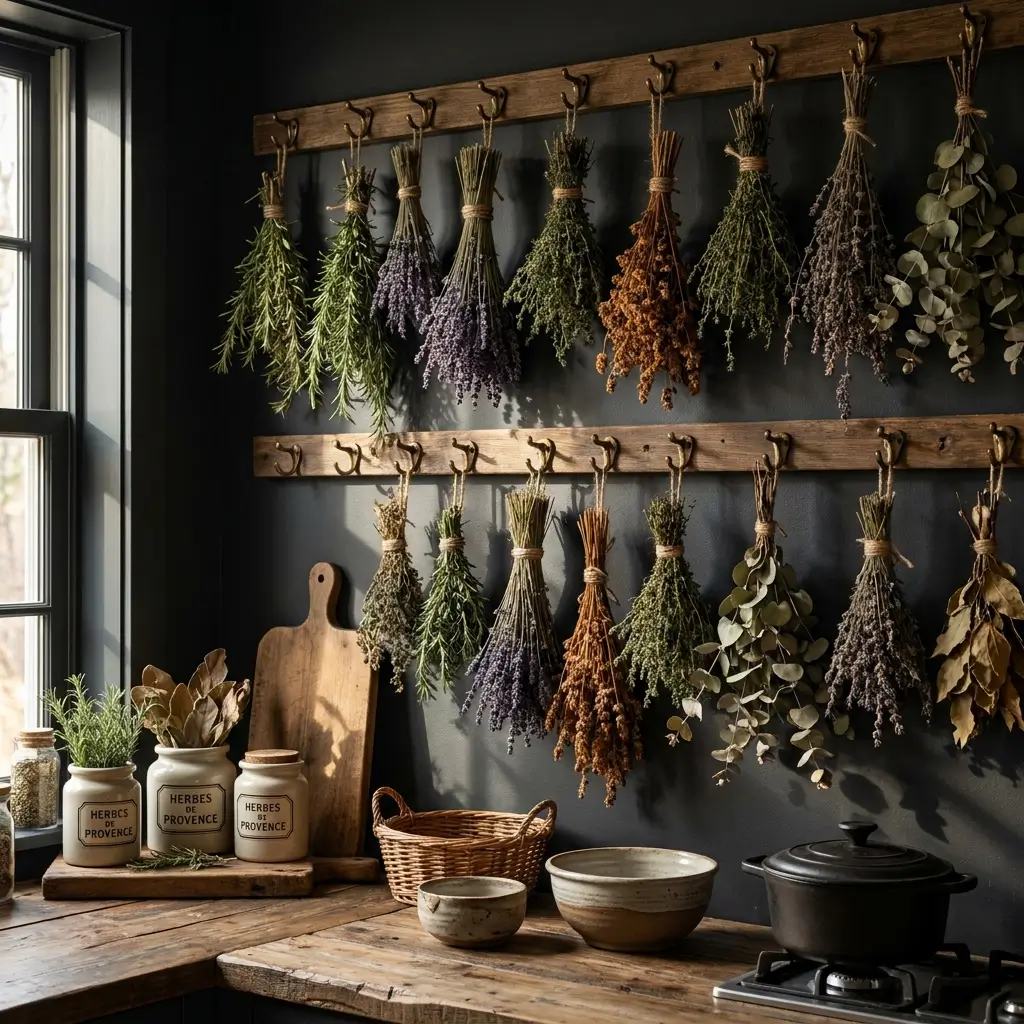
Hanging bundled sprigs of dried rosemary, lavender, thyme, and eucalyptus from ceiling hooks or rustic wall rails brings organic texture into moody kitchens.
As these botanicals dry, their muted earth tones including deep olive greens, soft purples, and amber browns harmonize effortlessly with dark paint palettes.
Beyond visual aesthetic charm, these drying plants continuously release subtle, calming herbal aromas that elevate the cozy atmosphere.
It is an affordable decor choice that connects your home cooking space directly to traditional cottage garden harvests and herbal traditions.
10. Moody Warm Layered Accent Lighting
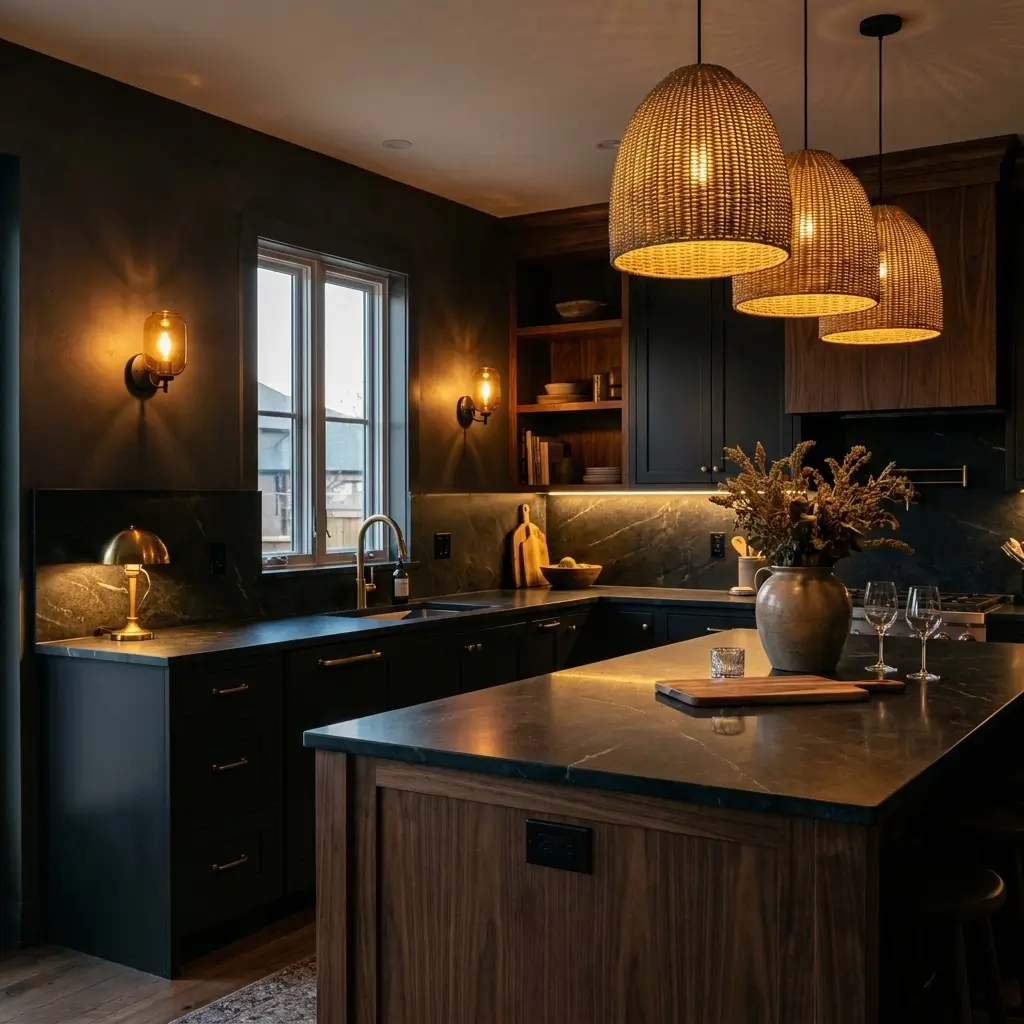
Lighting is crucial in dark kitchen design to ensure the space feels atmospheric rather than dim and dreary.
Instead of relying solely on harsh overhead recessed lights, layer multiple warm illumination sources throughout the room.
Combine woven pendant fixtures over the island, warm under-cabinet LED strips, amber wall sconces, and even a small vintage table lamp sitting directly on the countertop.
Warm-toned bulb color temperatures between 2200K and 2700K create an enchanting, candlelit glow that softens deep shadow lines and invites evening relaxation.
11. Rich Jewel-Toned Vintage Rugs
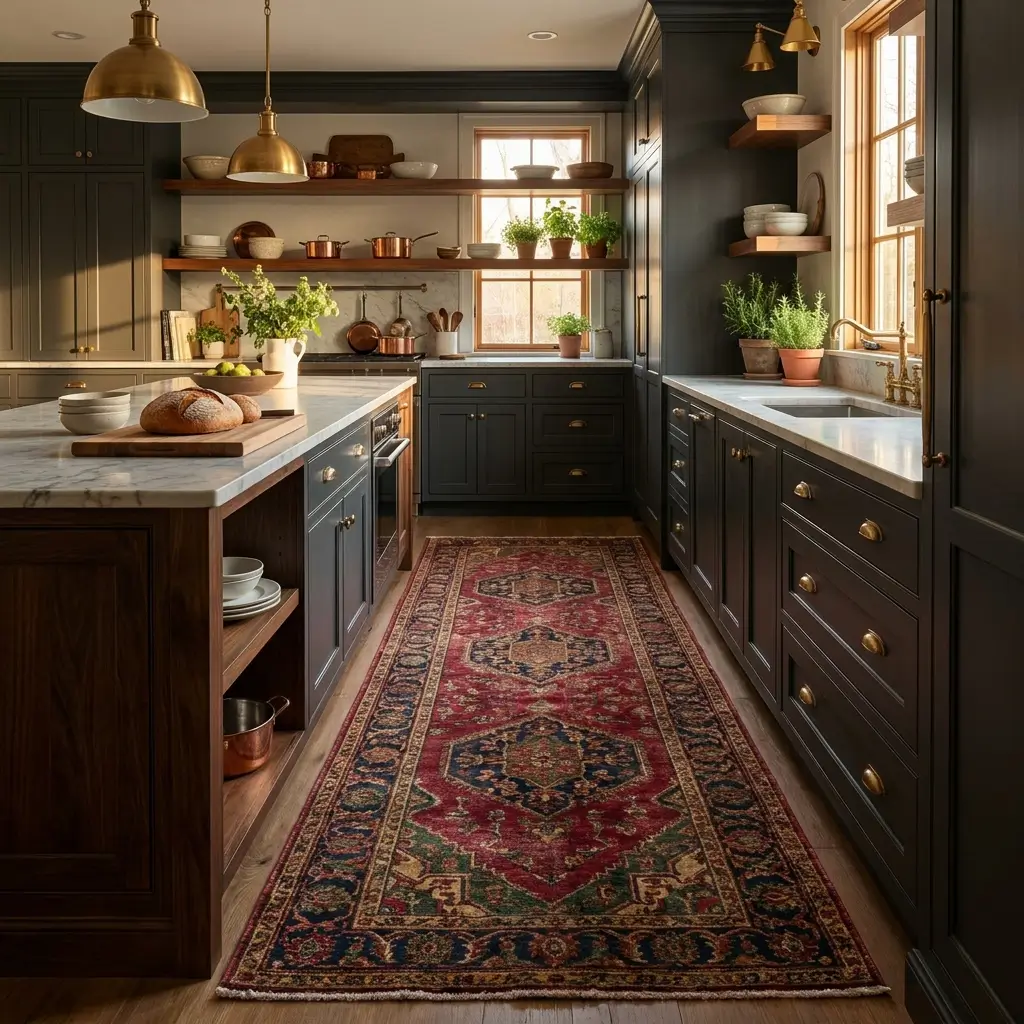
Placing a vintage Turkish or Persian-style runner rug along your kitchen workstation adds plush softness, acoustic dampening, and rich color underfoot.
Opt for rug designs that incorporate deep ruby reds, navy blues, dark golds, and forest greens.
These jewel tones complement dark cabinetry while introducing intricate, historic patterns to plain flooring.
A high-quality runner also provides comfortable cushioning during long prep sessions.
Selecting a durable, stain-treated vintage rug ensures it handles kitchen foot traffic easily while keeping the room feeling warm, soft, and lived-in.
12. Mason Jar and Stoneware Pantry Storage
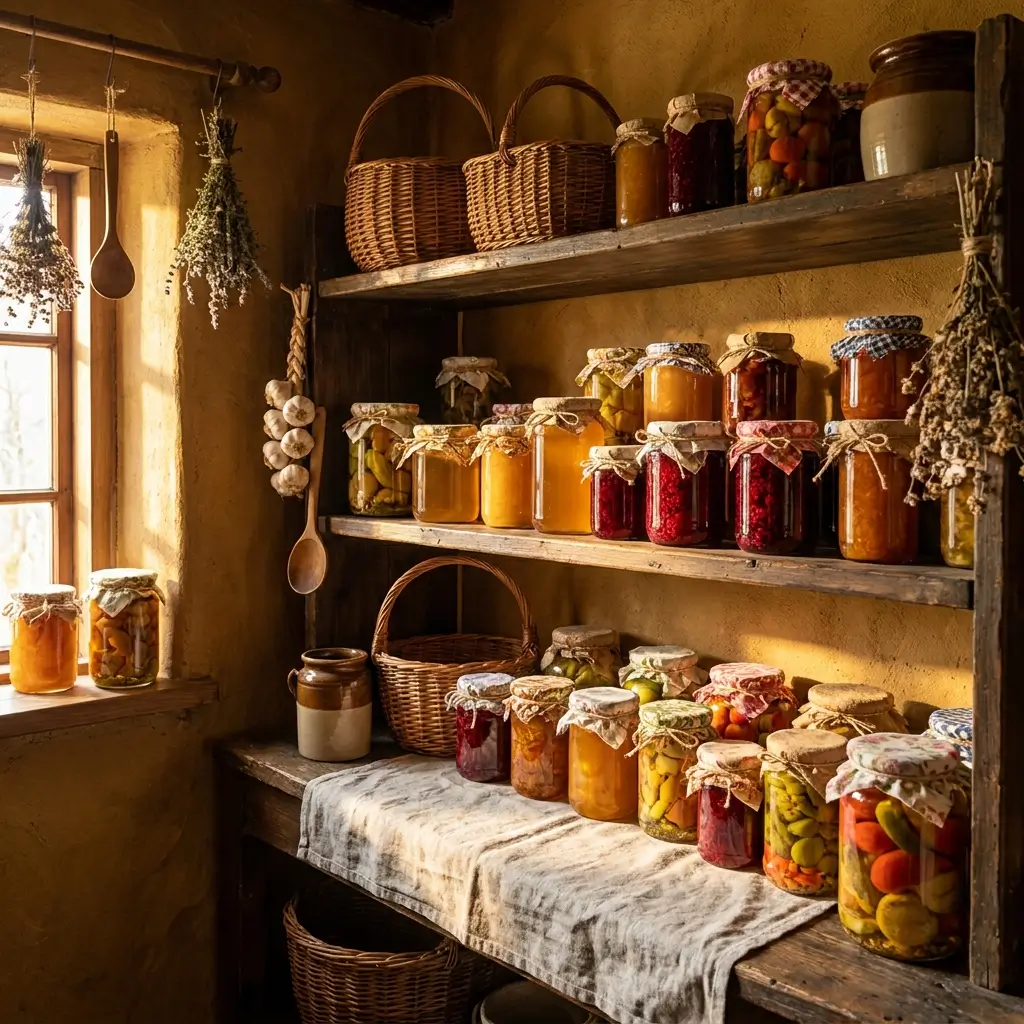
Ditch plastic packaging in favor of clear glass mason jars, glazed stoneware canisters, and vintage ceramic crocks arranged along countertops or open shelves.
Storing grains, flour, spices, and homemade preserves in transparent glass creates an authentic, old-fashioned pantry aesthetic.
The natural earth tones of legumes, dried pasta, and golden honey add subtle pops of organic color against dark background walls.
This practical organization method keeps essential ingredients fresh and visible while reinforcing the simple, self-sufficient lifestyle values that form the soul of cottagecore design.
13. Exposed Brick or Weathered Stone Backsplash
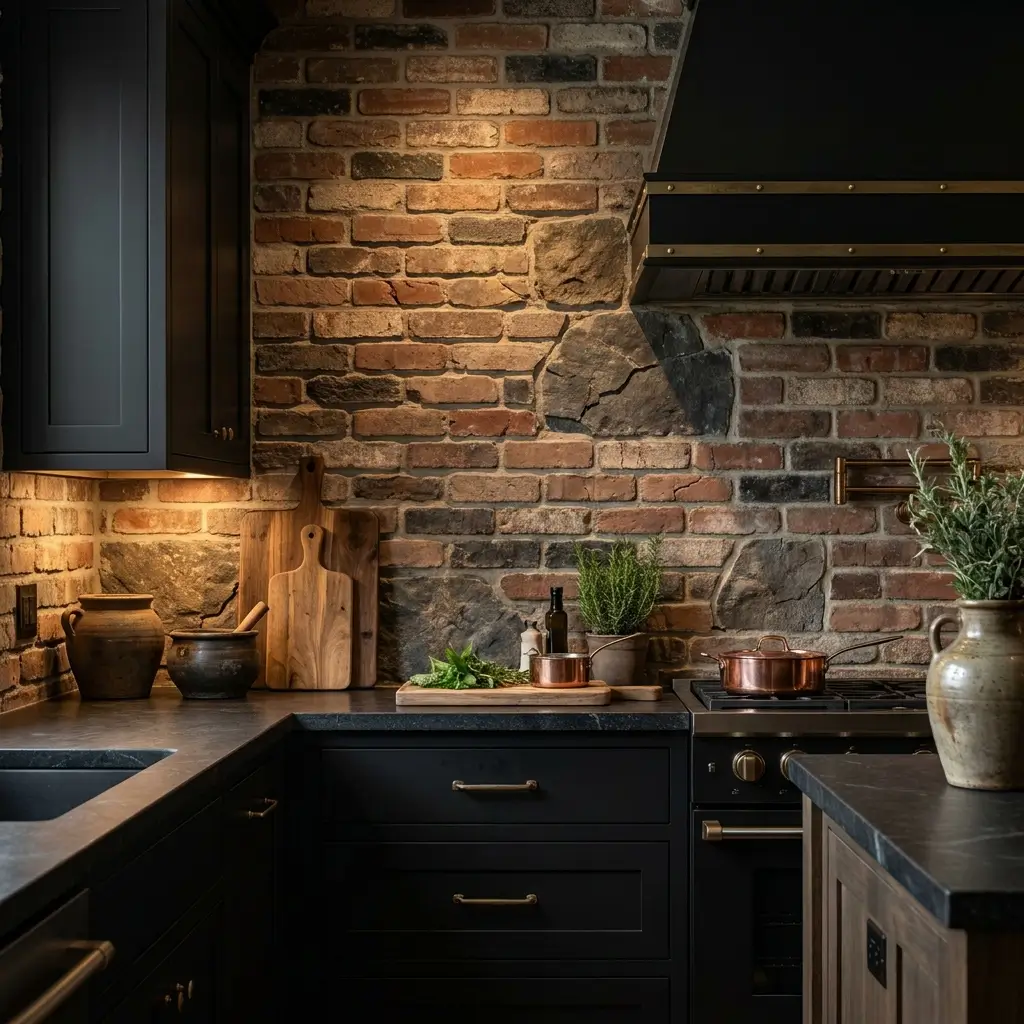
Incorporating a splashback made from reclaimed brick or rustic, irregular stone introduces raw architectural texture into your dark kitchen layout.
Weathered masonry surfaces offer a rugged tactile contrast when positioned behind smooth dark countertops and sleek ranges.
The earthy reddish-brown or muted gray tones of natural stone absorb light softly, preventing harsh glare while emphasizing historic craftsmanship.
Sealing the masonry with a matte finish protects against cooking splatters while preserving the natural, hand-carved look that evokes an ancient stone cottage hearth in the countryside.
14. Dark Wood Kitchen Island or Dining Table
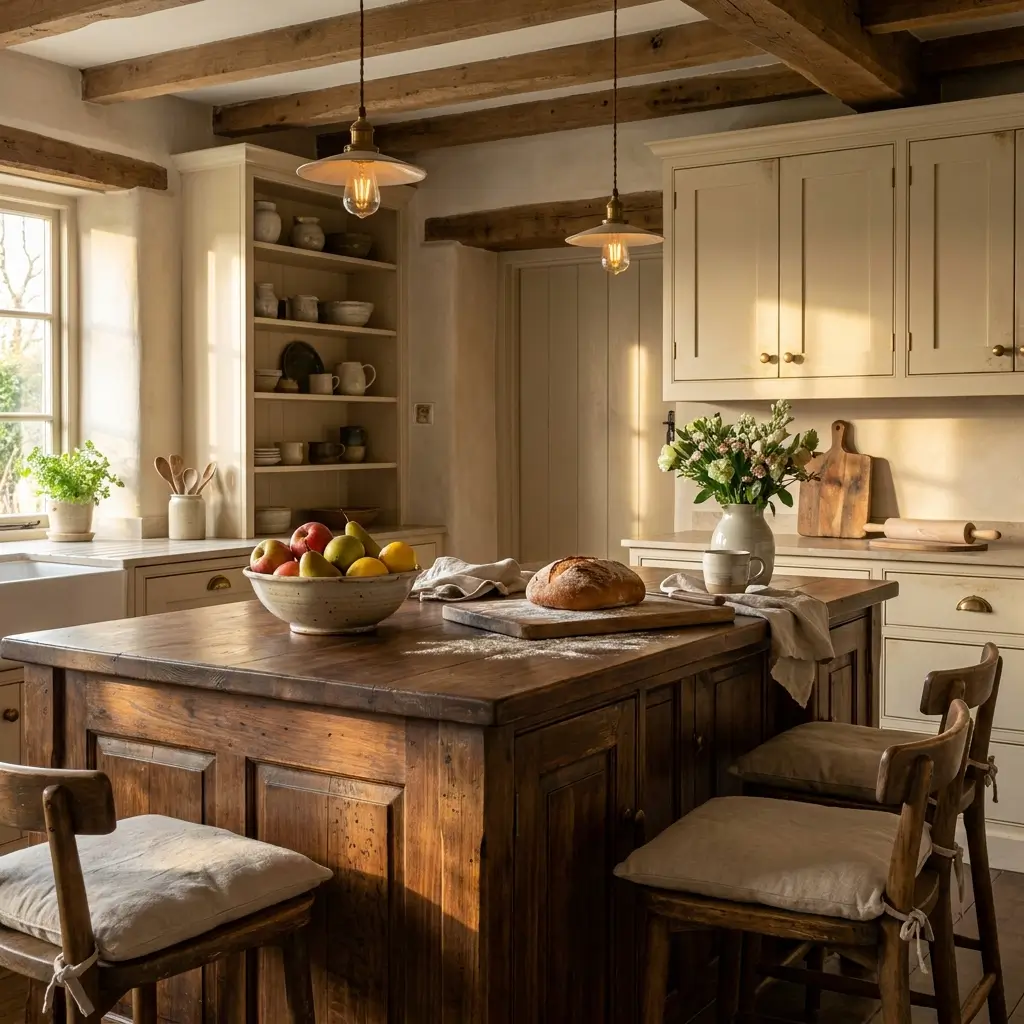
A central island or farmhouse dining table crafted from deep walnut or distressed dark oak acts as the ultimate gathering hub.
Rather than painting every piece of furniture in dark colors, retaining visible natural wood grain adds richness and warmth.
Style the surface with a ceramic bowl of fresh fruit, a linen runner, or a rustic wooden cutting board.
This substantial furniture piece anchors the room, offering a cozy prep area where family and friends can gather to bake, share meals, and enjoy slow living moments together.
Tips for Dark Cottagecore Kitchen Design
- Stick to Matte Finishes: Avoid high-gloss paints on dark cabinets; high gloss creates harsh reflections, whereas matte finishes absorb light softly.
- Layer Warm Light Sources: Combine under-cabinet task lights, vintage sconces, and small countertop lamps using 2200K–2700K warm LED bulbs.
- Incorporate High-Contrast Accents: Use a crisp white farmhouse sink or lighter butcher block surfaces to prevent dark colors from swallowing all natural light.
- Thrift Your Decor: Flea market ceramics, aged copper pots, and antique glassware add far more genuine personality than store-bought modern replicas.
Pros and Cons
| Category | Advantages (Pros) | Challenges (Cons) |
| Aesthetics | Warm, inviting, and filled with old-world storybook charm. | Requires careful lighting to prevent the room from feeling small or cave-like. |
| Maintenance | Dark matte surfaces hide small stains and scuffs better than stark white kitchens. | Dust and flour splatters can show up clearly on very dark countertops. |
| Atmosphere | Creates a relaxing, cozy sanctuary ideal for slow living and evening cooking. | May feel too dim for homeowners who prefer intense, clinical task lighting throughout. |
| Flexibility | Highly customizable with thrifted finds, plants, and vintage textiles. | Bold dark hues can be a commitment if you plan to sell your home quickly. |
Mistakes to Avoid
- Going 100% Black Without Contrast: Avoid painting every wall, cabinet, and floor black without introducing lighter wood, ceramic, or metal tones.
- Relying on a Single Overhead Fixture: A lone central light bulb creates harsh downward shadows, making dark cabinets look gloomy.
- Using Cool Chrome or Plastic Finishes: Shiny silver hardware and synthetic materials instantly break the rustic, vintage cottage illusion.
- Overcrowding Open Shelves: Displaying too many items at once creates visual clutter instead of a curated antique aesthetic.
Frequently Asked Questions (FAQs)
What paint colors work best for a dark cottagecore kitchen?
Deep forest green, charcoal gray, muted burgundy, rich walnut, dark navy, and moody olive green work best. They offer rich color depth while maintaining an organic, nature-inspired connection.
Can a small kitchen handle a dark cottagecore design?
Yes! In smaller kitchens, balance dark lower cabinets with open wooden shelving, light-colored countertops, warm brass hardware, and strategic accent lighting to keep the space open yet cozy.
How do I make a dark cottagecore kitchen feel cozy instead of gloomy?
The secret lies in warm lighting (2200K–2700K bulbs), natural wood textures, living or dried botanicals, and glowing metal accents like copper and brass.
Key Takeaways
- Balance dark paint with warmth: Pair rich moody hues with warm timber, brass hardware, and soft lighting.
- Mix textures: Combine soapstone, reclaimed wood, brick, and ceramic crocks for authentic depth.
- Layer your illumination: Countertop lamps, under-cabinet strips, and sconces banish harsh shadows.
- Embrace functional decor: Displaying copper pans, herb bundles, and mason jars serves both utility and aesthetic goals.
Final Thoughts & Wrapping It Up
Creating a dark cottagecore kitchen is about far more than just updating paint colors; it is about cultivating an inviting home sanctuary that honors slow living, comfort, and natural beauty.
By combining deep moody shades with natural wood textures, antique metallic accents, and soft warm lighting, you can craft a dream kitchen that feels as comforting as a warm cup of tea on a stormy afternoon.