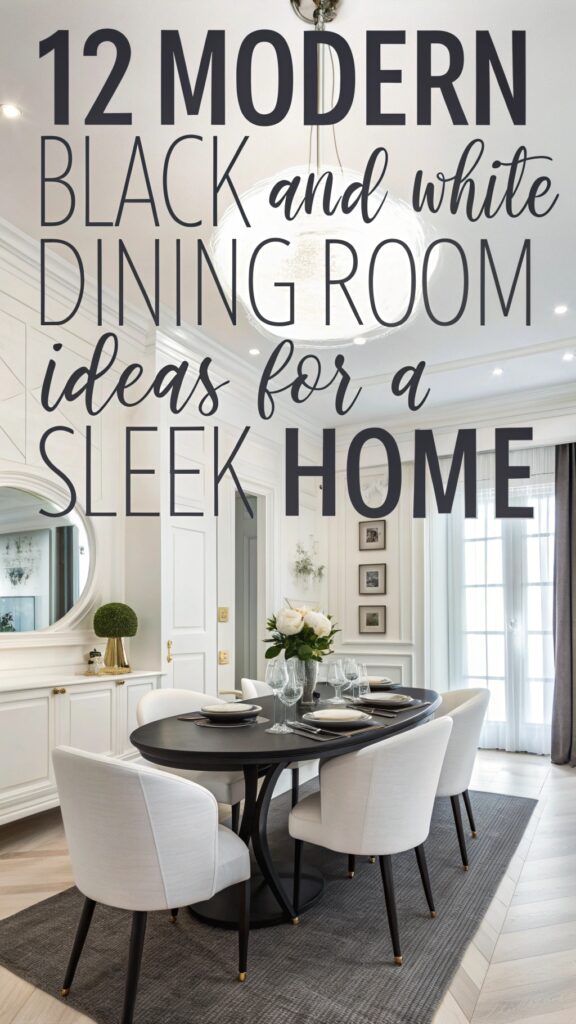
A black-and-white dining room never loses its edge. Timeless yet daring, this monochrome pairing delivers instant sophistication while allowing architectural details to shine.
Without color to distract, the focus shifts to clean lines, layered textures, and bold contrasts that feel deliberate and refined.
From moody, high-drama settings to airy, minimalist layouts, this palette adapts effortlessly. If your dining space needs a modern refresh, these striking black-and-white ideas offer polished inspiration with lasting impact.
Why Choose a Black and White Dining Room?
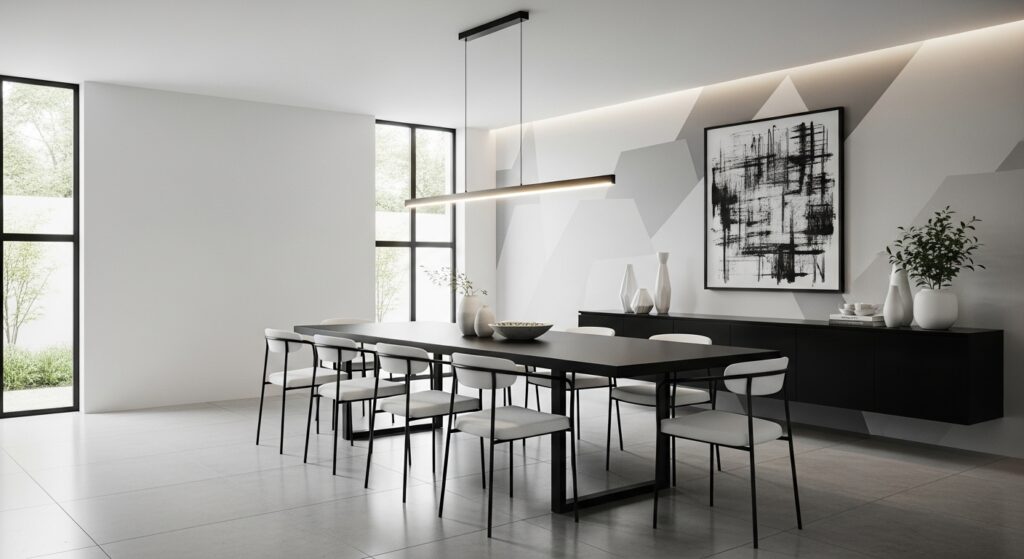
Opting for a black and white palette is a commitment to timeless style. It is incredibly versatile, serving as a sophisticated backdrop that allows architectural details and furniture silhouettes to take center stage. Unlike trendy color schemes that date quickly, monochrome is eternally modern.
Furthermore, it is surprisingly easy to manage; if you ever crave a pop of color, a simple centerpiece of vibrant flowers or a bowl of fruit instantly transforms the entire room without requiring a redesign.
1. The Statement Sculptural Light
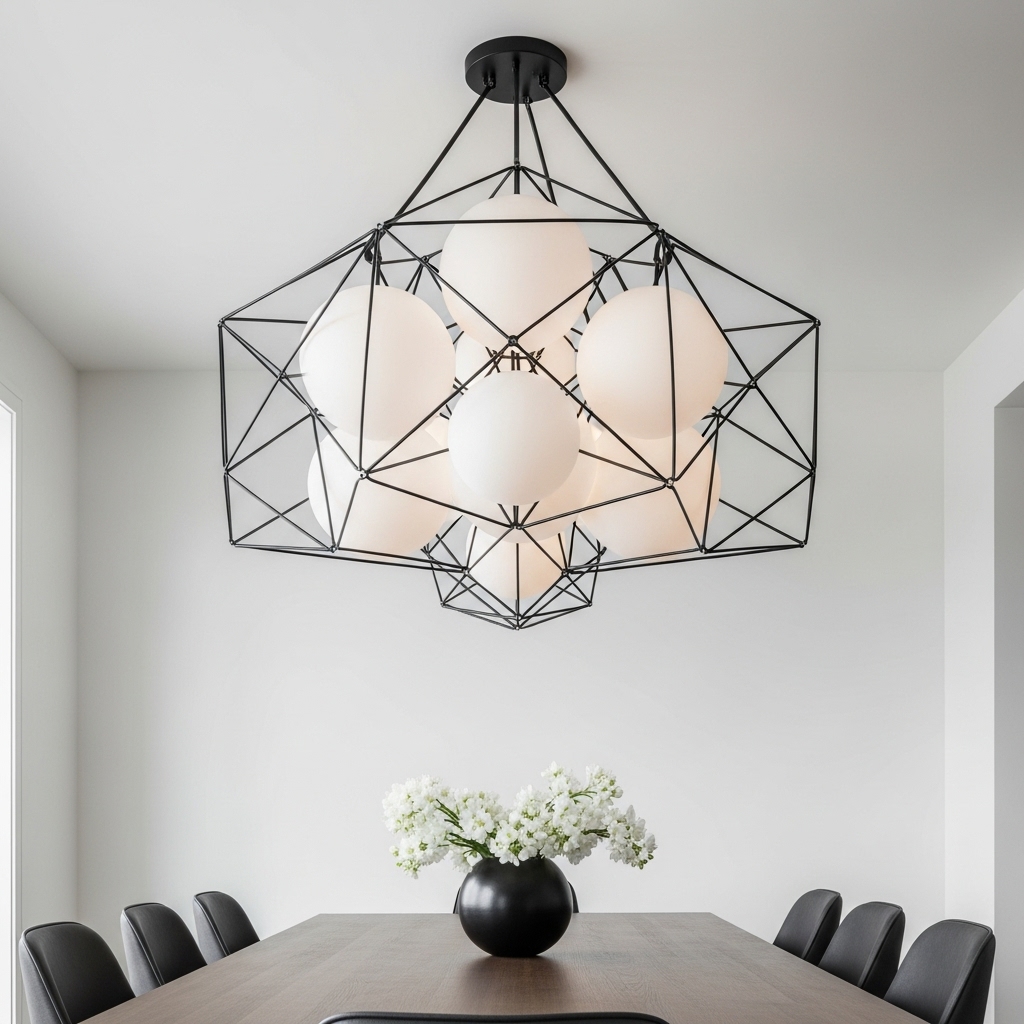
Start with a bold overhead fixture to define the modern space. Instead of standard chandeliers, choose oversized, geometric black metal pendants or a cluster of white sculptural orbs hanging directly above the dining table.
This draws the eye upward acts as the room’s artistic centerpiece. The stark contrast against a plain white ceiling is immediately modern.
Ensure the lighting temperature is warm to prevent the space from feeling too clinical, softening the sharp lines while maintaining high drama and architectural interest.
2. High-Contrast Graphic Wallpaper
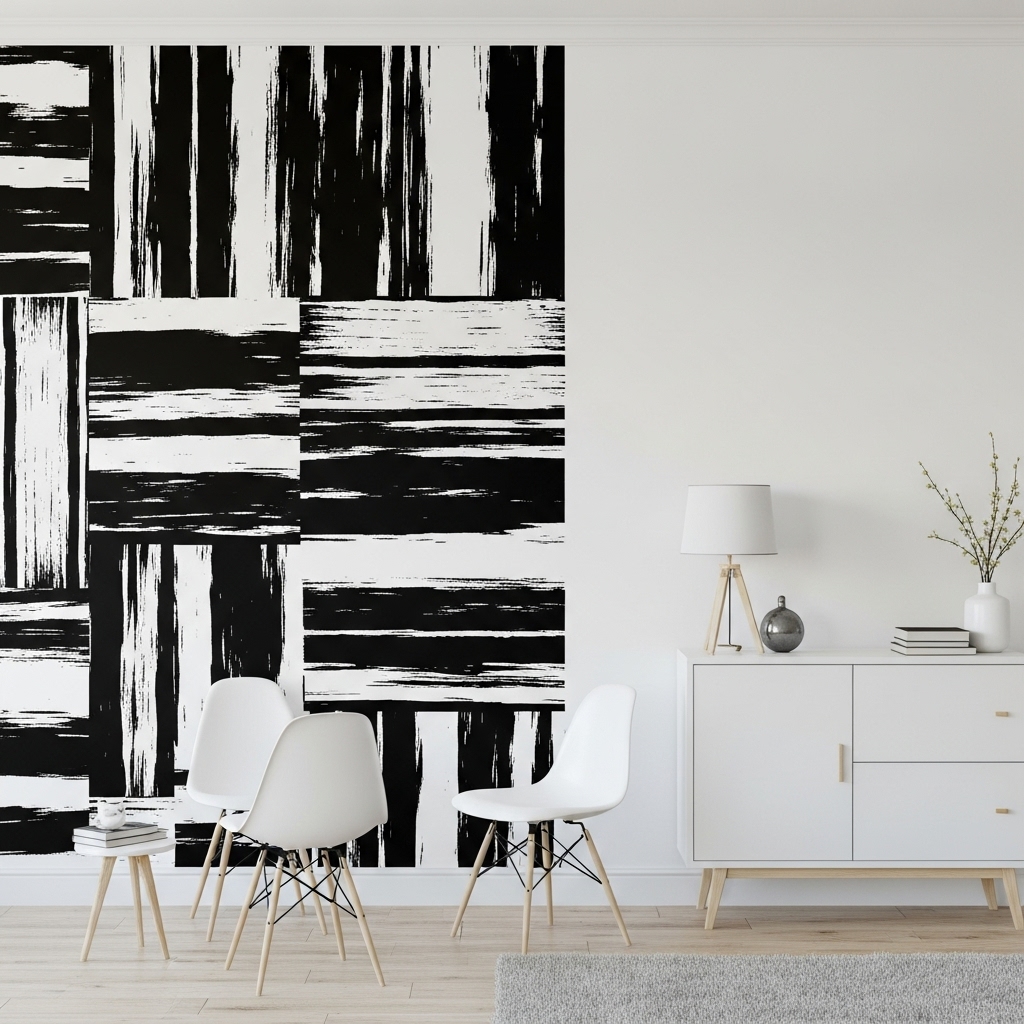
Introduce a powerful visual element with black and white graphic wallpaper on a single accent wall. Think large-scale geometric shapes, abstract brushstrokes, or bold, uneven stripes to create an immediate modern impact.
This dynamic backdrop makes simple, clean-lined furniture pop. Keep the remaining walls plain white to avoid overwhelming the senses with too much pattern.
This approach adds significant depth and artistic personality without needing excessive decor, letting the walls do the heavy lifting in establishing a contemporary vibe.
3. The Sleek Marble Table
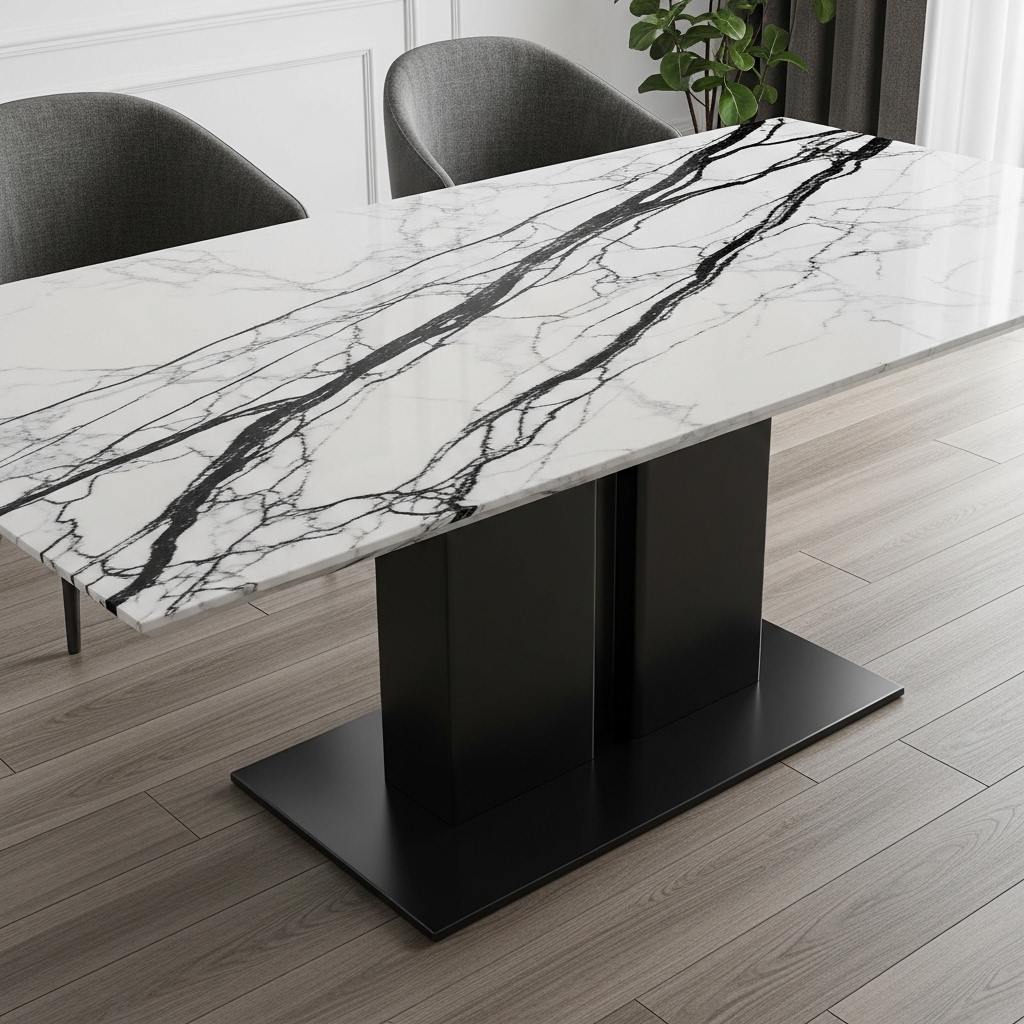
A white marble dining table featuring prominent, dramatic black veining is the epitome of modern luxury. Look for a table with a thin, beveled edge and a heavy, matte black metal pedestal base to ground the look.
The cool stone surface reflects light beautifully, adding necessary brightness, while the dark base provides the visual anchor the room needs.
It is a sophisticated choice that feels organic yet incredibly sharp, serving as a highly functional piece of art in the room.
4. Matte Black Wishbone Chairs
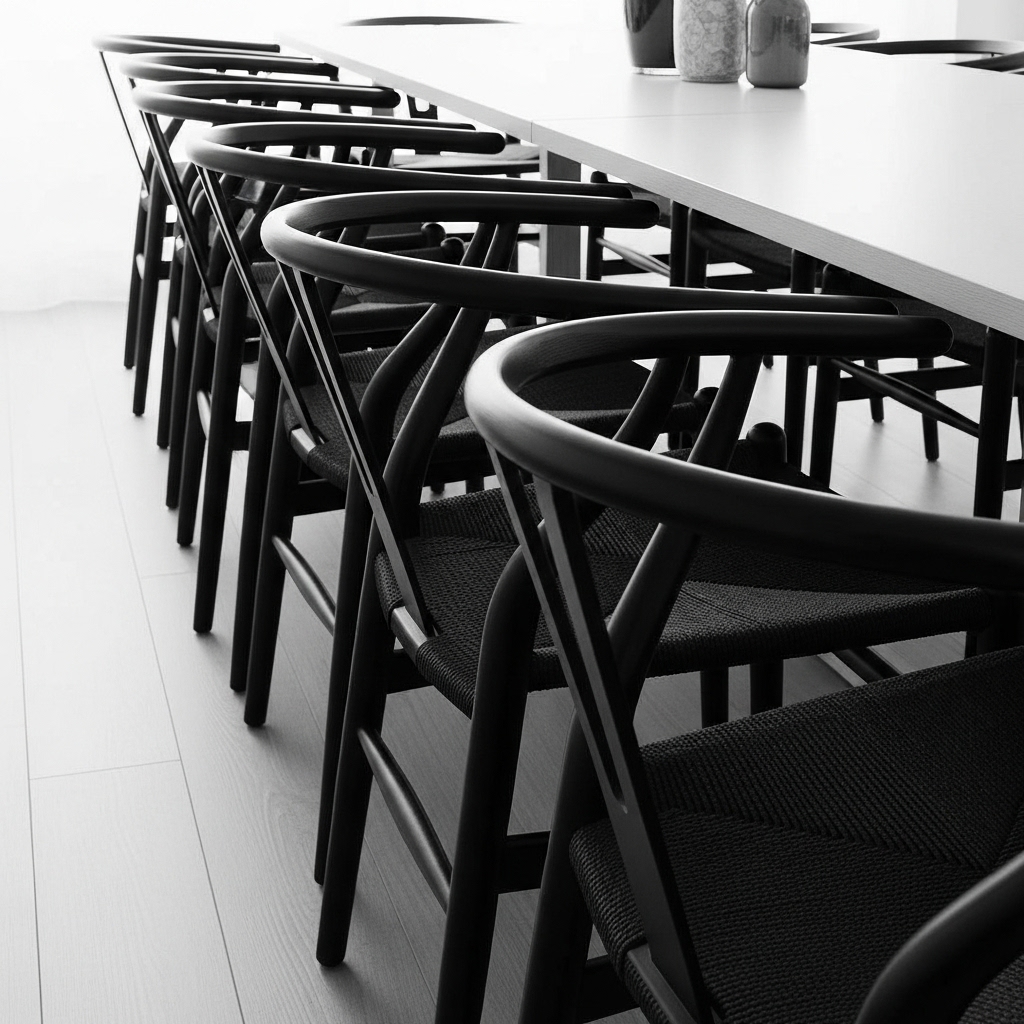
Update a mid-century classic design by utilizing wishbone-style chairs in a solid matte black finish. The curved, organic lines of these iconic chairs help to soften the harshness of a strict monochrome palette, while the uniform dark color keeps the look incredibly current.
When lined up uniformly around a lighter wood or white table, the repeated black silhouettes create a striking visual rhythm that is both orderly and stylish. It’s a perfect blend of design history and contemporary sleekness.
5. The Monochrome Gallery Wall
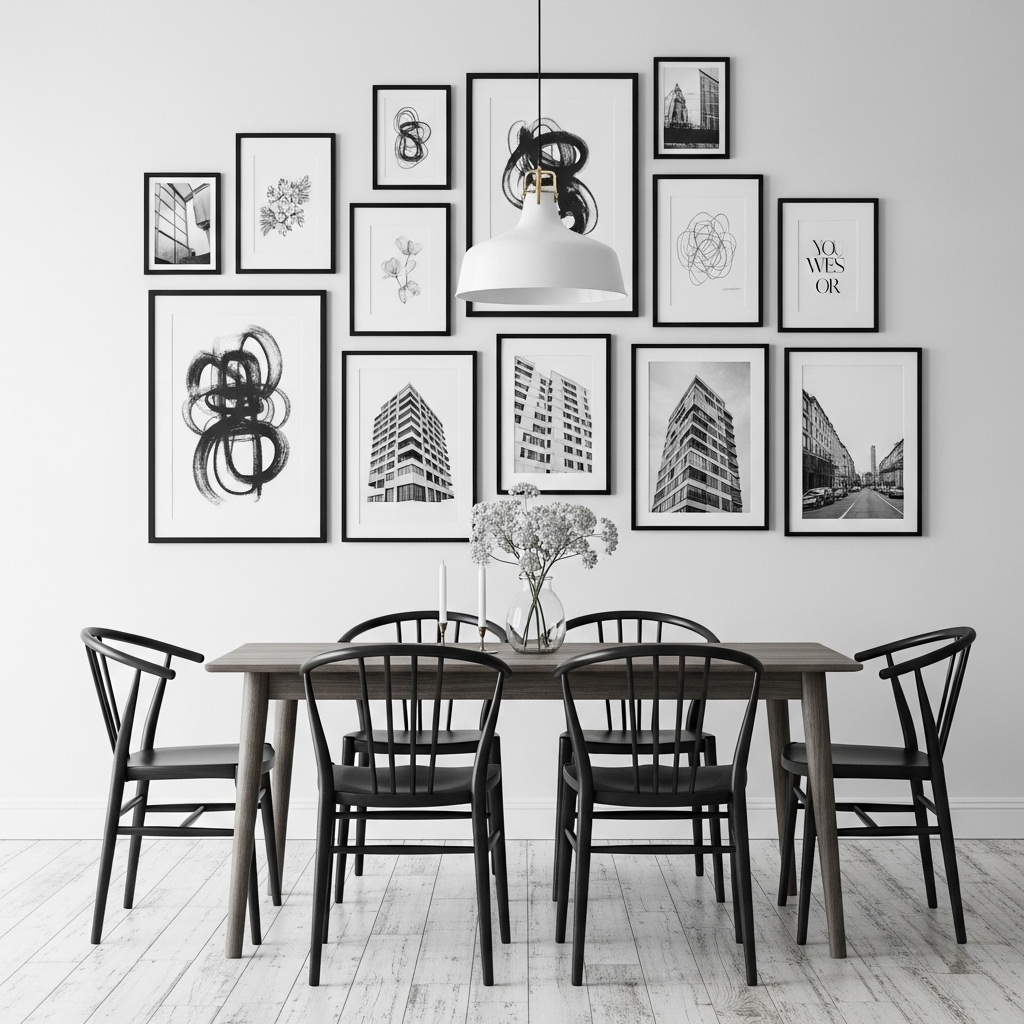
Create a curated focal point with a gallery wall dedicated solely to black and white imagery. Use identical thin black frames with varied white mats for a cohesive, ultra-clean look.
Fill them with abstract charcoal sketches, high-contrast architectural photography, or minimalist typography prints.
Arrange them in a strict grid for a minimalist feel, or an organic cluster for a more relaxed modern vibe. This adds immense personal character to the dining space without breaking the established color scheme.
6. Black Ceiling, White Walls
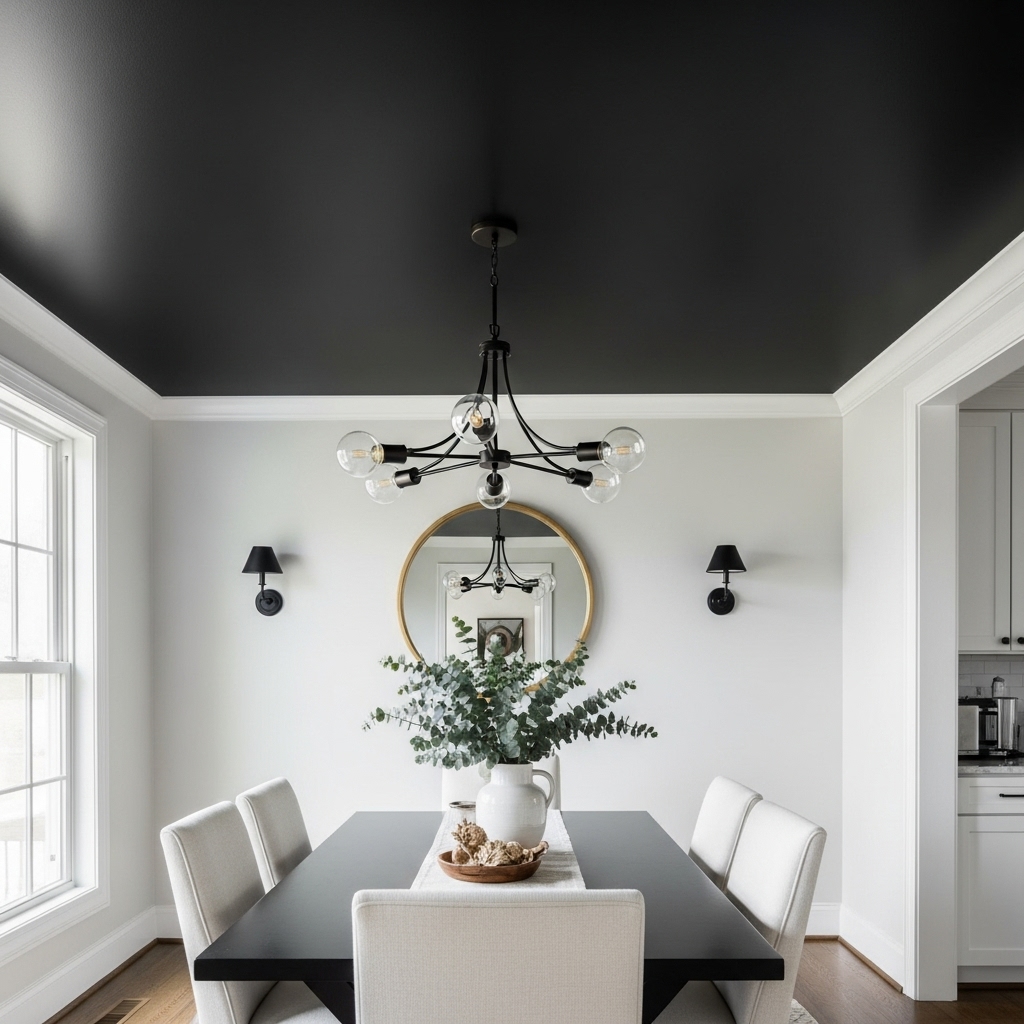
Flip the traditional script by painting the dining room ceiling a deep, flat black while keeping the walls stark white.
This bold architectural move instantly lowers the perceived height of the room, creating a surprisingly intimate and cozy atmosphere for dining. It also makes any light fixture pop dramatically against the dark backdrop.
This technique works best in rooms with decent natural light to ensure the space doesn’t feel claustrophobic, just incredibly moody, grounded, and modern.
7. Textured Rug Layering
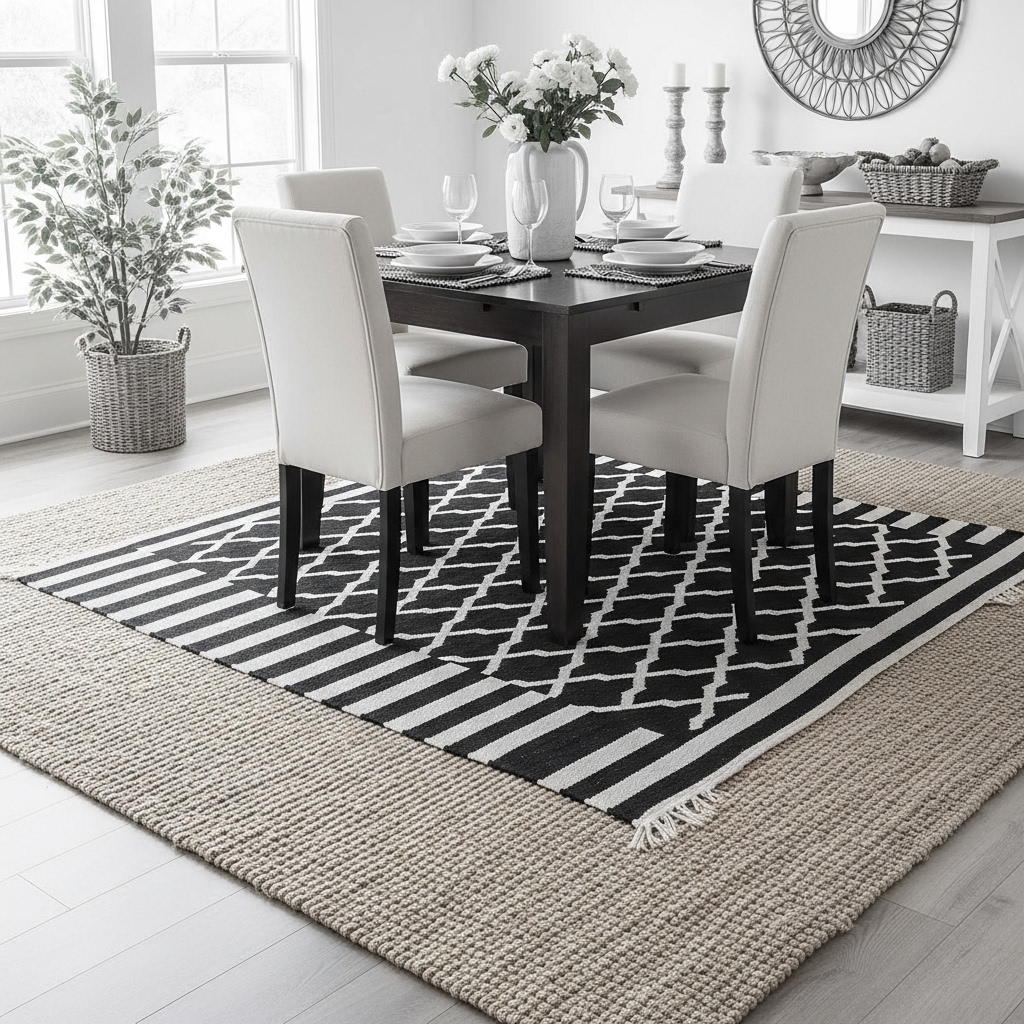
A monochrome palette can sometimes feel flat, so introduce necessary texture through clever rug layering. Start with a large, natural fiber rug like jute or sisal in a pale, bleached tone to cover most of the floor area.
Layer a smaller, bold black and white geometric patterned rug like sharp stripes or a Moroccan trellis design
directly under the table. This defines the dining zone and adds essential warmth and visual complexity underfoot without introducing unrelated colors.
8. Minimalist Black Tableware
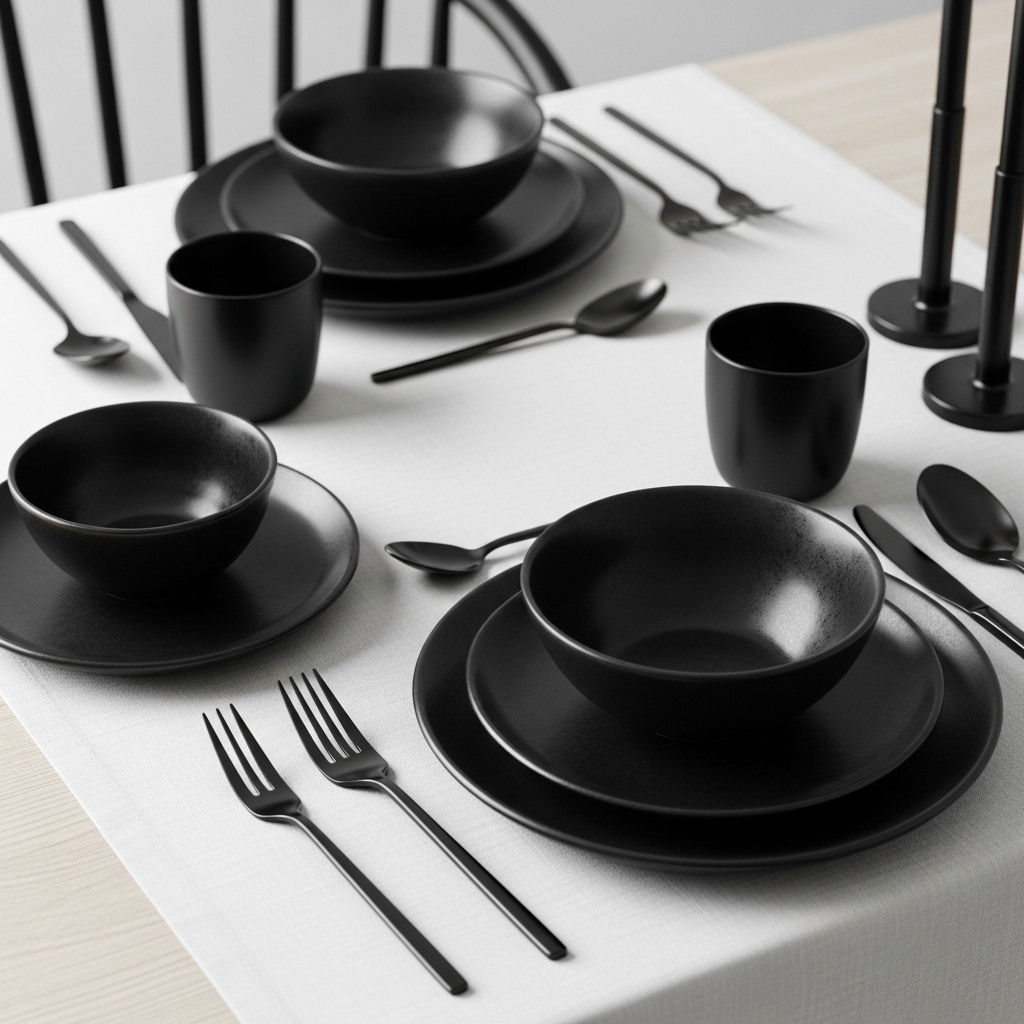
Extend the modern aesthetic right onto the tabletop with sleek black tableware. Ditch traditional white china for matte black stoneware plates and bowls with organic, slightly irregular edges.
Pair these with slender, black PVD-coated cutlery for a moody, ultra-contemporary place setting. When set against a crisp white tablecloth or a pale wood table surface, this dark dinnerware creates high-contrast drama that makes every meal feel like a specially curated design event.
9. Industrial Metal Accents
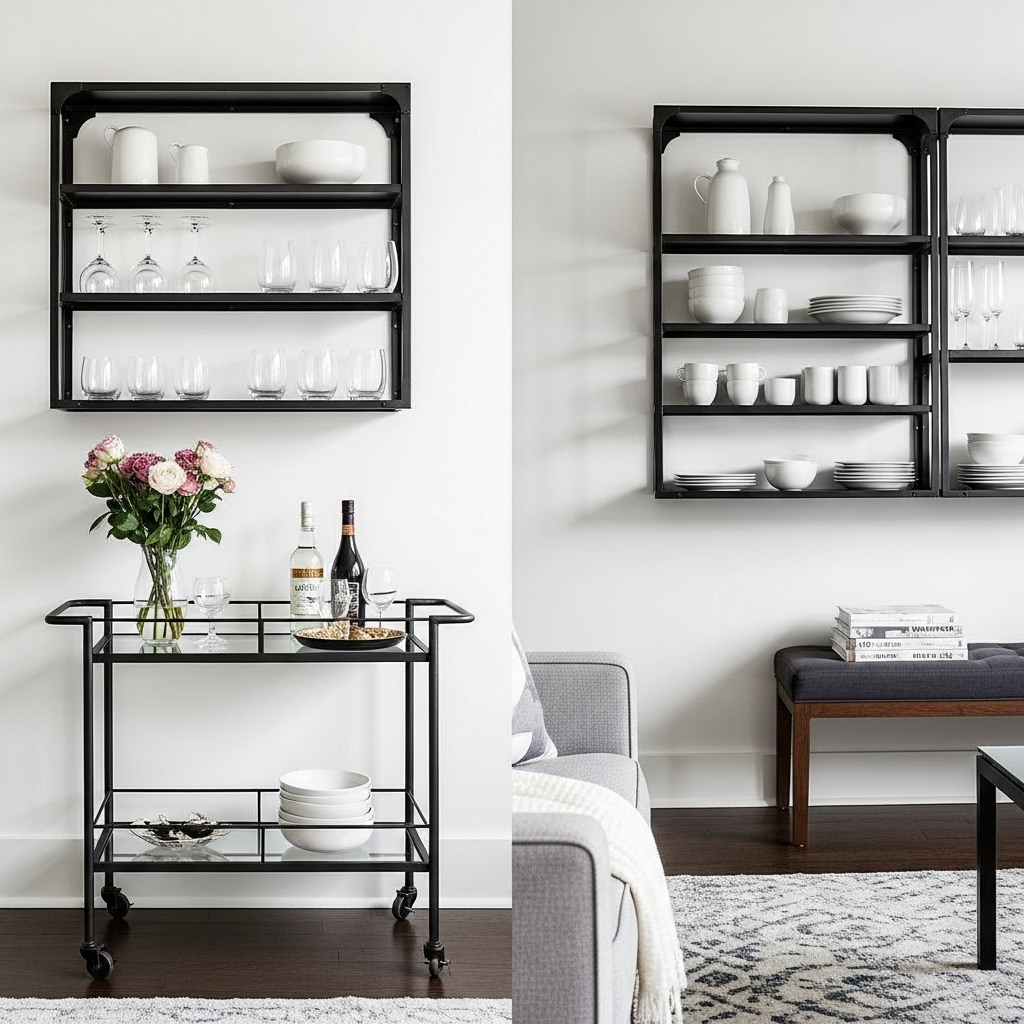
Incorporate an industrial edge to prevent the space from feeling too precious or formal. A rolling bar cart made of black powder-coated metal with glass shelves is both practical for entertaining and stylish.
Alternatively, install open black metal shelving units on a white wall to display curated white ceramics or clear glassware.
These raw, utilitarian elements add a contrasting masculine, structural component that balances nicely with softer textures like upholstered seating or drapery, enhancing the modern feel.
10. Natural Wood Integration
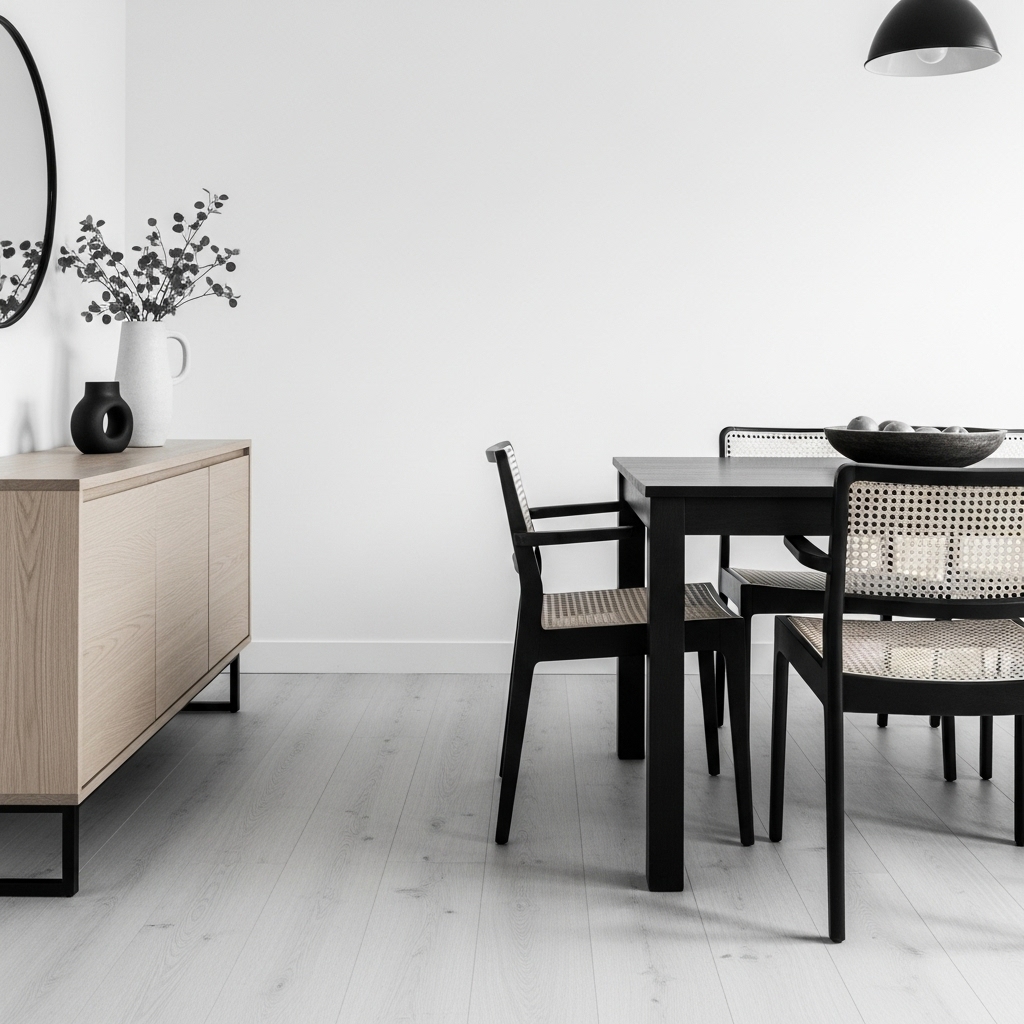
While strictly black and white, a modern space benefits greatly from natural wood tones to add warmth. Introduce blonde wood elements, such as white oak flooring, a sleek sideboard with light wood doors, or dining chairs featuring natural woven cane seats set into black frames.
The pale timber acts as a necessary neutral bridge, preventing the high contrast from becoming too stark or sterile. It brings an organic, Scandinavian-inspired modernism to the dining area.
11. Architectural Molding and Trim
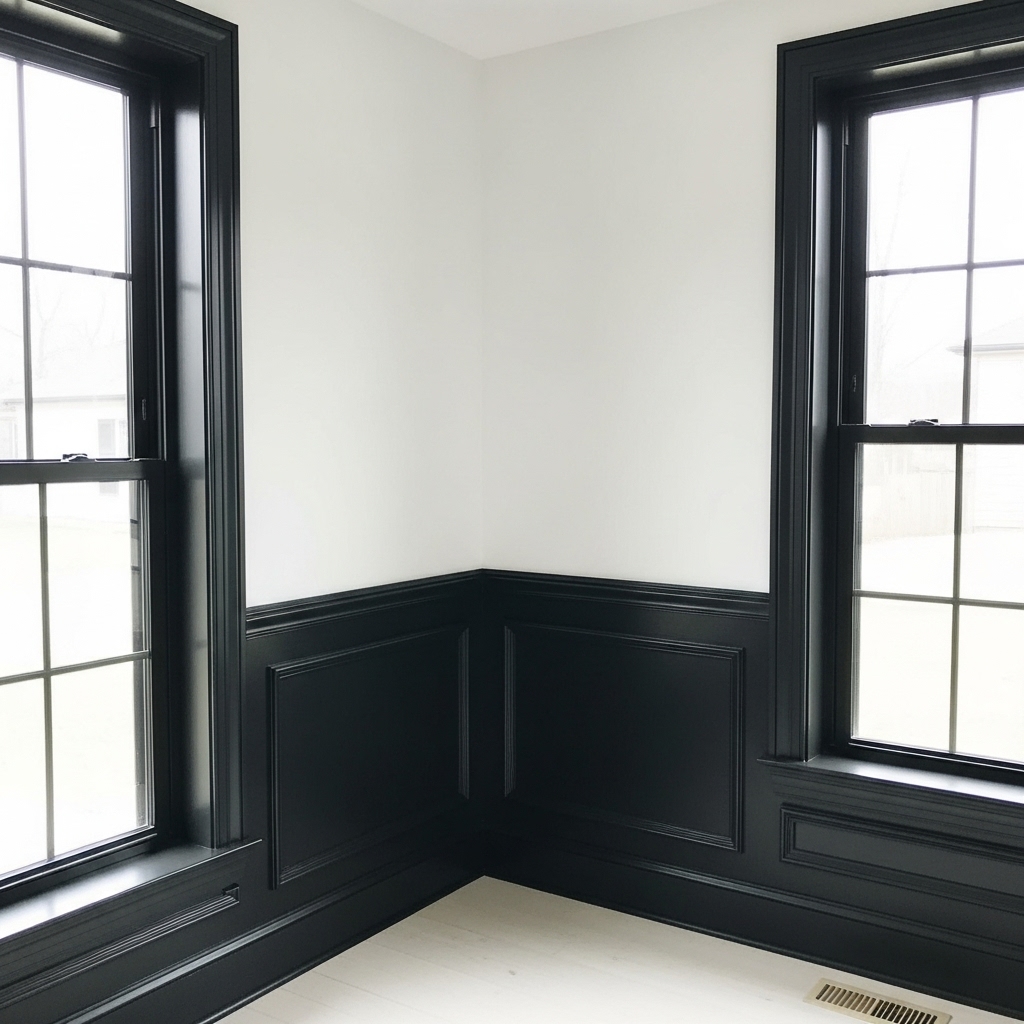
Use paint to highlight architectural details for a decidedly graphic, modern look. Paint baseboards, window trim, and door frames in a high-gloss black to outline the room sharply against matte white walls.
For even more drama, install wainscoting or board-and-batten paneling on the lower half of the walls and paint it solid black, leaving the upper half white.
This creates a grounding effect and adds sophisticated structure with a modern twist on traditional elements.
12. Large-Scale Abstract Art
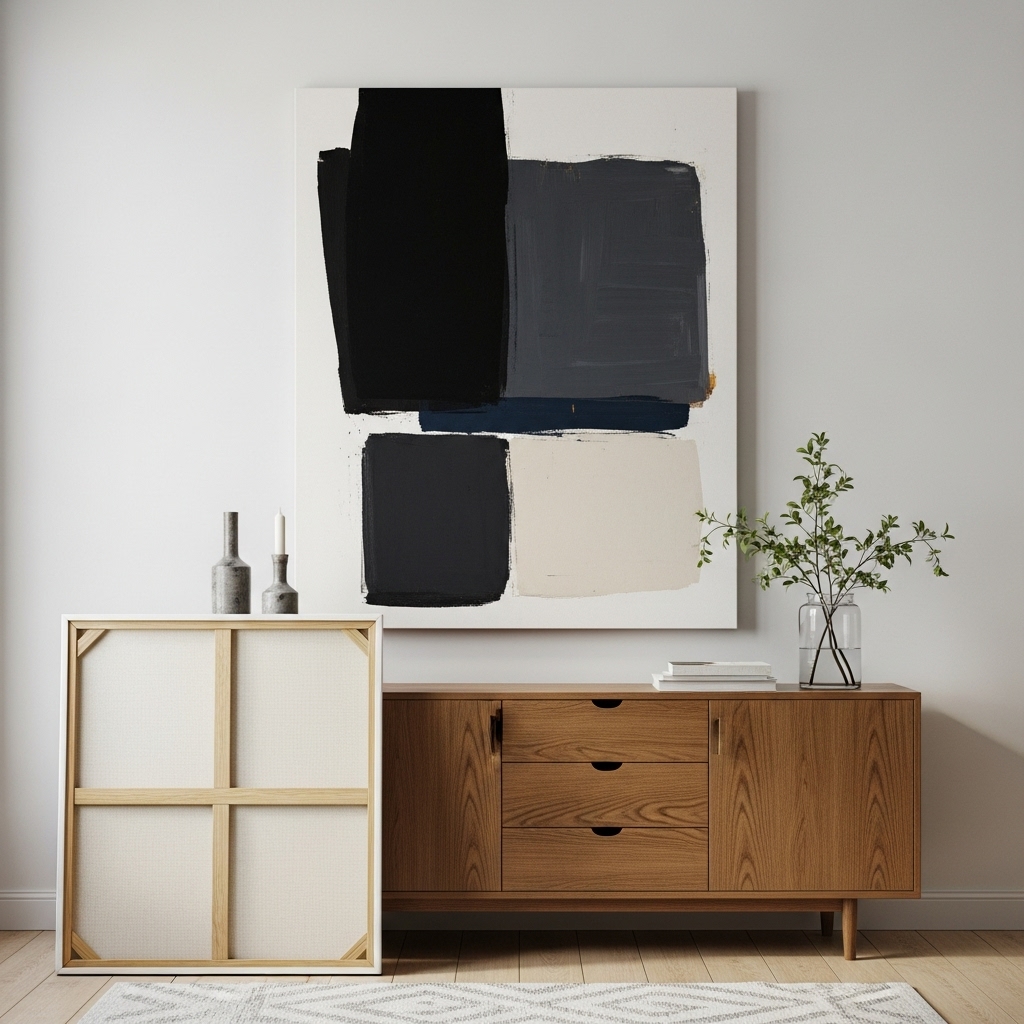
Instead of many smaller pieces, make a massive statement with one single, oversized piece of abstract art. Look for a huge canvas featuring broad, aggressive black brushstrokes on a stark white field, or a minimalist color-block piece in charcoal and cream.
Lean it casually against a wall for a loft-like vibe, or hang it centered precisely above a sideboard. A single, powerful piece of art anchors the room and dictates the modern tone immediately.
Tips for Achieving the Perfect Monochrome Balance
- Embrace Texture: Without color, texture is everything. Mix matte, glossy, rough (like jute or raw wood), and soft (velvet or linen) surfaces to keep the eye interested.
- Mind the Lighting: Black absorbs light, and white reflects it. Ensure you have layered lighting—ambient, task, and accent—to prevent dark corners and keep the white areas feeling crisp, not sterile.
- The 60/30/10 Rule: A good guideline is to use white for 60% of the room (walls, ceiling), black for 30% (furniture, rugs), and a third element, like wood tones or metallics, for the final 10% as an accent.
Conclusion
A black and white dining room is a bold declaration of style. It is a look that commands attention while remaining intensely practical for everyday living. By focusing on modern silhouettes, interesting textures, and the dramatic interplay of light and shadow, you can create a dining space that feels simultaneously classic and cutting-edge.
Frequently Asked Questions
Q: Won’t a black and white dining room feel cold or boring? A: Not if you utilize texture. The key to a successful monochrome room is layering different materials—wood, metal, textiles, and stone—to add warmth and visual interest that replaces the need for color.
Q: Can I add other colors later? A: Absolutely. That is the beauty of this palette. It acts as a neutral canvas. You can introduce color seasonally through table linens, fresh flowers, or art, and change it whenever you wish.
Q: How do I make this work in a small dining room? A: In smaller spaces, lean heavily on white for the walls, ceiling, and larger furniture pieces to keep it feeling airy. Use black for accents like chairs, lighting, and frames to provide definition without shrinking the room visually.