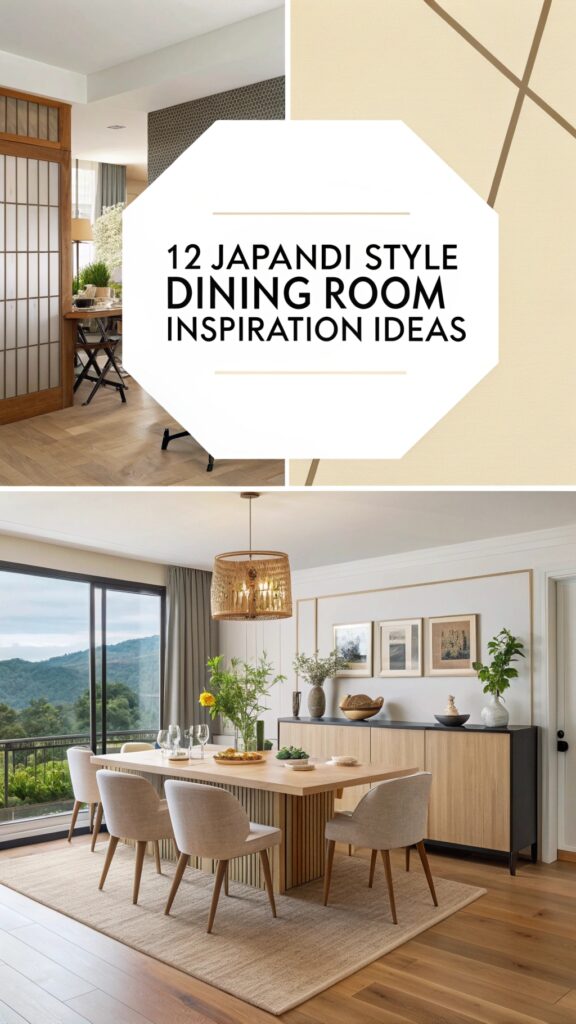
A dining room should nourish more than appetite; it should steady the mind. Japandi design, where Scandinavian warmth meets Japanese restraint, strikes that rare balance.
Natural woods, muted palettes, and purposeful simplicity work together to create calm without feeling bare. Clean silhouettes soften beside handcrafted textures.
Light flows freely. Every piece earns its place. These twelve ideas distill Japandi into a grounded, intentional dining space. Elegance emerges through restraint, balance, and thoughtful craftsmanship.
Why Choose Japandi Style?
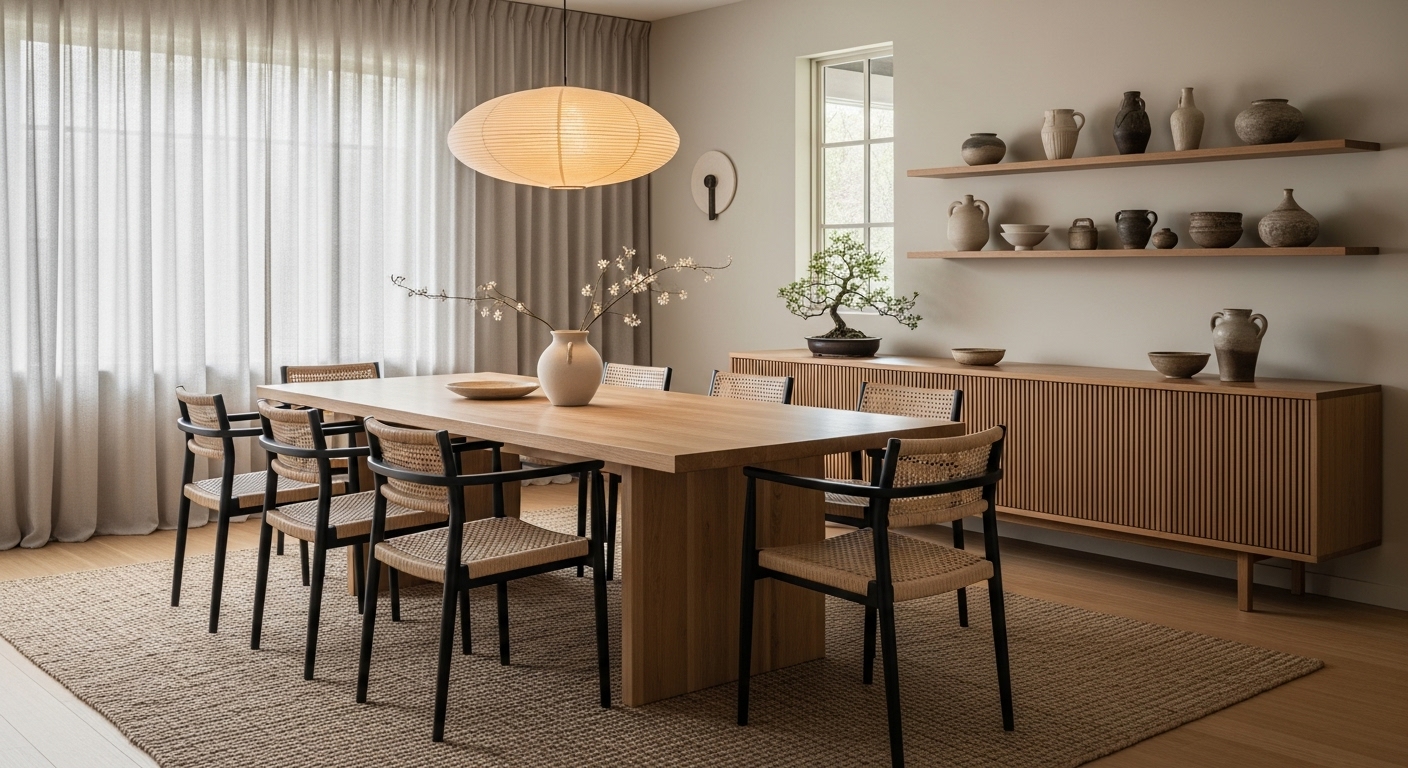
Japandi style is a calm rebellion against the noise of modern living. It merges Japan’s wabi-sabi an appreciation for quiet imperfection with Scandinavia’s hygge-driven comfort and warmth. The result is balanced, intentional, and deeply soothing.
Clean lines meet natural textures. Beauty meets function. More than an aesthetic choice, Japandi encourages mindful living, sustainability, and quality over excess, creating spaces that feel grounded, peaceful, and genuinely lived-in.
1. The Central Statement: Light Wood Tables
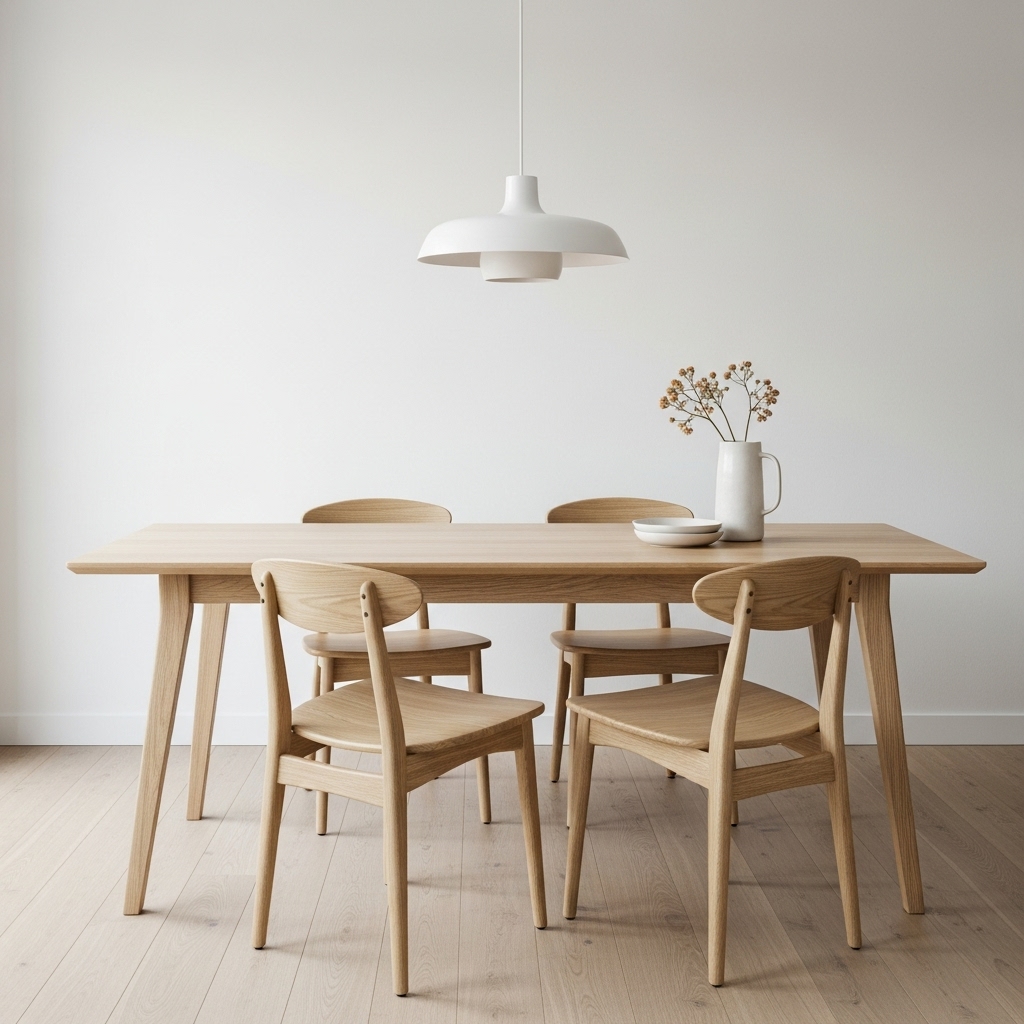
The heart of any Japandi dining room is undoubtedly the table, which grounds the entire space. You should look for tables crafted from light timbers like white oak, ash, or beech which naturally brighten the room.
The design must remain incredibly simple, avoiding ornate carvings in favor of clean, straight lines or soft, organic curves.
A matte finish is preferable to high gloss, as it exposes the natural grain and texture of the wood. This approach celebrates the raw, honest beauty of the material, serving as a warm, inviting canvas for your daily meals.
2. Embrace Low-Profile Seating Arrangements
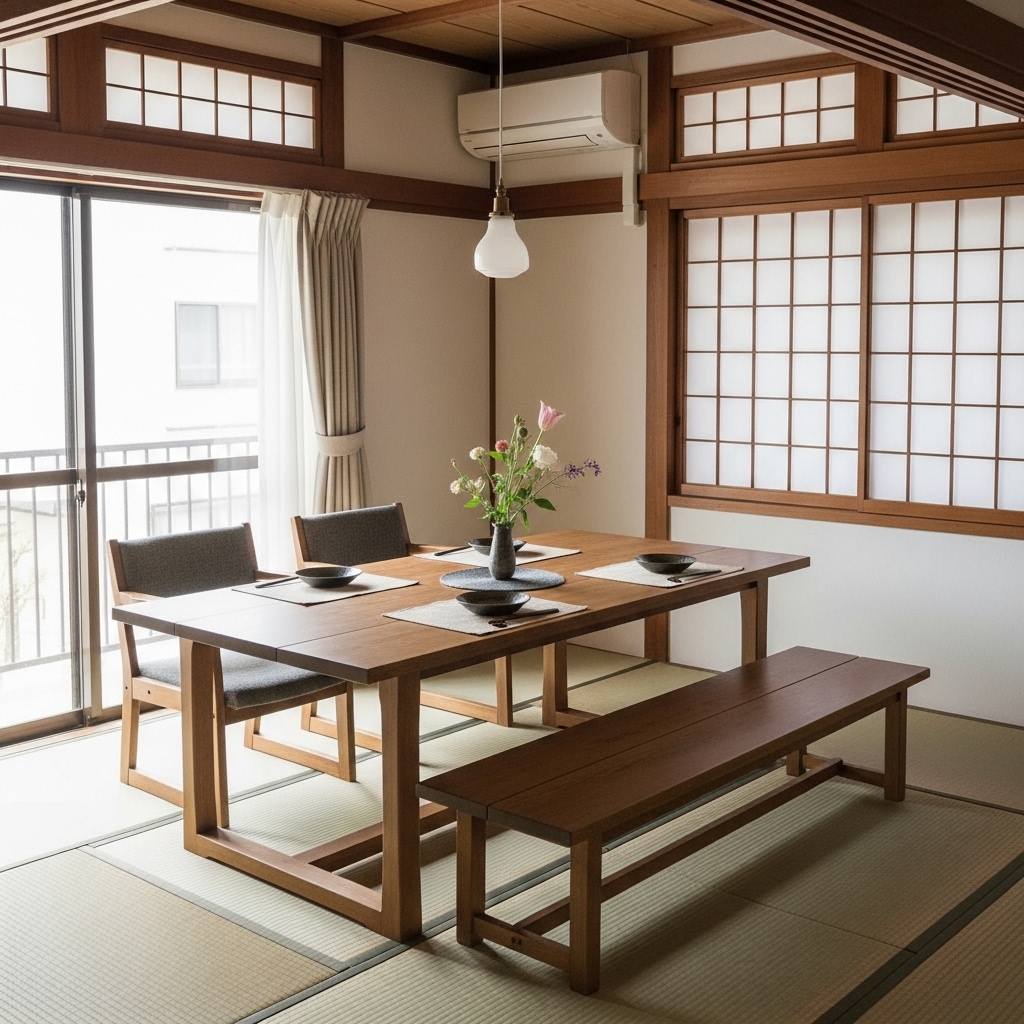
Drawing inspiration from traditional Japanese floor culture, low-profile furniture is essential for creating an authentic, grounded atmosphere. While you do not need to sit on the floor, choosing dining chairs with shorter legs or a lower back can significantly alter the room’s perspective.
This lower center of gravity creates a feeling of spaciousness, especially in smaller dining areas with lower ceilings. Pair a low-slung wooden bench on one side of the table with standard chairs on the other to add visual interest. This arrangement encourages a more relaxed, informal dining posture that feels intimate and cozy.
3. Soften the Edges with Curved Chairs
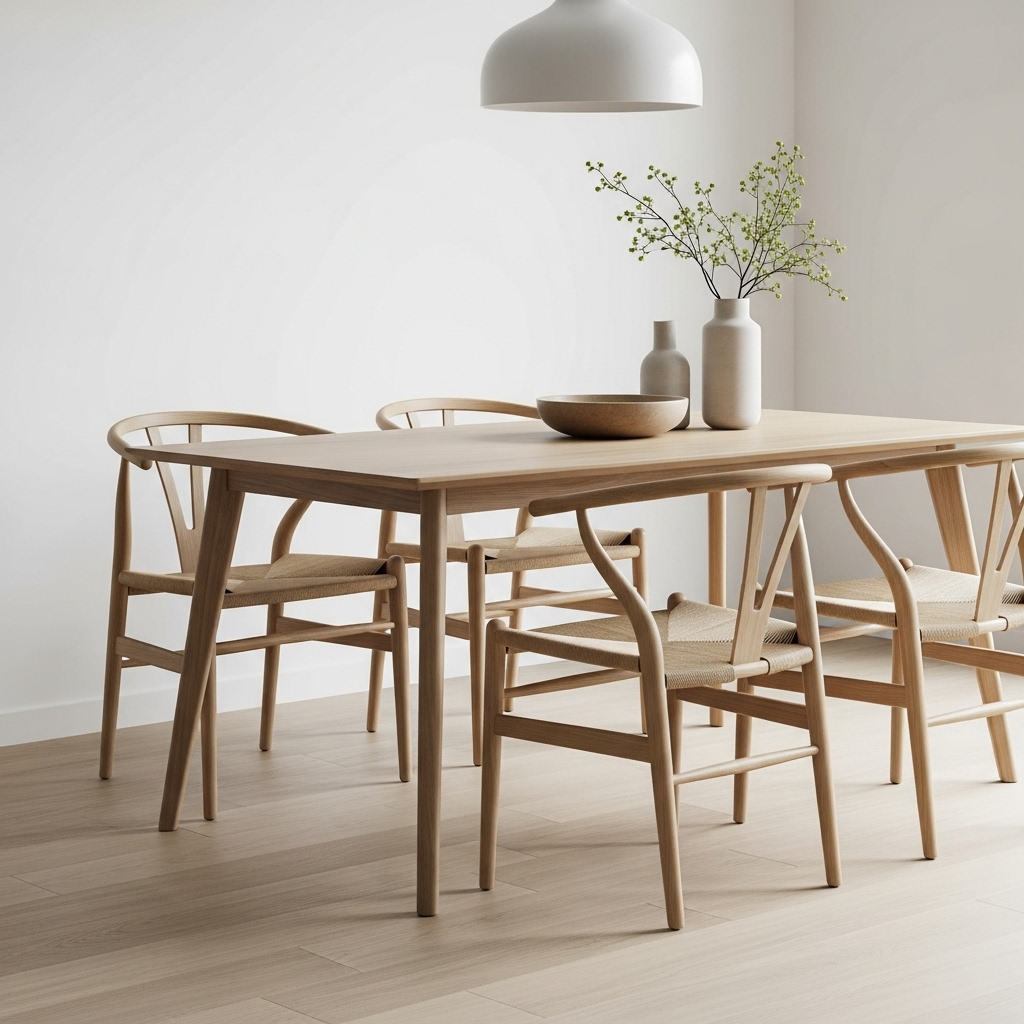
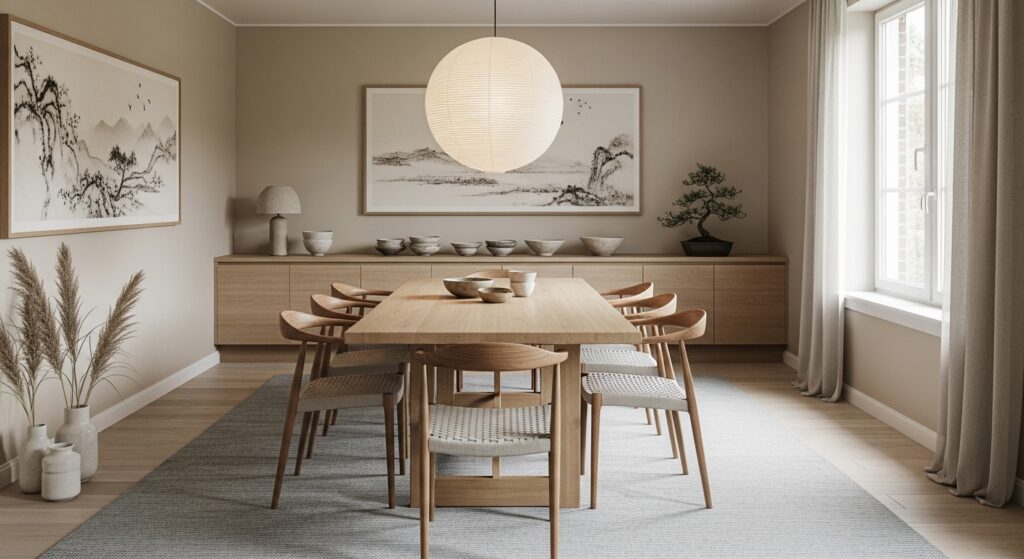
To counterbalance the strict geometric lines of a rectangular dining table, incorporate chairs with gentle, rounded silhouettes. The classic Wishbone chair is a staple in this aesthetic, perfectly marrying structure with organic flow.
These curved elements introduce a necessary softness that prevents the minimalist space from feeling too sterile or rigid. When selecting these chairs, prioritize natural materials like woven paper cord or bentwood to maintain tactile warmth.
The interplay between the angular table and the fluid chair designs creates a harmonious visual rhythm that is quintessentially Japandi and incredibly pleasing to the eye.
4. The Warmth of Paper Lantern Lighting
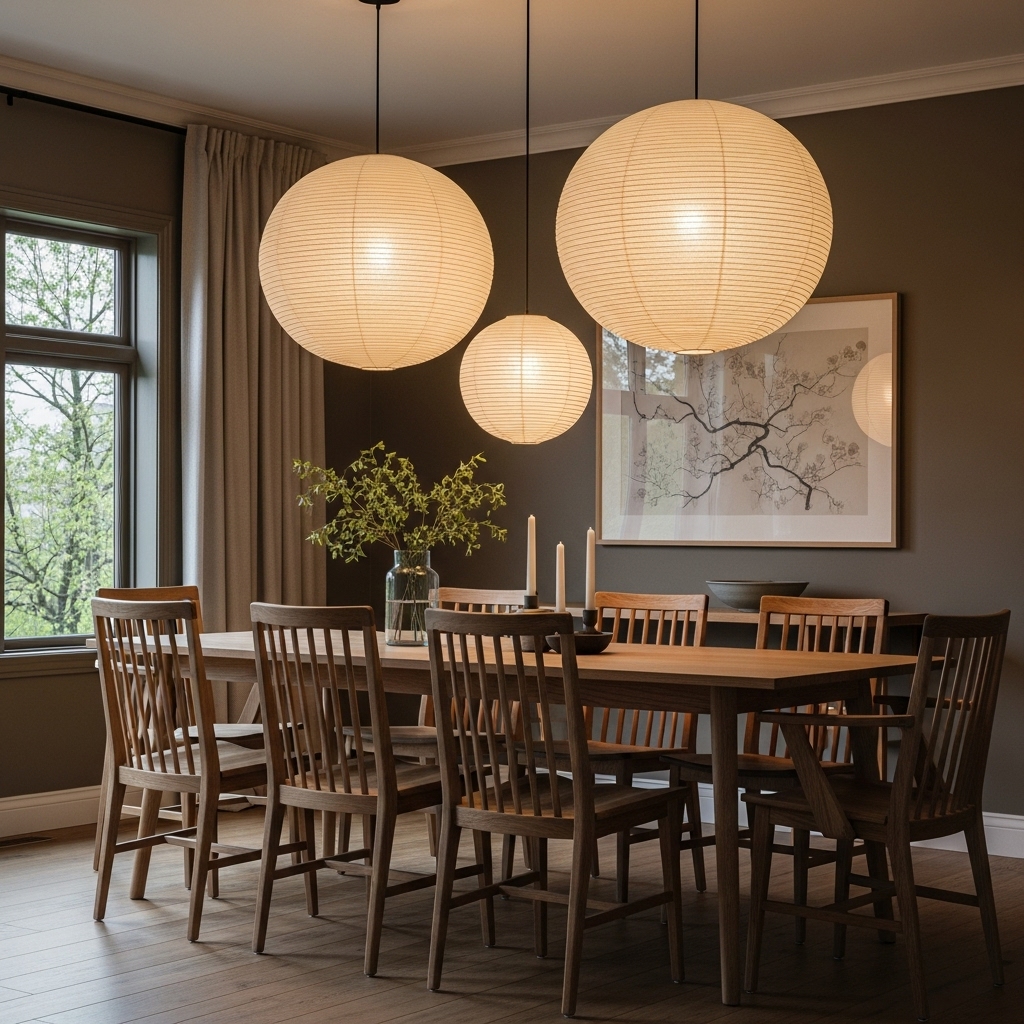
Lighting in a Japandi dining room should never be harsh or clinical; it must be soft, diffused, and atmospheric. Oversized paper lanterns or pendant lights made from rice paper are ideal choices for hanging above your dining table.
These fixtures emit a gentle, cloud-like glow that mimics natural daylight and casts calming shadows throughout the room. The fragile, organic texture of the paper adds a layer of delicacy that contrasts beautifully with solid wood furniture.
This specific lighting choice instantly evokes a sense of Zen, making your evening meals feel like a peaceful retreat.
5. Integrating Wabi-Sabi Ceramics and Decor
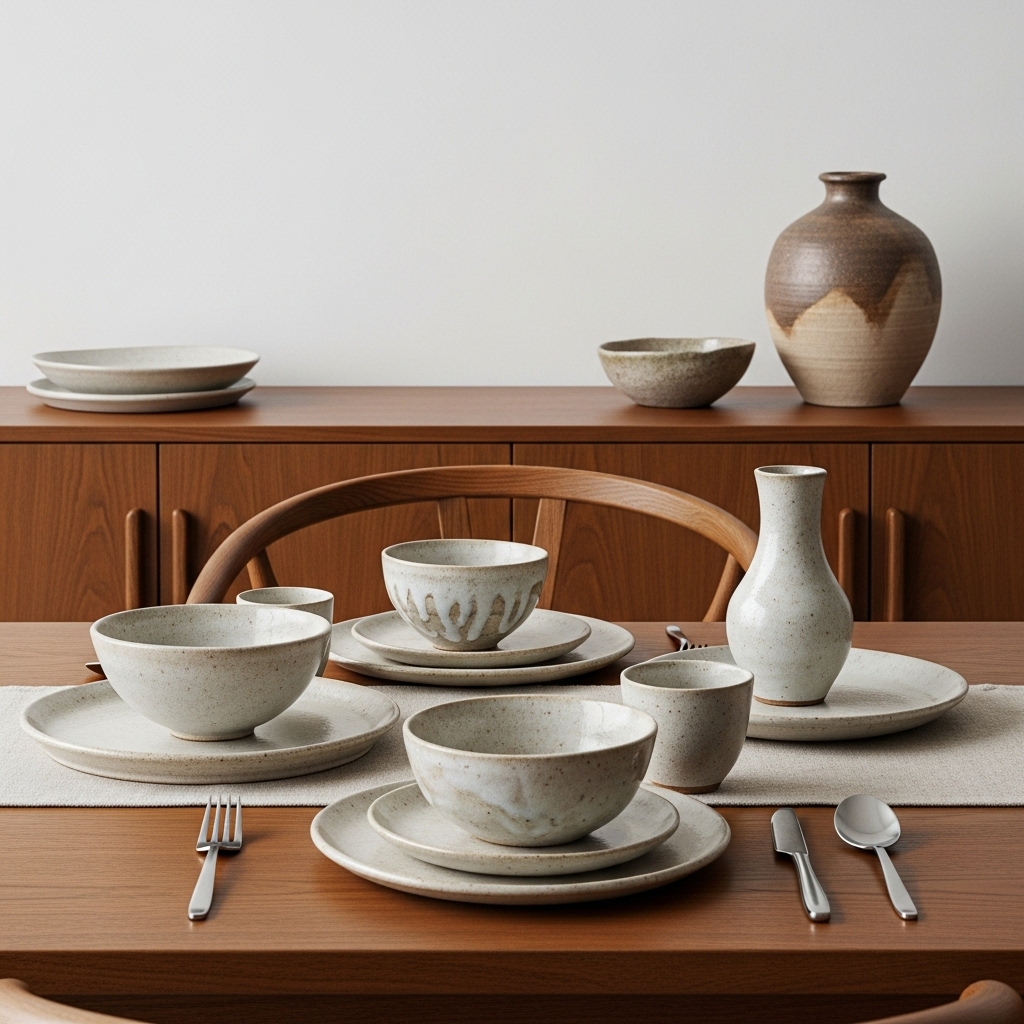
Accessories in this style should be sparse yet meaningful, reflecting the Japanese concept of wabi-sabi, which finds beauty in imperfection. Instead of mass-produced tableware, choose handcrafted ceramic bowls, vases, and plates that feature slightly irregular shapes or uneven glazes.
These artisanal pieces add soul and character to the dining table, serving as functional art rather than mere decoration. Displaying a single, rough-hewn earthenware vase on a sideboard can make a powerful statement. The goal is to highlight the human touch and natural processes, ensuring that even your decorative objects tell a story of authenticity.
6. Layering Textures for Hygge Comfort
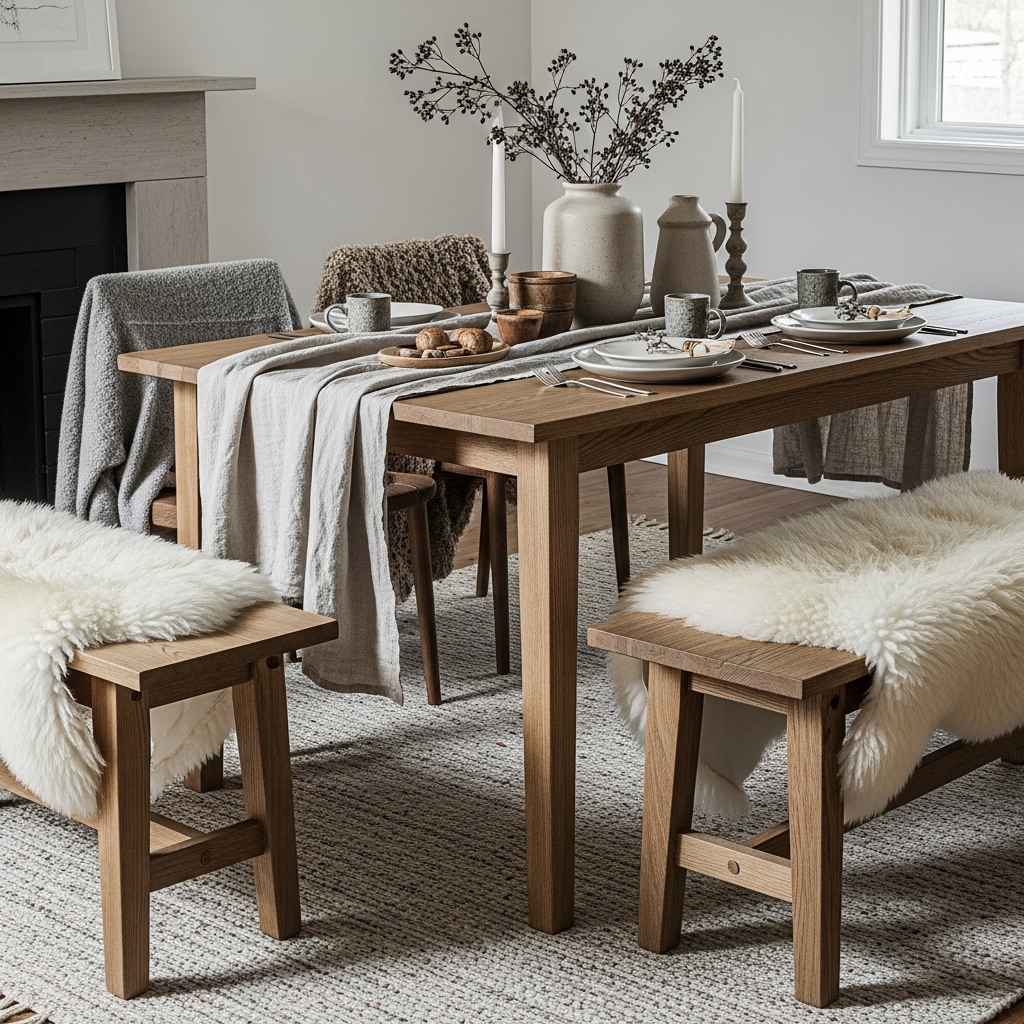
Since Japandi interiors often rely on a neutral color palette, texture becomes the primary tool for adding depth and interest.
You must layer different tactile elements to prevent the room from feeling flat or cold. Think about placing a nubby wool rug under the table, draping a linen runner across the surface, or adding sheepskin throws to wooden benches.
These soft, cozy additions bring in the Scandinavian hygge factor, inviting you to linger longer at the table. The contrast between smooth wood and rough, organic fabrics creates a rich sensory experience without overwhelming the eye.
7. A Palette of Warm Neutrals and Earth Tones
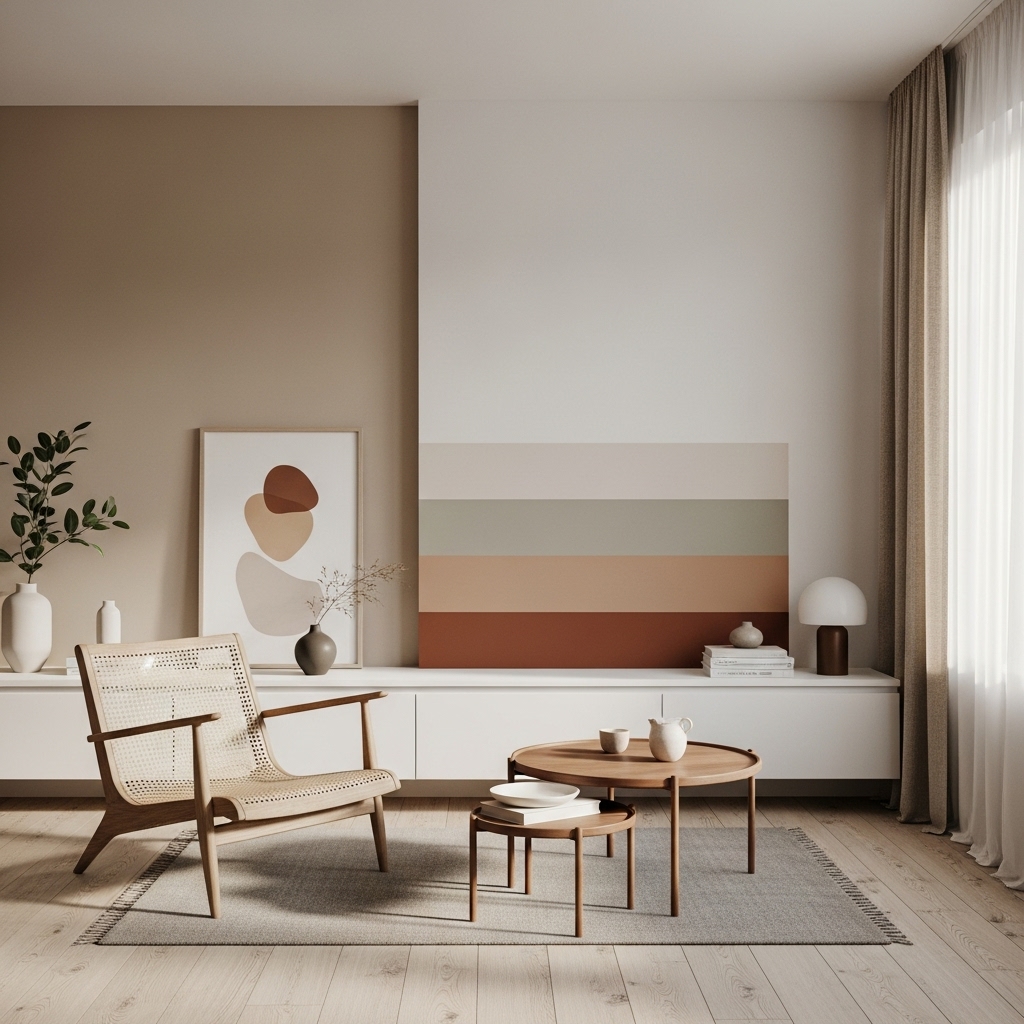
Color schemes in this aesthetic are intentionally muted to promote a sense of calm and clarity. Start with a base of warm whites, creams, and soft grays, then layer in deeper earth tones like terracotta, oatmeal, or muted sage.
Unlike pure minimalism which can lean cool and stark, Japandi embraces warmth to make the space feel lived-in.
You might paint the walls a soft beige to reflect sunlight or choose curtains in an unbleached stone color. These harmonious shades mimic the natural world, blurring the boundary between your interior space and the outdoors.
8. Minimalist Window Treatments for Natural Light
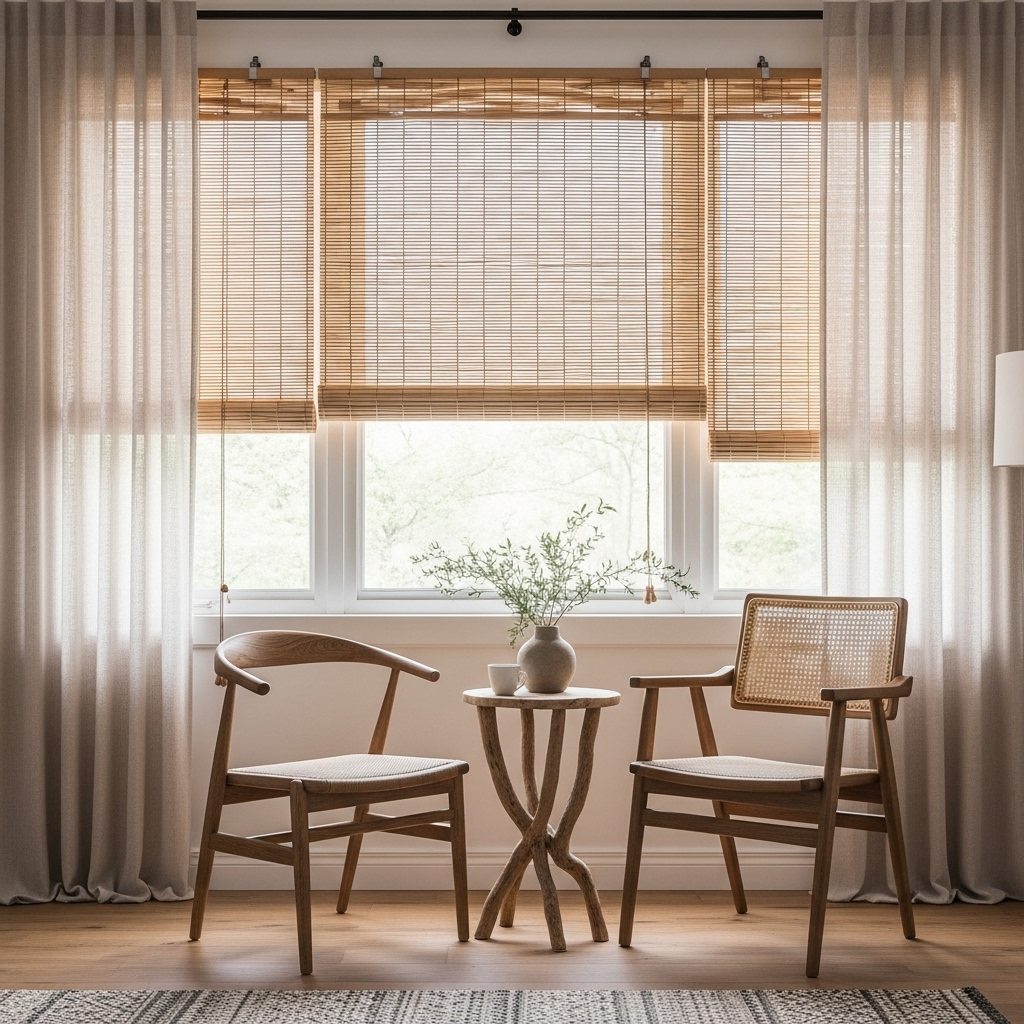
Natural light is a critical component of this design philosophy, symbolizing energy and connection to nature. Heavy, opaque curtains should be avoided as they block essential sunlight and weigh down the visual space.
Instead, opt for window treatments made from sheer linen, translucent cotton, or simple bamboo blinds that filter light gently. These materials allow the room to feel airy and bright while still providing a degree of privacy.
During the day, the sunlight interacting with the natural wood textures creates a dynamic, ever-changing atmosphere that energizes the room and highlights the beauty of your furniture.
9. Bringing the Outdoors In with Greenery
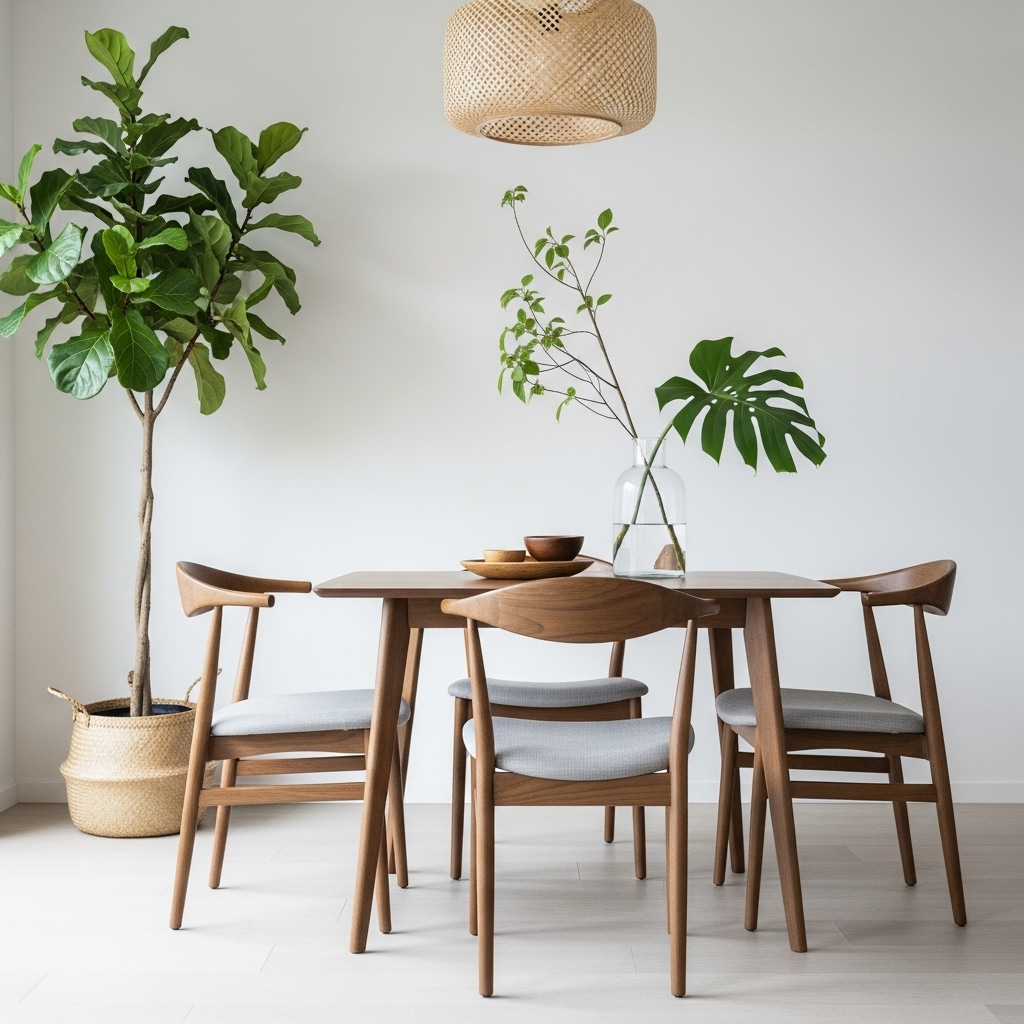
No Japandi dining room is complete without the inclusion of living plants to breathe life into the space. However, restraint is key; choose one or two sculptural plants rather than creating a cluttered indoor jungle.
A tall Ficus tree in a woven basket or a simple glass vase holding a single oversized branch can be incredibly effective. The greenery adds a vibrant splash of color against the neutral background and reinforces the design’s nature-centric ethos.
These botanical elements purify the air and provide a visual resting point, enhancing the overall tranquility of the dining experience.
10. Strategic Use of Black Accents
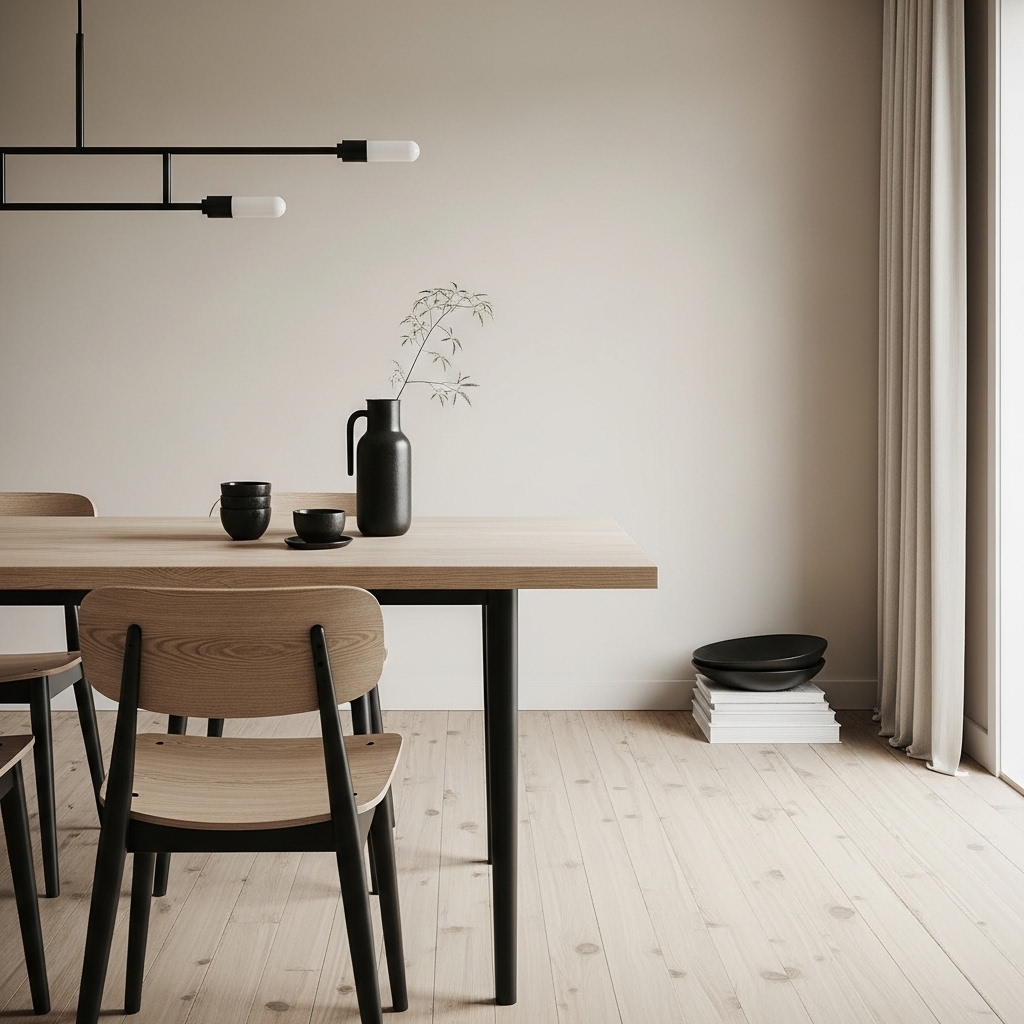
To prevent a room full of beige and light wood from looking washed out, you need to introduce anchoring elements. Matte black accents are frequently used in Japandi design to provide definition and modern contrast.
This could be achieved through a slender black metal light fixture, black painted chair legs, or dark ceramic coasters. These small, deliberate touches of darkness ground the airy space and highlight the lighter tones around them.
The key is moderation; the black elements should serve as punctuation marks in the design, sharpening the overall look without dominating the serene atmosphere.
11. Functional and Hidden Storage Solutions
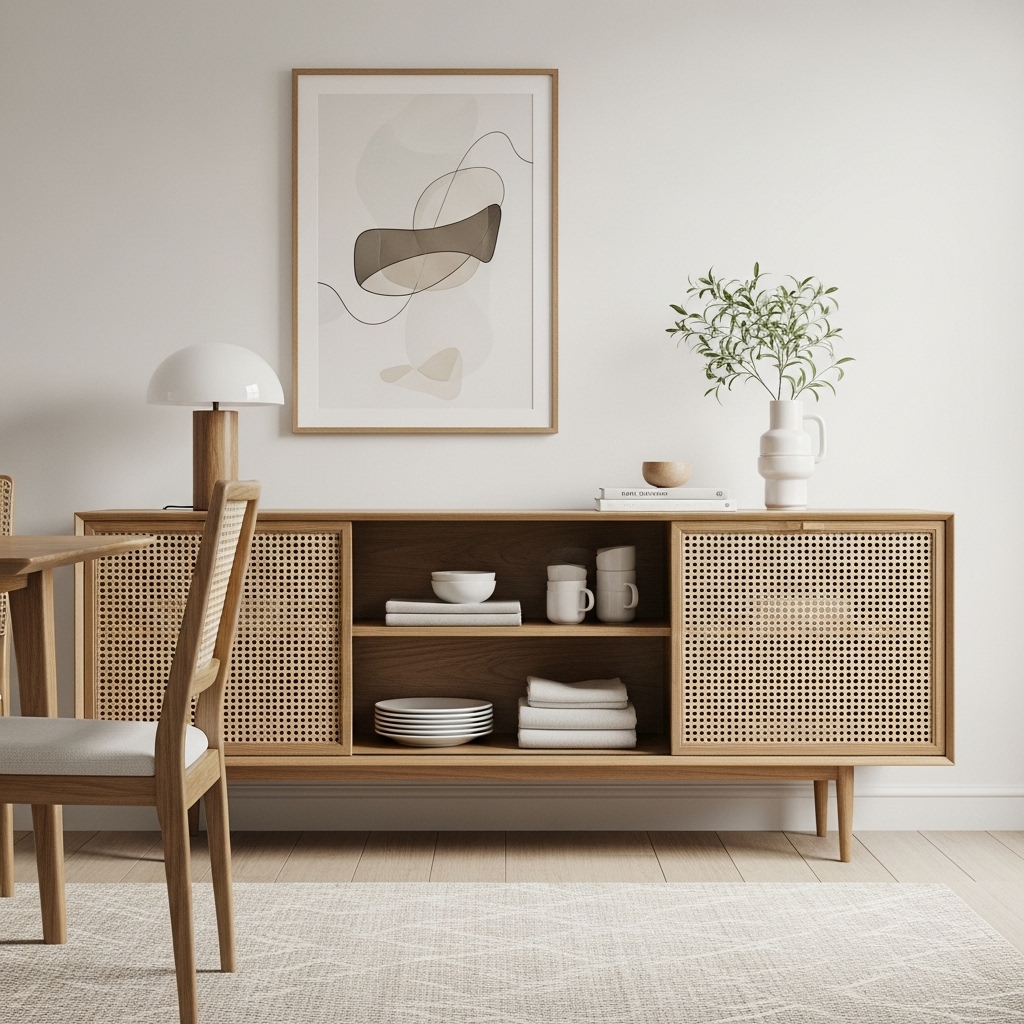
Clutter is the enemy of serenity, making smart storage solutions vital for maintaining a clean, minimalist aesthetic. Invest in a low-profile sideboard or credenza with sliding doors to hide away dinnerware, linens, and miscellaneous items.
Look for designs that feature slat detailing or cane webbing, which hide contents while adding texture. The top of the console should remain relatively clear, adorned perhaps by only a lamp and a book.
By keeping everyday items out of sight, you allow the architecture and key furniture pieces to breathe, fostering a peaceful mind and a focused dining environment.
12. Slatted Wood Details and room Dividers
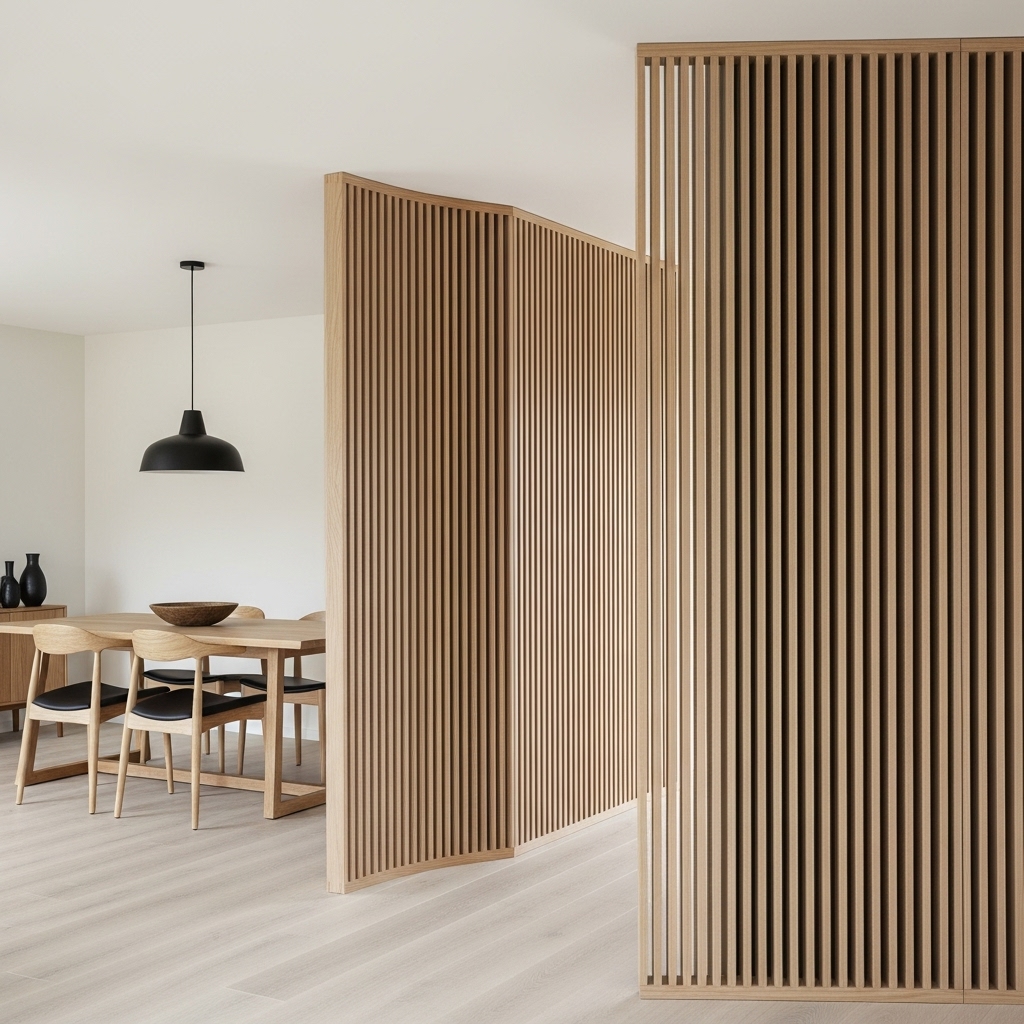
Slatted wood screens or wall panels are a signature element that adds architectural interest and vertical rhythm to the room.
These features can serve as subtle room dividers in open-plan homes, separating the dining area from the living room without blocking light. The linear pattern of the slats mimics the precision of Japanese design while the wood material keeps it warm and Scandinavian.
Whether applied as a feature wall texture or used as a freestanding screen, this detail introduces complexity and shadow play. It transforms a plain wall into a focal point without the need for loud colors.
Tips for Achieving the Look
- Declutter Ruthlessly: Keep surfaces clear. Only display items that are functional or hold deep personal significance.
- Invest in Quality: Since there is less furniture, the pieces you choose should be well-made and durable.
- Mix Wood Tones: Don’t be afraid to mix light oak with slightly darker walnut; it adds depth, provided the undertones match.
- Focus on Flow: Ensure there is ample space to walk around the table; the negative space is just as important as the furniture.
Frequently Asked Questions
Q: Can I use dark wood in a Japandi dining room? A: Yes, while light wood is more common in Scandinavian design, darker woods are traditional in Japanese interiors. Using dark wood adds sophistication and contrast.
Q: Is Japandi expensive to achieve? A: Not necessarily. While it emphasizes quality, the minimalist nature means you buy fewer items. You can also upcycle existing furniture by sanding down finishes to a matte, natural look.
Q: Can I add color to a Japandi room? A: Yes, but keep it muted. Soft pastels, olive greens, or rust tones work well. Avoid bright, primary colors that disrupt the calm.
Conclusion
Creating a Japandi style dining room is about more than just following a trend; it is about curating a space that fosters peace and togetherness.
By combining the best elements of Scandinavian comfort and Japanese minimalism, you can build a dining area that is timeless, functional, and undeniably beautiful.
Start with a few key changes perhaps a new light fixture or decluttering your sideboard and slowly layer in the natural textures and warm tones that define this serene aesthetic. Simplicity, after all, is the ultimate sophistication.