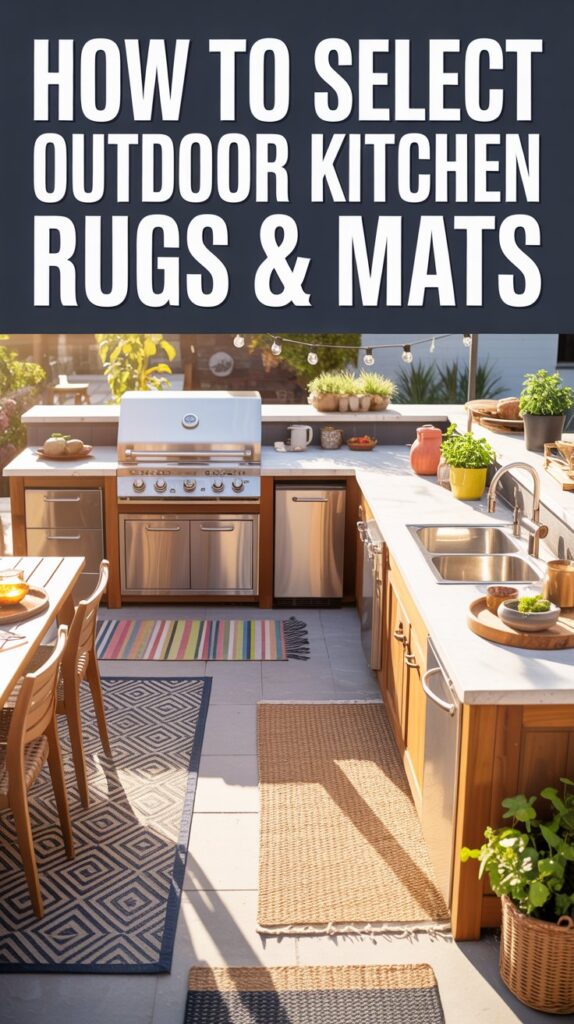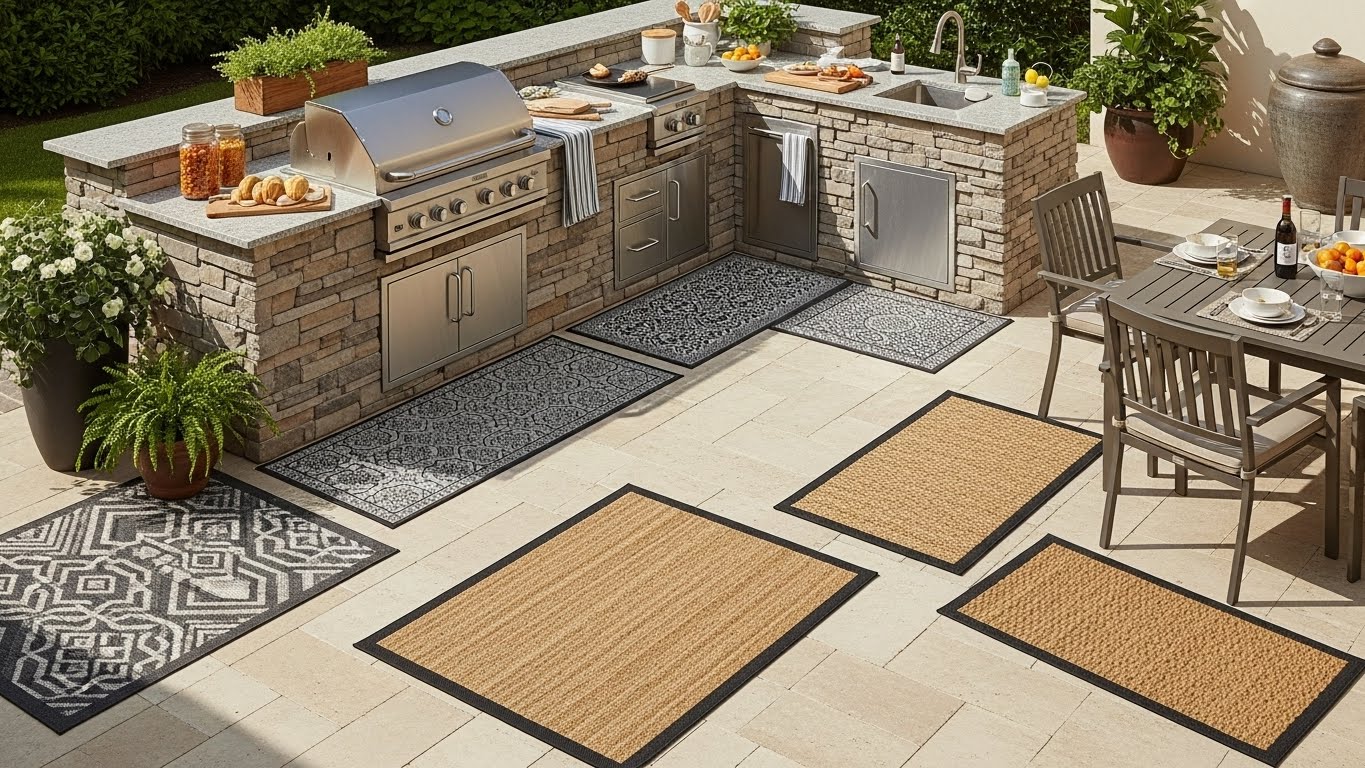
Outdoor kitchen rugs and mats elevate plain patios into welcoming, practical cooking areas by adding comfort, character, and reliable support beneath grills, prep stations, and seating zones. Built to endure heat, spills, and shifting weather, these tough pieces help organize and visually anchor outdoor dining spaces.
Choosing the right options requires attention to material durability, proper sizing, and a design that can handle constant foot traffic while still enhancing the overall atmosphere of an outdoor kitchen
1. Why Choose Outdoor Kitchen Rugs and Mats
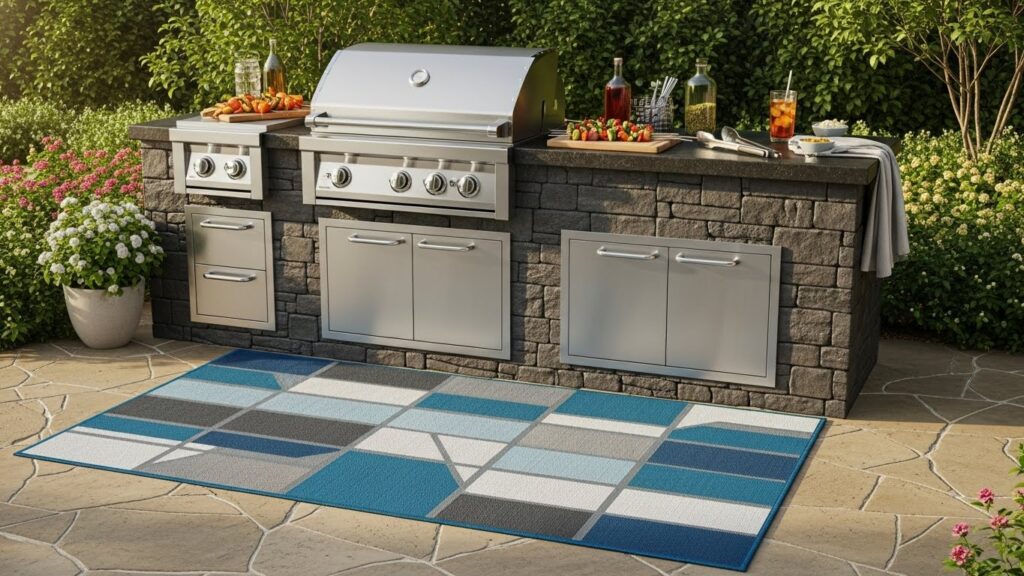
Outdoor kitchen rugs and mats protect surfaces from grill drippings, dropped tools, and hot utensils that could damage decks or tiles. They provide cushioning for standing during long prep sessions, reducing fatigue on hard floors much like anti-fatigue mats indoors.
These additions enhance safety with slip-resistant textures, especially around wet sinks or rainy days, preventing slips in busy cooking areas.
Style elevates the space too rugs anchor furniture groups, creating cohesive zones for dining or lounging that make patios feel like extended kitchens.
Weatherproof options like polypropylene resist fading from sun exposure near grills and dry quickly after hose-downs, ensuring longevity without constant replacement. Eco-friendly recycled plastic versions offer sustainability without sacrificing durability, appealing to those prioritizing green choices.
2. Key Materials for Durability
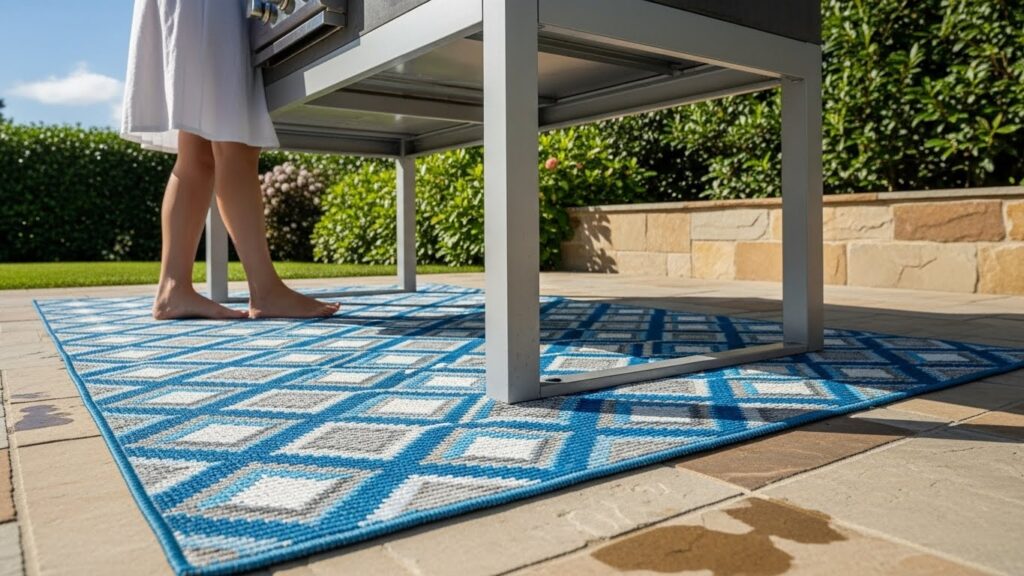
Polypropylene tops lists for outdoor kitchens due to its stain resistance, UV protection, and ability to handle moisture from spills or humidity. This synthetic fiber mimics natural textures but avoids mold issues, making it ideal for uncovered areas with heavy foot traffic. Rubber mats excel in high-heat zones under grills, providing superior traction and easy cleaning with just a hose.
Polyester suits drier climates, offering fade-resistant colors that pop against neutral patios, though it needs avoidance near oil-heavy cooking. For covered kitchens, jute or sisal adds organic texture but requires shelter from direct rain to prevent mildew. Non-slip backings on all types ensure stability, crucial around slick surfaces from marinades or splashes.
3. Sizing and Placement Guide
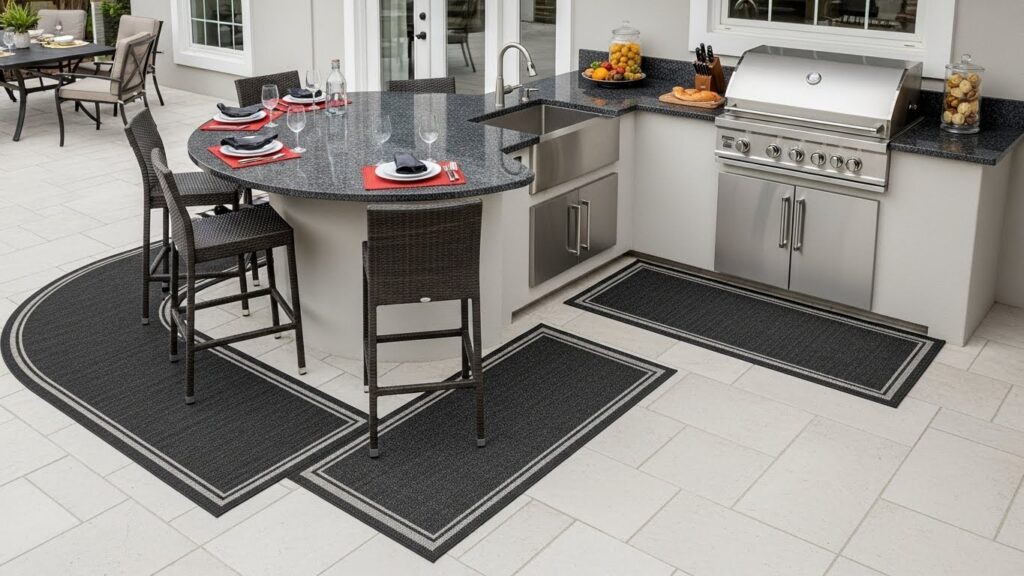
Measure your outdoor kitchen layout first rugs should extend 2-3 feet beyond furniture edges so chairs stay on the mat when pulled out. For sink areas, opt for 2×3-foot mats to catch water without overwhelming space; larger 8×10-foot rugs suit full grill-station setups. Runner shapes work along counters, protecting narrow paths while allowing easy movement.
Consider traffic flow: place mats under standing prep zones for comfort and high-use paths for dirt-trapping. Round or oval options fit curved islands, while rectangles define rectangular dining spots seamlessly. Always leave 18-24 inches of exposed floor around edges to avoid a cramped feel.
4. Design and Style Inspiration
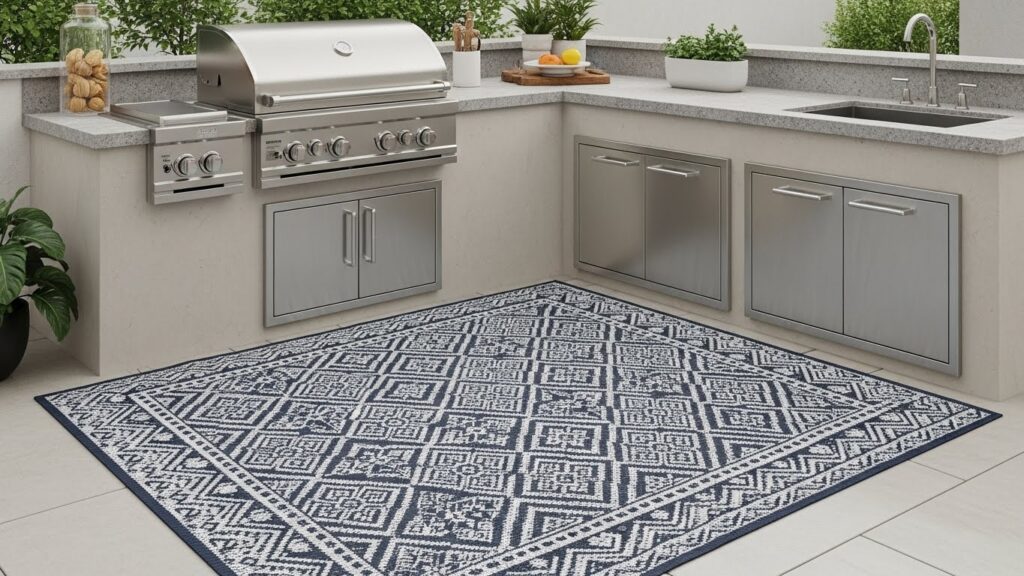
Draw from Pinterest trends favoring bold geometrics or subtle stripes that hide grease marks while complementing stainless grills. Earth tones like terracotta or navy blend with stone counters, creating a grounded Mediterranean vibe. Neutral bases let vibrant cushions or planters stand out, ideal for modern minimalist kitchens.
Layer patterns for depth solid mats under patterned rugs add dimension without chaos. Coastal blues with white motifs evoke beachside cooking, while boho florals suit eclectic patios. Match rug hues to surrounding greenery or furniture for harmony, ensuring UV-treated fabrics keep vibrancy through seasons.
5. Maintenance Essentials
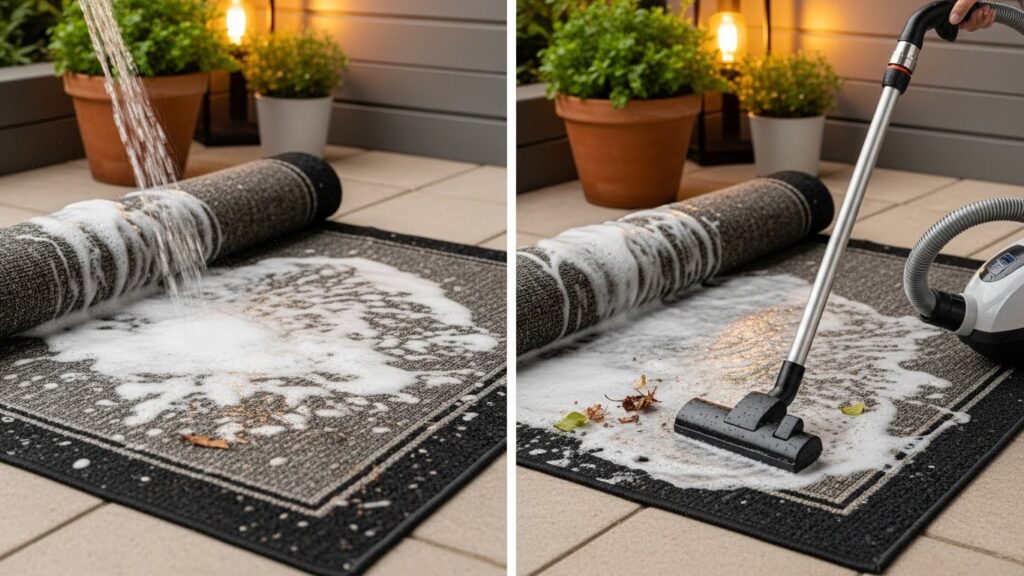
Hose off monthly with mild soap to remove grease and pollen, focusing on both sides for even drying. Store rolled in dry spots during harsh winters to prevent cracking. Vacuum weekly traps debris before it grinds in, extending life in pet or kid-heavy areas.
Tips for Smart Selection
- Prioritize UV and water resistance for all-day exposure near cooking heat.
- Test non-slip grip by pressing firmly—essential for wet, oily floors.
- Budget for quality: mid-range polypropylene lasts years over cheap fades.
- Layer with pads underneath for extra drainage and stability on uneven patios.
- Check weight—lightweight options roll up easily for cleaning or storage.
- Read reviews for real-world spill tests from cooking enthusiasts.
Conclusion
Selecting the right outdoor kitchen rugs and mats is about more than covering ground it’s crafting a space where comfort meets creativity, turning fleeting barbecues into cherished traditions. From weather-tough synthetics that laugh at spills to textured weaves that whisper seaside serenity, your choices shape an inviting hub that endures sun, showers, and endless gatherings.
Armed with these insights from material must-haves to Pinterest-fueled designs you’re set to elevate your patio without the hassle. Remember, the best pick feels good underfoot and looks even better in photos.
Dive in, experiment, and watch your outdoor kitchen bloom into the envy of the neighborhood. Happy decorating may your floors stay fabulous and your feasts unforgettable.
Frequently Asked Questions
What size rug for an outdoor kitchen island?
Aim for coverage where all front furniture legs rest on it, typically 2 feet wider than the island on each side.
Are rubber mats better than woven rugs for grills?
Yes, rubber handles heat and slips superiorly, while rugs add style elsewhere.
How often clean outdoor kitchen mats?
Weekly vacuuming and monthly hosing suffice for most synthetic types.
Can natural fibers work outdoors?
Only in fully covered spots to avoid moisture damage.
Do I need a rug pad?
Recommended for slip prevention and airflow under damp conditions.